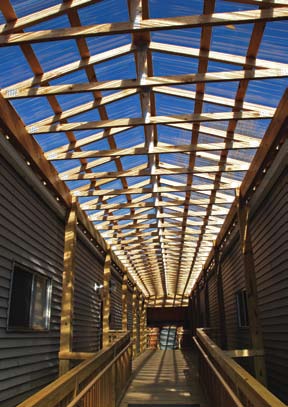
 Building green. It seems everywhere we look there is some kind of statement or message about green building and the environment. While the greening of America is a noble trend, as a contractor, it can be time-consuming to wade through all the information and figure out what is not only truly good for the environment, but good for your bottom line, and good for your customer’s bottom line too. Implementing natural daylighting in a building project is an easy way to gain a quick return on investment while going green, and doing so can also contribute to LEED credits.
What is it?
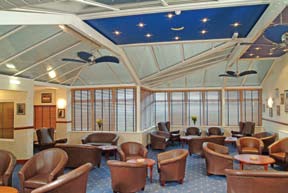
Daylighting is the use of glazing to allow natural light into spaces, often replacing the use of artificial light. There are two types of daylighting options, top lighting (skylights and roof lights) and sidelighting, often called clerestory windows. Traditionally, daylighting has been used in agricultural applications where electricity is unavailable or simply is not cost effective in areas such as loafing sheds, fertilizer storage buildings, and animal confinement buildings and so forth. Today, in addition to those traditional agricultural uses, natural daylighting is used in high-end architectural projects, retail facilities, hospitals, schools, offices, warehouses and more.
Energy Codes and Energy Savings
Energy codes are the driving force behind the green movement. Most of you are probably familiar with the codes ASHRAE 90.1 2010, ASHRAE 189.1 and Title 24, which include energy efficiency standards for various structures. The International Code Council
(ICC) has recently created the International Green Construction Code (IgCC), which provides a baseline of energy efficiency from the building design phase on through occupancy.
All of these codes focus on modifying building construction and renovation practices to save energy in safe, practical ways. Daylighting saves energy. Introducing natural light into the building means artificial lighting can be turned off or dimmed. This can be done manually (open loop), or there are photocontrols available that use sensors to read the natural light coming in the room and will adjust the artificial lighting automatically (closed loop). Dimming or turning off the artificial lights greatly reduces the cooling load. According to the U.S. Department of Energy (USDOE), two of the highest energy uses in a building are lighting and HVAC. Determining exactly how much energy can be saved depends upon the energy efficiency (U factor) of the skylights or sidelights, as well as the type of artificial lighting being dimmed or switched off. To determine the exact calculations, visit the USDOE website at www.eere.energy.gov.
Daylighting Integration
There are many configurations available for skylights and sidelights. When determining where to place sidelights, a north- or south-facing wall is best for more even lighting for longer portions of the daylight hours. East- and west-facing sidelights often have harsh glares and provide light for only short portions of the day. For additional or total light diffusion, optional pigments can be added to the glazing to diffuse the natural light, reducing glares and hotspots.
 Installation
Installing polycarbonate skylights or sidelights is virtually the same as any corrugated metal roofing or wall panel with the exception of pre-drilling holes and the type of fastener used for proper installation. The pre-drilling is necessary to allow for expansion and contraction, as polycarbonate expands and contracts at a different rate than metal. Rubber butyl tape or a compatible silicone caulk, along with positive drainage, should alleviate any leakage concerns with skylights. Be sure to read the entire installation guide for any chosen skylight or sidelight system to ensure proper panel performance.
Life Expectancies and Warranties
Most polycarbonate manufacturers offer some type of warranty against discoloration and impact resistance against hail for up to 10 years, although many polycarbonate installations have been in place for 20 years or more. The impact resistance of polycarbonate is far superior to other materials available on the market. Commercial warranties might be a bit different considering the product might be installed in an area where it could be subjected to chemical attack (e.g., harsh cleaning compounds). UV inhibitors add to the life expectancy of polycarbonate panels, while a co-extruded UV layer creates a more permanent bond and will not delaminate or crack.
Summary
The economical and societal impact of implementing natural daylighting far outweighs the use of artificial lighting. Daylighting not only saves energy, but also produces positive results in human performance and moods. Polycarbonate skylights and sidelights are among the most durable options available and allow for full spectrum lighting to be introduced into the building to produce those positive effects, plus offer the opportunity for LEED credits for your project. As energy codes become more stringent, daylighting is going to be even more important in both new construction and renovations. Implementing daylighting in your current projects will put you ahead of the competition and provide valuable experience for the coming years.
—
Charlene Riegger is the marketing specialist at Palram Americas, a manufacturer of polycarbonate and PVC flat sheets and corrugated panels, located in Kutztown, Pa. For more information, go to www.palramamericas.com.