There are numerous reasons an existing roof may be retrofitted, ranging from the most obvious being a continually leaking roof to “Let’s Go Green” and install some renewable solar equipment. The truth is most building owners are not going to make that phone call to the roofing contractor until it’s too late.
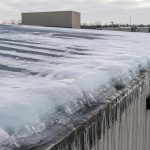
By nature, flat roofs are prone to leak because they are flat. Buildings with flat roofs are subject to ponding water and, therefore, are exposed to more than normal moisture gain and possible rainwater infiltration. Flat roofs utilize a design application that is considered to be hydrostatic (watertight), and their inability to shed rainwater subjects them to a broader range of performance issues.
Retrofit metal roof systems, on the other hand, employ hydrokinetic water-shedding methods. By discharging the rainwater from the building roof, the roof’s weathering surface is subject to fewer performance issues. Of course, the feasibility of any construction project is subject to the building owner’s needs and specifically what has to be achieved or satisfied. One common need with most retrofit opportunities is the building owner is currently experiencing roof leaks and in many cases has gone through several attempts to have the leaks eliminated. Many have spent enormous amounts of money over the years for constant patch, repair and maintenance, and even have had to go to the extreme of a premature tear-off and replacement, only to revisit the same problems with water infiltration after a few years.
The building owner that typically becomes interested in retrofit is one who intends to occupy the building for many years to come. Otherwise, the assurance that a new metal roof system provides in long-term performance and weathertight reliability can be over shadowed by the initial cost of retrofitting in most cases.
The building owner that typically becomes interested in retrofit is one who intends to occupy the building for many years to come. Otherwise, the assurance that a new metal roof system provides in long-term performance and weathertight reliability can be over shadowed by the initial cost of retrofitting in most cases.
Then, there are financial benefits of a metal roof versus conventional flat roof membranes. Metal roofing has an annual maintenance cost of about 2 cents per square foot compared to conventional flat roof membranes of up to 23 cents. The savings realized with a metal roof because of its 40-plus year service life
(some say 60 years) compared to its best competitor at 23 years equates to fewer roof replacements over the life of the building.
In today’s energy conscious environment, there are even more reasons to drive the owner to a retrofit metal roof. Adding insulation and renewable solar thermal and power generation technologies to a retrofit can reap tax relief benefits up to 30 percent of dollar-for-dollar federal tax credits, as well as possible grants, special funding, and other state and local incentives. (Visit www.dsireusa.org for a database of incentives and policies on renewables and energy efficiencies in your state.)
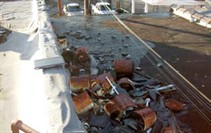
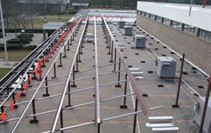
A recent case study illustrated a two- to five-year return on investment (ROI) for a 100,000-square-foot school project in the Midwest. The ROI was calculated using the difference in cost between a built-up roof (BUR) and a lowslope retrofit of about $1 per square foot. This was factored by the savings from reduced maintenance cost, reduced energy consumption from adding insulation having a thermal resistance value of R-19 and the amortized savings from not having to replace the BUR at 23 years.
Add all of these saving opportunities together and you essentially get a roof that pays for itself. It was once said that, “The cheapest form of energy is saved energy.”
Most building owners don’t know about the retrofit concept using metal roofing. If you decide to get in the retrofit game, don’t forget your large job-site signs so owners driving by will know whom to call when a roof needs to be replaced.
Mark James has more than 40 years experience in the retrofit and metal construction markets, working for leading manufacturers and executing great projects. Currently, he is president of RetroSpec LLC, a consulting company offering direction and deep knowledge of the retrofit business for manufacturers and contractors. James can be reached at mark@retrospecllc.com.