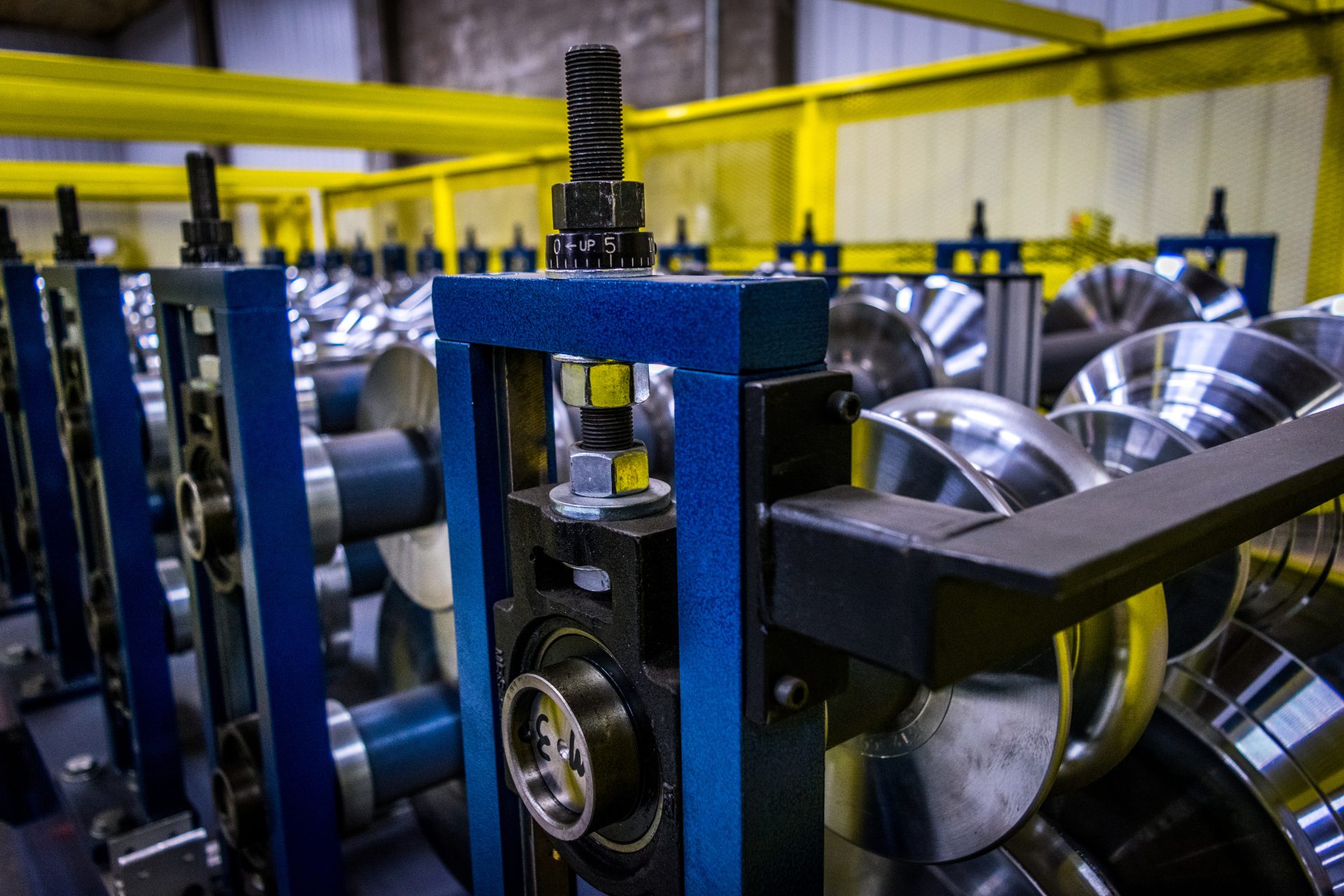
In the world of metal panel production, the debate between permanent rollformers and transit (portable) rollformers often centers on logistics, scalability, and environmental control. But underneath these operational distinctions lies a more critical factor—quality assurance. Regardless of where the machine is located, the true determinant of consistent panel quality is the operator’s vigilance and expertise.
The myth of machine superiority
Permanently installed rollformers offer undeniable advantages: stable calibration, precision-aligned dies, and reduced exposure to environmental contaminants. These conditions foster consistent production and high material integrity, especially with structured maintenance plans and traceable coil inventories.
On the other hand, transit rollformers bring limited flexibility to the job site. They allow for on-demand panel production tailored to specific project needs, reducing transportation costs and lead times. However, they operate in less predictable environments and are subject to dust, temperature fluctuations, and variable setup conditions.
Despite these differences, both systems can produce panels that meet the highest industry standards. The secret? Human oversight and the benefit of quality, experienced operators.
Operators: The great equalizer
Whether stationed in a factory or deployed on-site, rollformers rely on operators to monitor, adjust, and verify output. Quality checks, such as visual inspections for jamming, shearing, and die alignment, are essential in both environments. Operators walk the length of the machine, jog material through the dies, and ensure that each panel meets dimensional and aesthetic specifications.
These manual interventions are not just safeguards—they are the linchpins of quality control. A well-trained operator can detect subtle inconsistencies, recalibrate equipment, and prevent defects before they reach the customer. In fact, the consistency of panel quality across both machine types is often more reflective of operator diligence than machine design.
Efficiency: Speed vs. setup
Efficiency is another area where the two systems diverge. Permanent rollformers are optimized for high-volume production. With minimal setup time and streamlined coil handling, these machines can run continuously, producing thousands of panels per day with minimal downtime. Additionally, they are run by full-time teams trained in quality control from loading the coil to catching the produced panel on the opposite end.
Transit rollformers, while more flexible, often require additional setup time at each location. Leveling the machine, aligning the dies, and calibrating for environmental conditions can slow initial output. This slower trend, unlike permanently placed rollformers, also includes production of panels themselves, and in some cases, can result in panels running significantly slower than their full-time anchored counterparts. On the other hand, operators of on-site rollformers are often the same team who will install the panels, which means the operators can do measurements in real time to produce panels for their project.
The trade-off is clear: permanent machines excel in output, while portable machines shine in responsiveness. The choice depends on the project’s scale and logistical constraints.
Panel selection: Range and customization
Permanent rollformers typically offer a broader selection of panel profiles. These machines are often part of a larger manufacturing ecosystem, with interchangeable tooling and access to specialized dies. This allows for complex profiles, including architectural panels, structural panels, and specialty shapes.
Transit rollformers are more limited in their profile capabilities by design. Most portable units are configured for standard panel types, such as standing seam or corrugated profiles optimized for roofing and siding applications. While some advanced portable systems offer modular tooling, the range is generally narrower than their permanent counterparts. One thing contractors should consider when choosing to use a portable rollformer is if they know what panel profiles they offer, so various options are not to their detriment.
Portable machines can still deliver high-quality panels for most commercial and residential applications. The key is selecting the right machine for the job and ensuring operators are trained to maximize their capabilities.
Color assortment: Inventory vs. on-demand
Color options are another consideration. Permanent facilities often maintain extensive coil inventories for various colors and finishes. This is ideal for projects requiring precise color matching, specialty coatings, or direct print aesthetics.
However, transit rollformers rely on coils delivered to the job site. This limits color selection to what is available or pre-ordered. While this can streamline logistics and reduce waste, it may constrain design flexibility—especially for projects with evolving specifications or last-minute changes.
To mitigate this, some contractors coordinate closely with suppliers to ensure the timely delivery of custom coils. Others maintain a small inventory of popular colors for quick-turn jobs. Again, the success of either approach hinges on planning and communication.
Bridging the divide
The notion that permanent rollformers inherently produce better panels overlooks the human element. While fixed machines benefit from controlled conditions, portable units can produce good material when operated by skilled professionals who follow rigorous quality protocols.
This insight reframes the conversation: instead of choosing between machine types based solely on perceived quality, manufacturers and contractors should invest in operator training, standardized inspection routines, and clear accountability measures.
In the end, the rollformer, whether bolted to a factory floor or rolling onto a job site, is only as good as the person running it. By elevating the operator’s role and emphasizing quality checks as the cornerstone of panel consistency, the industry can move beyond the binary of permanent versus portable and focus on what truly matters: delivering excellence, one panel at a time.
Andrew Wilson serves as vice president of innovation for Central States Inc., overseeing product development, testing and certifications, engineering, and the Project Management Office. He has served in various leadership roles in the past, including supply chain and operations. He brings decades of experience working in manufacturing businesses, specializing in continuous improvement and quality management. Andrew serves on committees for several major industry associations, including the Metal Construction Association (MCA) and the Cool Roof Rating Council.