As 2026 begins, the commercial construction industry finds itself at the crossroads of shifting demands and evolving challenges. From the growing need for thermally efficient buildings to the ever-tightening deadlines driven by labor shortages and escalating costs, several trends have shaped the landscape in the past year. As the new year develops, the industry is poised for further transformation.
2025: A year of resilience and innovation
2025 presented significant hurdles and opportunities. Among these was the increasing demand for specialized facilities such as data centers. Global data center power demand is expected to grow by 50 percent by 2027, with projections indicating an increase of up to 165 percent by 2030. This rapid growth is putting immense pressure on developers to construct these facilities efficiently while maintaining high performance.
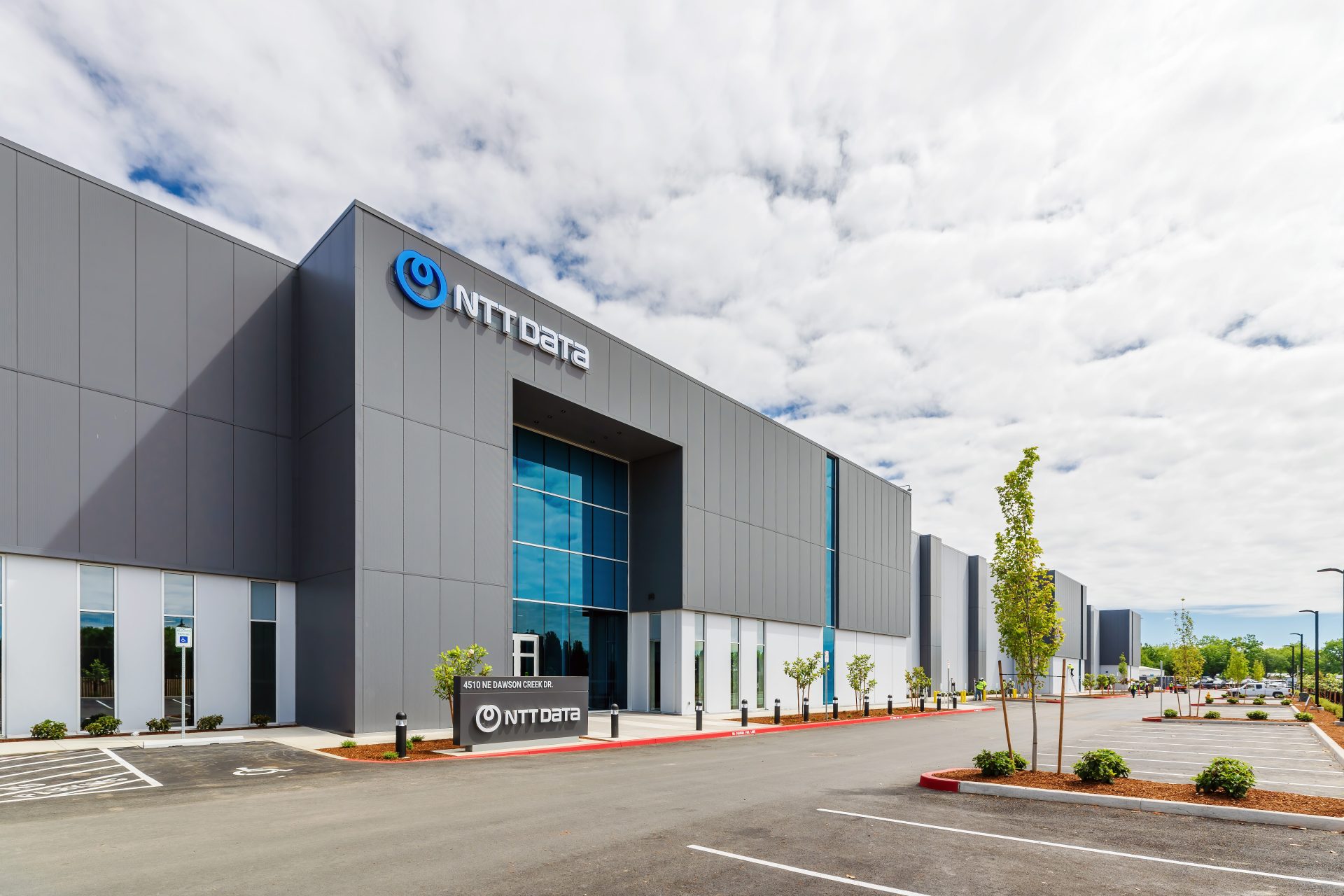
The construction of data centers faces the challenge of balancing quick project timelines with the technical demands of the building. A notable example of this in 2025 was in Hillsboro, Ore. NTT Global Data Centers Americas–one of the largest data center providers worldwide–responded to the growing need for facilities with the HI2 Data Center, which serves as a high-capacity hub for data storage and processing. The facility’s design incorporated construction materials and methods to enable a high-speed build while addressing operational and aesthetic needs.
Last year, construction teams also faced the pressures of tighter project timelines and ongoing skilled labor shortages. Owners demanded faster delivery while contractors faced limited workforce availability and rising costs. These constraints reshaped how projects were planned and executed, placing greater emphasis on efficiency and reducing onsite complexity. Successful teams are now adopting materials and processes to maintain speed and quality despite workforce limitations.
The expectation that buildings must be both high-performing and visually impactful was another challenge. Owners and users increasingly prioritized facilities that combined strong performance and durability with designs that reflect brand and community identity. This shift influenced material selection and envelope design in 2025, even in sectors such as industrial and specialized facilities, where function once outweighed form. In many of these projects, insulated metal panels (IMPs) were selected as the primary building material, meeting thermal performance demands while supporting durability and design in a single system.
As technology became more central to the industry, its impact on how buildings are planned and delivered became increasingly evident. Teams moved away from fragmented systems toward more integrated platforms, aligning performance data, specifications, and compliance requirements in one place. The digitization of materials data accelerated, enabling architects, engineers, and contractors to access product attributes and performance in real time early in the design process. These tools helped project teams make quicker and more informed decisions, reduce rework, and better coordinate across disciplines to keep complex projects on schedule.
Predictions for 2026
Looking ahead to 2026, several predictions are shaping the commercial construction landscape:
Specialized construction meets speed-driven delivery
As demand for specialized facilities such as healthcare, cold storage, and data centers continues to grow, builders will continue to face mounting pressure from construction delays, labor shortages, and rising material costs. These challenges will further accelerate the shift toward modular and streamlined construction approaches, where speed and cost control have become key competitive advantages. Developers and contractors will increasingly prioritize solutions that reduce on-site complexity, limit trade coordination, and help projects stay on schedule while protecting margins.
Design-led construction takes center stage
In 2026, architecture and aesthetics will play a larger role in construction decision-making as developers and architects place greater value on visual impact alongside performance. Industrial and commercial buildings—once designed purely for function—are now expected to reflect brand identity, community presence, and long-term adaptability. Materials that offer efficiency and flexibility in color, texture, and finish will rise in popularity, allowing builders and architects to deliver high-performance buildings without compromising design.
Sustainability at the core
As energy-intensive technologies accelerate growth across industries, the construction sector will face increased pressure to build more sustainably. In response to stricter carbon-neutral goals and Leadership in Energy and Environmental Design (LEED) requirements from both businesses and governments, demand will rise for building materials that reduce both operational and embodied carbon.
The growing use of IMPs
In response to these converging demands, integrated building systems such as insulated metal panels (IMPs) will continue gaining traction. By combining air, water, vapor, and thermal control into a single assembly, these systems help streamline construction, reduce reliance on multiple trades, and support faster installation. Compared to traditional concrete wall assemblies, specific IMPs can deliver up to 28 percent lower embodied carbon, while their high thermal performance meets increasingly stringent energy codes with fewer materials. These materials support sustainability goals while enabling teams to meet tight schedules and budgets, making integrated envelope solutions a practical choice for projects balancing speed, performance, and cost. These panels also come in a wide range of colors, finishes, and profiles, allowing architects to create distinctive looks that suit both contemporary and classic styles. Whether used vertically or horizontally, IMPs enable dynamic facades that incorporate elements such as clean lines and geometric patterns.
Looking ahead: Embracing change and innovation in 2026
The construction industry’s journey through 2025 has shown that innovation, efficiency, and adaptability are essential for success. In 2026, the industry will need to continue embracing technological advancements and materials to overcome challenges such as rising costs and labor shortages. By integrating innovative solutions into construction strategies, the sector can anticipate a more streamlined and resilient future.
Karim Muri is vice president of marketing services and strategy development for Kingspan Insulated Panels North America. Muri has led strategic marketing in the construction products market for nearly 20 years. His global experience includes leadership roles in Australia and the United States across both the residential and commercial building sectors.