Metal buildings and metal roofs offer a distinct advantage for rooftop solar photovoltaic (PV) installations: durability. Their long service life exceeds that of rooftop solar systems, reducing the likelihood of major repairs or reroofing that would interrupt system performance or add unexpected costs.
That longevity also has direct financial implications. When planning a rooftop solar project, the lifetime cost is the critical driver for achieving the ultimate return on investment (ROI). Installation expenses, operations and maintenance (O&M), and the potential for future disruptions all shape the system’s cost savings over its expected service life.
This alignment makes metal construction well-suited for rooftop solar. But compatibility alone is not the full story. The larger opportunity lies in treating the building, roof, and solar array as a single integrated asset rather than separate investments. When considered together, efficiency gaps are easier to identify, along with opportunities for innovation that will create lower installation costs, minimize O&M, and help accelerate rooftop solar growth in the United States and beyond.
However, in practice, building construction and solar installation are still often approached sequentially rather than collaboratively. A building or reroofing project is completed first, and the solar installer arrives later. At that point, modifications to the building are difficult and costly.
Roof attachments may require penetrations or specialized mounting systems. Power electronics need to be mounted on walls or placed in enclosures. Conductors, jumpers, homeruns, and related wiring must be routed from the array to inverters, service equipment, and the utility meter. These elements often require penetrations, raceways, and other modifications.
Each of those steps adds cost, complexity, and coordination. Over the life of the system, they can also affect maintenance, serviceability, and long-term ROI. Therefore, the relationship between metal construction and rooftop solar is more than compatibility. It is also about how much inefficiency and avoidable cost can be identified and addressed before installation begins.
Complementary—but not yet integrated
Metal construction and rooftop solar systems are naturally aligned, yet often treated separately. When building systems, roof systems, and solar arrays are designed and installed in isolation, valuable efficiencies are lost, and a major opportunity for cross-industry innovation is missed.
Despite this, there has been measurable progress. Solar-ready design concepts and attachment innovations, especially for standing seam metal roof systems, demonstrate how metal construction can lower barriers to solar installation. Buildings designed with built-in wire chases, designated equipment locations, and code-compliant provisions for PV power electronics and batteries can also reduce installation cost and simplify future system additions.
Even so, the industry may not be moving quickly or innovating deeply enough to accelerate rooftop solar deployment meaningfully. Best practices and custom solutions already exist, but widespread impact will depend on turning those ideas into standard design approaches, repeatable construction details, and readily available products.
Solar-ready design: A step toward integration
One of the clearest examples of progress is solar-ready design. Solar readiness formalizes practical decisions during the building and roof design phase, allowing PV systems to be installed more efficiently later. Roof orientation, pitch, unobstructed solar zones, durable materials, and designated space for conduit and power electronics are addressed intentionally rather than reactively. It is simpler and less expensive to integrate solar systems than to retrofit buildings and roofs later.
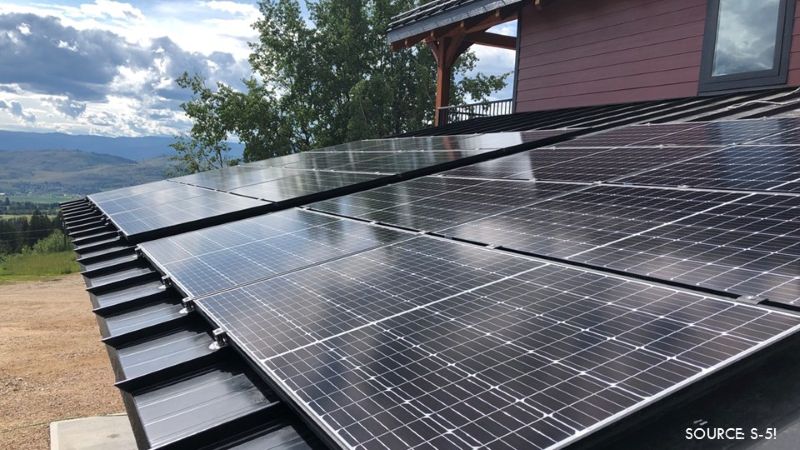
In engineered metal building systems, with framing members, purlin spacing, and load paths defined from the outset, solar readiness is feasible and efficient. When these considerations are incorporated early, both the roof system and the future PV array benefit from these efficiencies.
The current trend is for states and municipalities to implement solar-ready mandates. For example, California has required solar installations on many new buildings since 2020, along with related solar-ready provisions. Policies like these encourage integrated planning rather than retrofit improvisation, helping lower system costs and improving long-term performance.
Solar readiness is not complicated. It simply formalizes design choices directly affecting costs, constructability, and ROI in anticipation of immediate or eventual solar additions. The larger goal is to move beyond isolated examples and make those options standard point-of-sale conversations across the metal construction industry.
Building-integrated solar
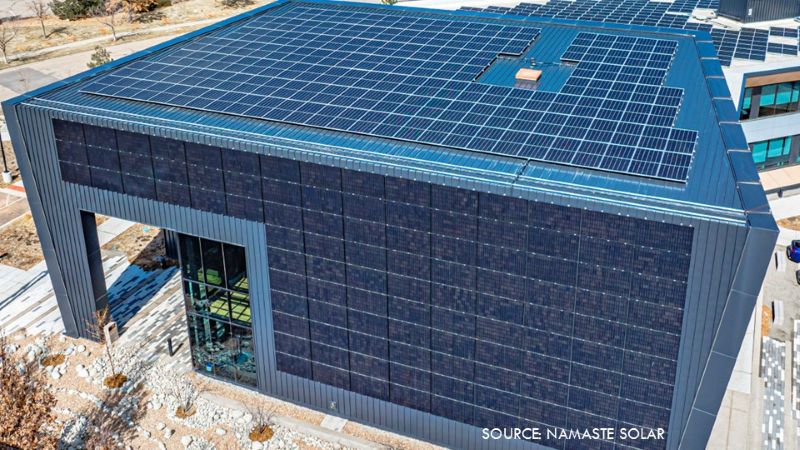
Another area where construction and solar technology intersect is building-integrated photovoltaics (BIPVs), including solar roofing products. These systems have been gaining traction in the U.S. market, with manufacturers such as Tesla, GAF, and CertainTeed introducing products that merge roofing materials with energy generation.
Solar shingles do not currently match the power density or cost-per-watt performance of conventional crystalline PV panels. Over time, continued innovation may narrow that gap, particularly in residential applications.
These developments represent incremental progress toward integration and demonstrate that innovation within the construction sector can influence the solar industry’s trajectory, even if it is gradual.
Where metal construction is leaving opportunity on the table
The long-term growth of rooftop solar will rely on innovation from both the solar and metal construction industries. Solar-ready practices, building-integrated solar, and attachment compatibility all represent meaningful steps forward. Yet opportunities remain for metal construction to move beyond compatibility into integrated innovation.
On top of the design-and-build savings, the workforce implications are equally significant. Roofing and metal building professionals bring expertise in structural integration and long-term performance—skills directly relevant to successful solar deployment.
Greater crossover between trades can strengthen both industries, particularly as demand intensifies across construction and energy sectors.
A coordinated future
If metal construction, roofing, and rooftop solar are to achieve the shared potential, progress will not come from treating them as separate scopes stacked one on top of the other. It will come from designing, specifying, and installing them as a coordinated rooftop system—built on durable metal platforms that complement the full-service life of the PV installation.
Metal buildings and roofing systems are naturally compatible with rooftop solar. The question is whether that compatibility evolves into active influence and cross-industry innovation.
Mark Gies is director of strategy and market development at S-5! With more than 15 years of experience in the solar energy industry, Mark has expertise spanning product development, operations, installation, compliance, codes and standards, and sales and business development. He is the vice-chair of the Solar Energy Industries Association’s Mounting System Manufacturers Committee, a member of the Structural Engineers Association of Southern California’s PV Committee, and a founding member of UL 2703’s Standard Technical Panel.