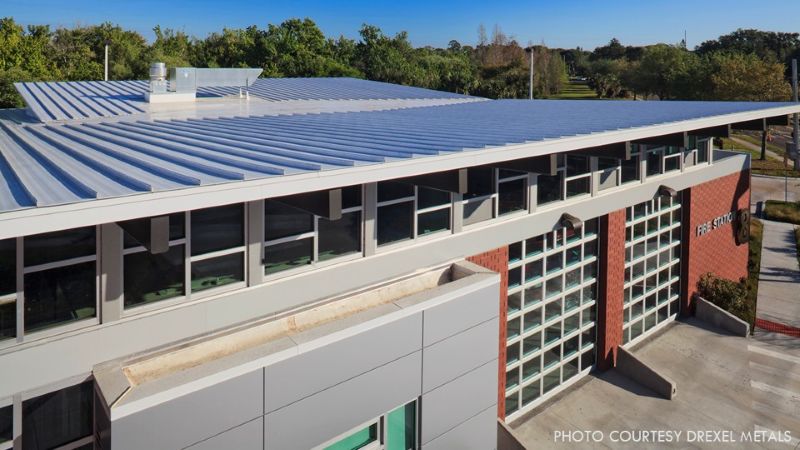
According to the National Interagency Fire Center, as of March 2026, 12,979 wildfires have burned across the United States—surpassing totals from the same period in 2025.
The upward trend in wildfire occurrences and intensity is a significant concern for homeowners, businesses, and insurance companies. These natural disasters threaten human life and, like a wrecking ball, leave a blazed trail of billions of dollars in property damage.
But contractors, designers, and aligned professionals can deliver peace of mind that a project will withstand the destructive forces of wildfires by selecting materials and building systems that have proven to be fire-resistant.
While there are many ways to improve a property’s wildfire resistance, metal roofing systems are an efficient and effective strategy to create a more resilient structure, especially when the system has been tested and certified with a Class A fire rating.
What does a Class A fire rating mean?
A Class A fire rating is the highest grade a building material can receive under Underwriters Laboratories (UL) 790. While other testing standards quantify a material or system’s ability to defend against fire, this standard is most appropriate for exterior roofing materials, as it measures fire resistance from numerous sources to quantify how these materials can protect occupants and limit the spread of a wildfire.
UL 790 categorizes materials into three classes, A, B, and C, depending on their ability to resist flame exposure, limit the spread of flames, and resist embers. As the highest rating, Class A materials can:
- Resist intermittent flame exposure for 15 cycles
- Allow less than 6 feet (1.82 m) of fire spread across its surface
- Resist embers and smoldering debris
- Reduce the number of embers made if ignited
UL 790, when applied to exterior applications, focuses on slowing the spread of fire and minimizing smoldering and flying embers if ignited. Both parts of the rating requirements not only help resist wildfire damage but also help slow and contain wildfires.
The dangers of wildfires encompass more than flames
The damage wildfires cause is often listed in acres burned or buildings destroyed. While both metrics imply the dangers of wildfire, they do not tell the whole story. The true danger of wildfire goes beyond flames, as smoke and flying embers rapidly spread fire from one building to another, threatening lives and damaging property.
Flying embers are the most serious threat. In fact, the Insurance Institute for Business & Home Safety (IBHS) estimates that embers are responsible for up to 90% of structural ignitions during wildfire events. These small, smoldering particles drift on heated updrafts and spread much farther than a wildfire’s flames. Because these embers rain down, roofs can be particularly vulnerable, especially when made of flammable materials such as wood shingles.
Structural ignition from embers is not just a risk for a single building; it also increases the risk to the surrounding homes and businesses. This can accelerate the spread of fire and make containment more difficult. As a result, planning defenses against flames, smoke, and flying embers is crucial to ensuring resilience not just for structures but for the community.
Case in point: Eldridge home, Boulder, Colo.
Premium metal roofing can be an integral part of community resilience. The Eldridge home in Boulder, Colo., demonstrates this. Originally, the Eldridge family chose metal roofing for their home because it is engineered to resist hail and wind damage. But in late 2021, they found that this roofing material also protected them and their neighbors from wildfire impacts.
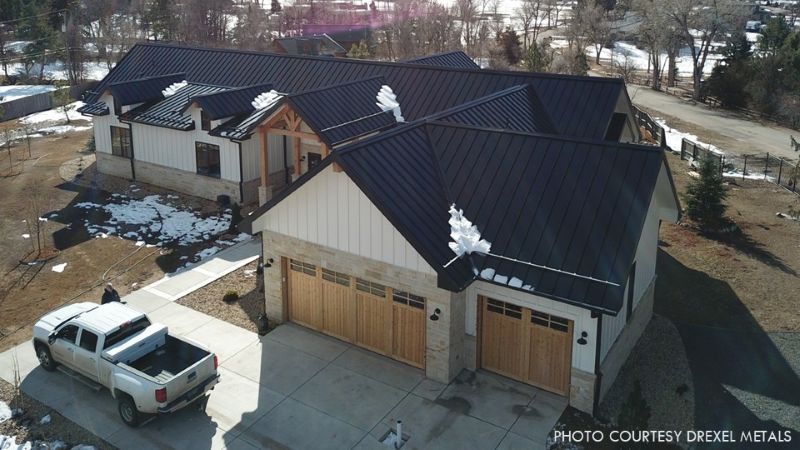
At that time, a devastating wildfire smoldered in and around Boulder, prompting the evacuation of 35,000 people. Fueled by a dry season and 100 mph winds that fanned its flames and intensified the heat, the fire thwarted containment efforts. As the fire crept through the Eldridge’s neighborhood, it caused a large propane tank near the family’s home to explode, showering the roof and surrounding area with flames, ash, and destructive shrapnel.
The home’s metal roof not only resisted damage from the flaming debris and advancing flames but also provided critical protection for surrounding homes. By not bursting into flames, the home reduced the amount of potential fuel for the fire. Neighbors also claim the roof helped shield the homes behind it from the wind-driven flames, heat, and propane tank shrapnel—acting as an unintended firebreak.
How does Class A fire rating align with industry standards?
Among other fire mitigation measures, the roof is a critical pathway to earning certification through the IBHS Wildfire Prepared Home program. This voluntary program translates wildfire science into practical action steps that contractors and homeowners can take to reduce a property’s wildfire risk. One of the program’s requirements is that a structure’s roof covering is a Class A fire-rated material.
In fact, a Class A fire-rated roofing material is the first requirement listed to meet the program’s base level designation. It states that the material should be certified with this rating in accordance with UL 790 or ASTM E108, Standard test methods for fire tests of roof coverings, standards. In addition to metal roofing panels, the Wildfire Prepared Home specifications also list other materials that have achieved a Class A rating under these standards, such as concrete, clay, or slate tiles.
While these other materials can be a viable part of a wildfire resistance strategy, it is important to consider that these roof tiles can weigh between 8 and 15 lb (3.63 and 6.8 kg), often requiring rafter and structural reinforcements and frequent repair and replacement due to weather damage.
On the other hand, metal roofing panels weigh between 0.5 and 2 psf (2.4 and 9.8 kgf/m²), depending on the metal and alloy. Despite being the lightest roofing material listed in the program, metal roofs offer premium, long-term protection from wildfire and the damaging effects of hail, wind, water, and more.
Metal roofing: making wildfire resilience standard
Whether it is finding materials that meet recognized standards for fire, smoke, and ember protection or following wildfire preparedness programs, the design, construction, and upkeep of a home and business can be complex. This is especially true considering that fire defense is just one of many factors that must be addressed in modern projects.
Metal roofing panels offer project teams and owners a high-performance, multifunctional option for enhancing a structure’s resilience against extreme events such as wildfires. They also provide defense against high winds, relentless rain, heavy snow, and more. They do this without requiring substantial modifications to a roof deck or structure, making them incredibly efficient for home and business owners looking to prioritize their wildfire resiliency.
In addition to the protection they offer, metal roofing panels are also available in a range of profiles, colors, and attachment styles. This allows owners, contractors, and designers to create resilient homes and businesses without compromising project aesthetics. Incorporating metal roofing is more than a practical upgrade.
It is a strategic, forward-thinking investment that can enhance the value and resiliency of nearly any property and its surrounding structures.
Mike Weis began his career in 1995 and later advanced to vice president of sales and marketing at Carlisle Architectural Metals (CAM). With more than 30 years of experience in the architectural metals industry, Mike has established himself as a respected leader in architectural metal envelope solutions. Mike is committed to delivering high-performance building envelope solutions from the CAM portfolio, which includes some of the industry’s most recognized brands: Petersen, Drexel Metals, Metal-Era, Hickman Edge Systems, and Citadel Architectural Products.