When designing a metal-over-metal roof retrofit, architects, engineers, and other roofing specifiers frequently ask me whether they can include a peel-and-stick underlayment with our proprietary retrofit system and a new standing seam metal roof. When done correctly, the short answer is “Yes.”
What you cannot do
- You must not add plywood or coverboard over a typical metal building roof.
- Do not change from a ribbed metal roof system to a smooth, flat surface like TPO or similar, as this alters the basic engineered design of the building.
- Do not change the roof geometry without a full engineering review or water might flow or, worse, accumulate where you don’t want it to.
And here’s why
Roof framing for metal buildings is normally 8-in. light-gauge, high-strength purlins, spaced 5-ft o.c. Plywood and coverboard cannot span 5 feet between supports and are also much too heavy for most purlin systems. Their weight will cause purlin deflection and the roof will sag between the main support frames.
Can you use infill with foam to support the coverboard? Metal roof panels are not structural decking; they are not designed to be a bearing or attachment surface for additional materials. Foam insulation is light and can work well, but beware of combining it with a single ply like TPO or PVC—even if you don’t use a coverboard.
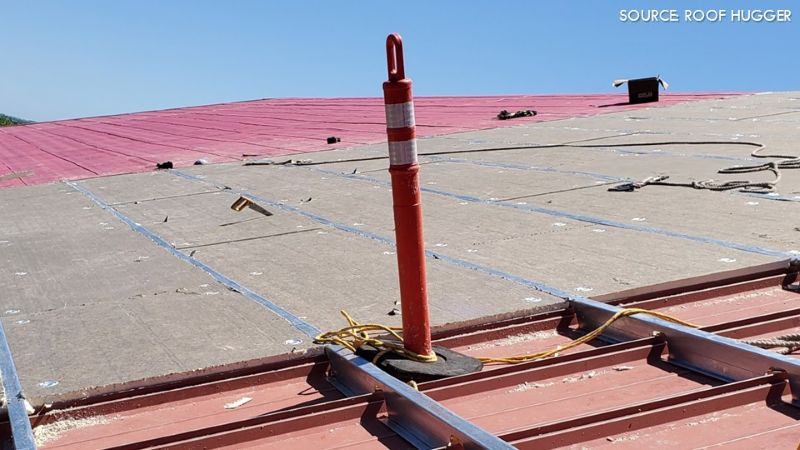
Single-ply systems on metal roofs change water flow. Metal panels have ‘ribs’ or corrugations that channel water from the ridge to the eave. Conventional single-ply coverings channel water to the low point of the roof. In low-slope metal applications, this means water will flow toward the center of the purlin span between support frames, as well as toward the eave.
The more the water flows toward this mid-span point, the more the roof will deflect. The greater the deflection, the greater the accumulation and loading. You definitely don’t want this happening in snow country.
Parapets can create an even greater risk of ponding and collapse. Single-ply systems will commonly foam fill the facade/parapet gutter and direct water to newly installed scupper openings. This will cause the water to stack up behind the parapet until it finds its way to the scuppers. Metal roofs are never designed to have water ponding on the roof; several roof collapses have occurred because of this exact issue.
The correct solution for recovering a metal roof is to use a new metal roof, as this is the way the building was originally designed and engineered. Retrofitting with metal keeps the weight to a minimum (typically 2.25 to 2.75 lb/sf) and delivers a new roof engineered to meet today’s building codes.
Working in peel-and-stick underlayment
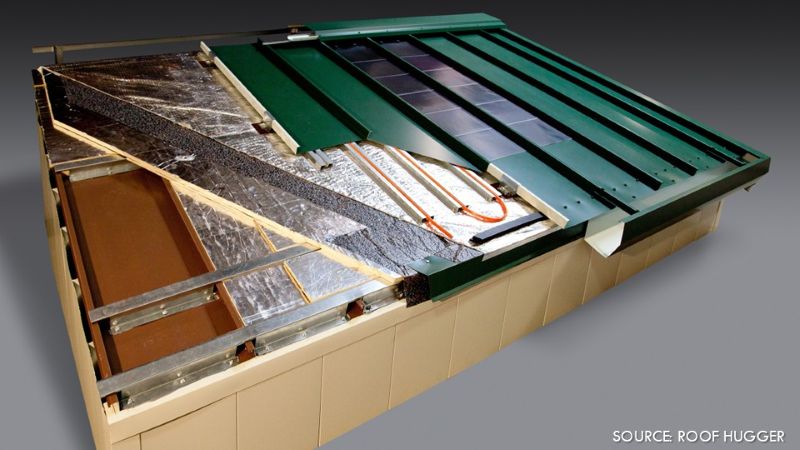
The first thing we do is provide a flat surface to which the peel-and-stick membrane can adhere. To begin, we determine the height and spacing of the existing metal roof panel ribs. Then we identify the new standing seam roof panel system to be used, as each panel has its specific tested capacity values.
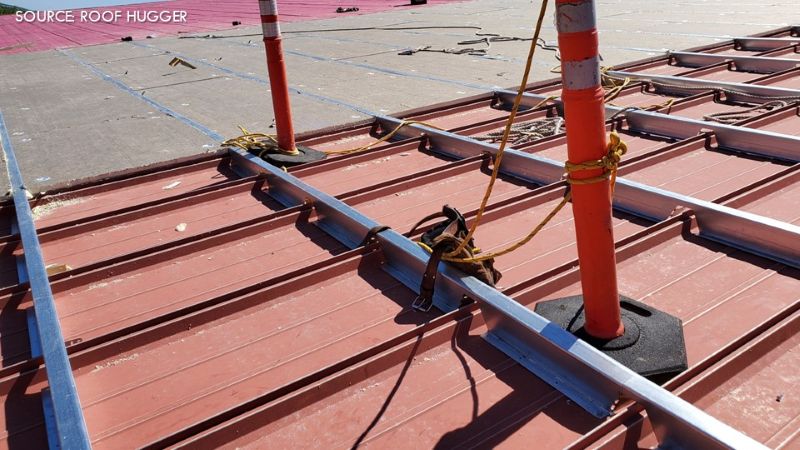
The height and spacing of the retrofit framing can now be determined. It must be tall enough to clear the existing ribs, meet the insulation requirements, and be spaced such that the new panels meet the current building code requirements.
Now we can specify a rigid foam flute filler to flush out with the top of the new subframing, which can be a single or double layer, as needed. If more insulation is desired, an additional layer can be laid across the top of the flute filler and sub-purlins by using a tall clip or bearing plate on the standing seam assembly.
High-temp ice and water shield is run over this top layer of rigid insulation. The new structural standing seam roof panels are now installed over this top layer, attaching to the structural subframing system.
A system using Galvalume or similar will provide a roof that lasts 50 to 70 years, while a painted roof will last 35-50 years. You could even add rooftop solar and the roof and will still outlast the PV panels.
This retrofit solution promises a low lifetime cost while assuring the client that their roof is doubly protected. Sticking with the original design and using a metal roof system is the correct way to recover an old metal roof. And, if you want the extra benefit of a peel-and-stick layer—especially when you have hip/valley details—you can absolutely have it.
Dale Nelson is a founding partner and president of Roof Hugger LLC, and a member of LSI Group. He holds a Class A Florida Contractor’s License and a Florida Real Estate Broker’s License, and has been inducted into MCN’s Hall of Fame. Dale is a former chair of the Metal Construction Association, from which he has received both the Patrick R. Bush and Larry A. Swaney awards. He is a two-time recipient of the Metal Building Manufacturers Association’s Innovation Award, and has been a member of the International Institute of Building Enclosure Consultants for a quarter century.