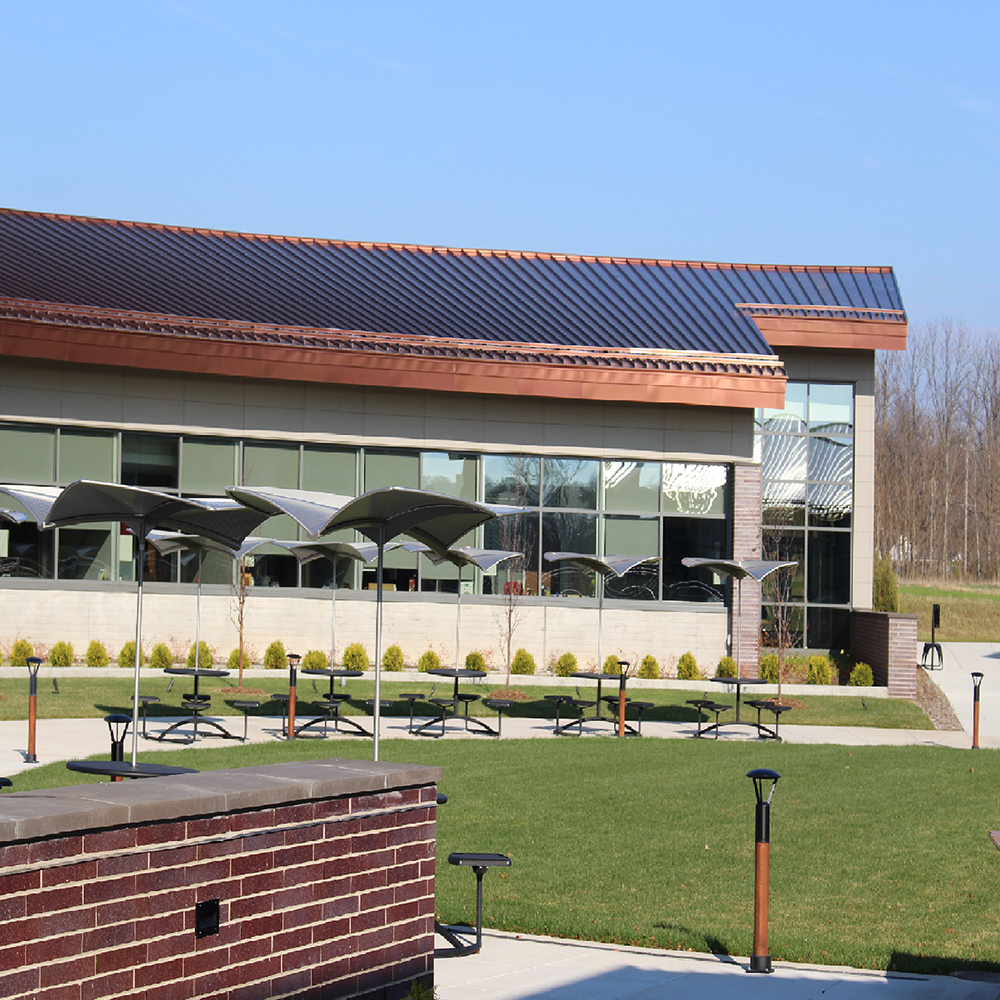
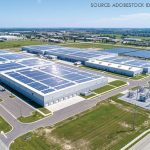
If you’re looking for a high-design, low-maintenance, environmentally responsible, easy-to-install, long-term solution for your building’s roof, anodized aluminum is the material of choice. It is lightweight, durable and comes in a broad range of color options and finishes, thus making it the perfect solution for anyone wanting a natural metal roof.
Lightweight, durable and available in a range of colors and finishes
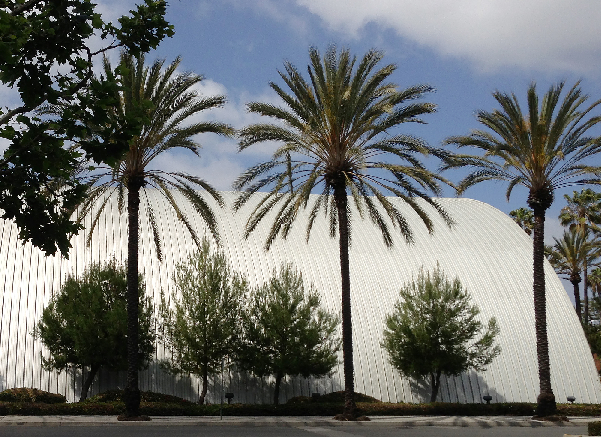
Aluminum has long been touted as a great option for roofs because of its light weight. Anodized aluminum comes in a multitude of colors, shades and finishes, including UV-stable anodized copper and zinc-look finishes. And embossed anodized aluminum offers that 3-D metallic look that will set your roof apart from the competition.
Surface as Durable as Sapphire
Aluminum is naturally anti-corrosive and will form a soft, thin and opaque protective oxide layer when left to the elements. Anodizing enhances this natural oxidation process.
Through the electrochemical process of anodizing, the raw aluminum is bonded at the molecular level to create a surface that is thick, translucent and very hard. With a hardness of 9 on the Mohs scale, the anodic layer is similar to sapphire, also composed of aluminum oxide. At 9 on the Mohs scale, sapphire is the third hardest mineral, after diamond at 10 and moissanite at 9.5.
Anodized aluminum roofing resists scratches, but if scratched it can be touched up. It scores high on both the Taber abrasion and falling sand abrasion ASTM tests, earning a 70 where paint earns a 20 to 25.
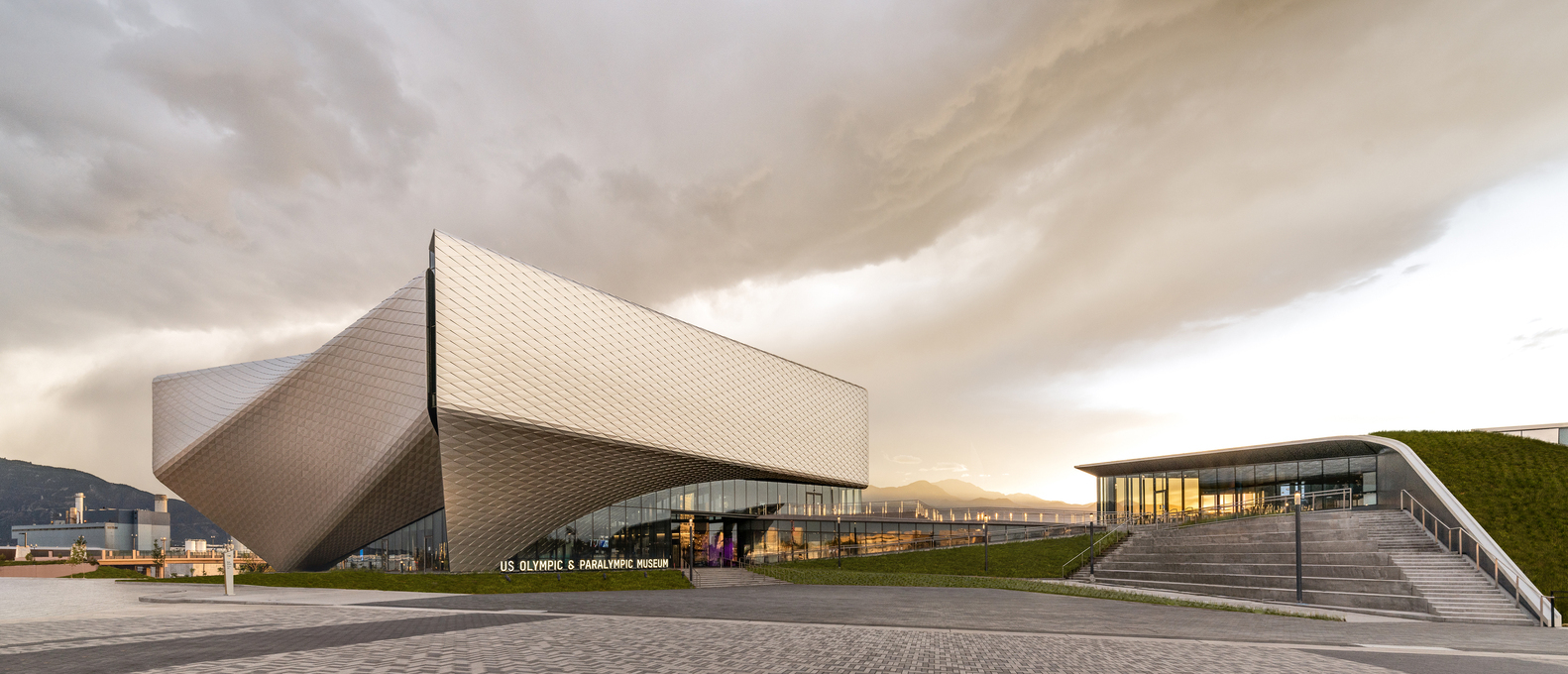
Maintaining its Great Look
The anodized surface from Lorin is easy to maintain. It just needs to be washed with mild soap and water every other year, unlike paint warranties, which require annual cleaning with stronger, often less environmentally friendly, and more expensive, cleaning agents.
Anodized aluminum roofing is not a coating—like paint—and therefore it will never chip, flake, peel or chalk. And it will never rust or corrode. Painted metal roofs, on the other hand, are notoriously vulnerable to corrosion, leading to expensive repair and replacement costs.
And the problem is not just damage to the roof itself. Other natural metals will oxidize over time, creating a runoff that has to be cleaned or leaves permanent stains on the roof and on other surfaces of the building. Additionally, with other metal roofs you are also susceptible to edge creep as the metal is cut and left bare on the edges. But with anodized aluminum, there is no edge creep, as there is no corrosion.
Easier Installation, Greater Design Flexibility
Aluminum is lightweight, which means it is easier to handle/fabricate. It offers more options for profiles for roof panels because of its superior formability and tighter tolerances than other metals. It is often faster and less costly to install than other metal roofing systems. Anodized aluminum in 0.032-gauge is easier to cut and trim compared to 0.032-gauge steel. The same tools used for steel can be used for aluminum in the field.
Good Choice for the Environment
Anodized aluminum is the only metal that is 100% recyclable. It is one of the most naturally abundant and most recycled materials on earth. Anodizing is a water-based process. There are no VOCs or Red List items in anodized aluminum, and it is RoHS compliant.
The trend towards cool roofs has increased interest in anodized aluminum with colors and finishes that contribute to LEED with SRI values above 90, compared to top PVDF paints like Solar White, scoring an 82, and Silver Metallic, with a score of 67. This means anodized aluminum lowers the heat load on a roof more than paints, helping to reduce cooling costs and overall energy consumption, as well as the upfront cost to provide the cooling systems.
Steven F. Soderberg, M.M., is corporate marketing manager at Lorin Industries Inc., Muskegon, Mich. To learn more about anodized aluminum for roofs, visit www.lorin.com and see how they can help you reflect your vision.