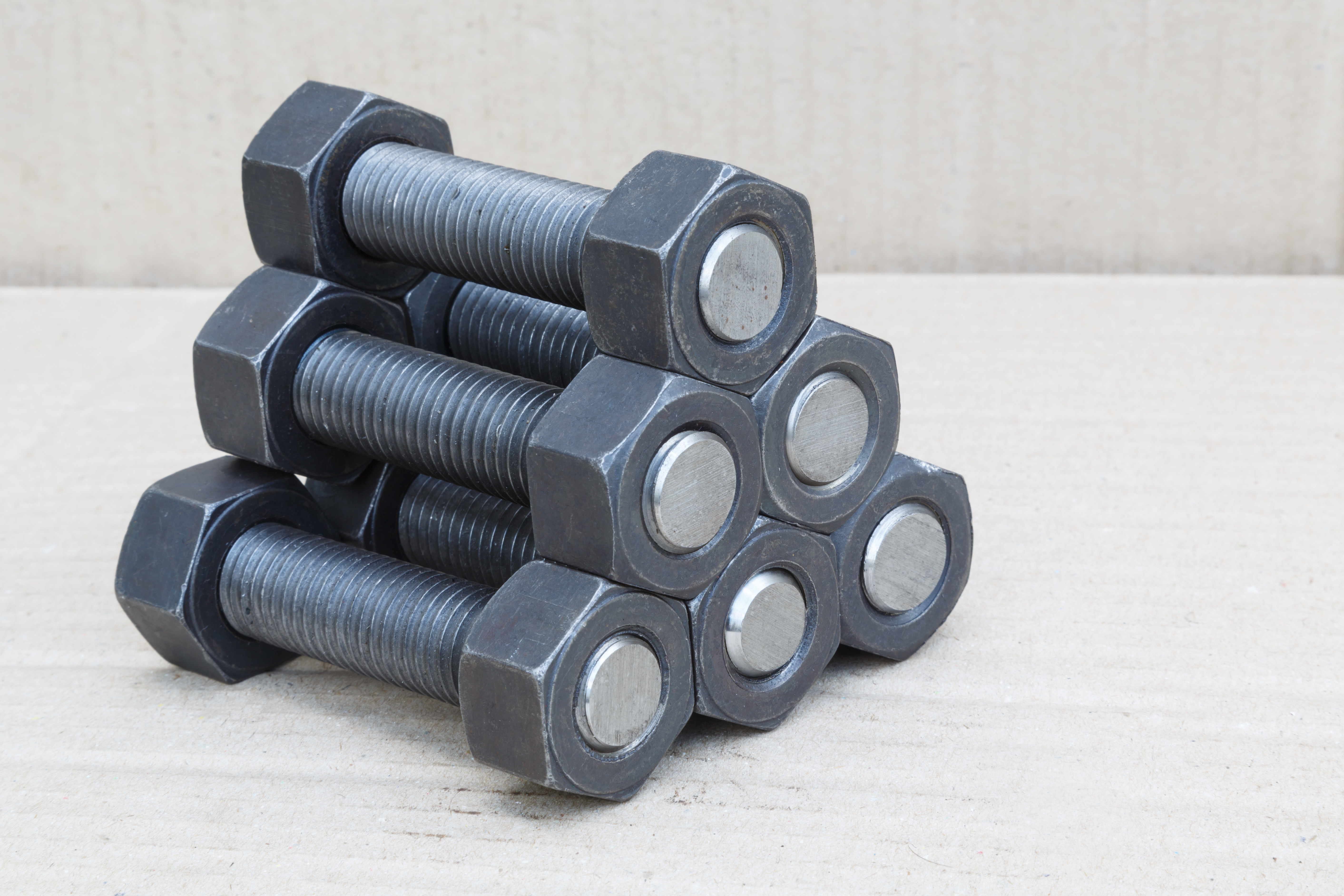
Since metal building systems are a bolt-together affair, that should mean erection is fast and simple.
Metal buildings just bolt together, right?

That is certainly the case for a run-of-the-mill agricultural building. For the well-seasoned building erector that is probably true even for the more complicated structures. Conditions do exist that complicate the matter beyond the obvious job-site specifics like limited access, inadequate lay-down areas or the need for special erosion control measures.
This article looks at design factors that affect the building erection process and two of the most common bolted connections. Not all bolted connections are created and/or treated the same.
Bolted Connection
Let us begin with the standard bolted connection at splice plates for structural members, such as when a column or rafter is connected to another column or rafter. These are moment connections, and although you will also find standard bolted connections at purlin or girt connections, purlin and girt connections are not moment connections and are excluded from this discussion. Every metal building system is engineered to meet all applicable design codes and that certainly includes the connection points. There can be substantial and damning consequences to a non-compliant bolted connection.
A standard bolted connection is typically installed to a snug-tight condition. There are no special tools needed for this connection and the process can easily be repeated. There are no pre-installation verification procedures needed. A few impacts of an impact wrench, or the full effort of an iron working using an ordinary spud wrench is all it takes. When visually inspected, as long as the connection plates are making firm contact at the actual bolt locations, then the connection is likely good.
Site-Specific Factors
Site-specific factors affect building erection procedures. High seismic activity is one such variable. High capacity, and/or numerous, overhead cranes that are supported by the building structure impact design and weigh heavily on the erection process. Both examples impart significant load reversals, or potential oscillations, that invariably dictate pre-tensioned bolts at moment connections. When site-specific factors are present, pre-tensioned connections are used.
The “Specifications for Structural Joints using High-Strength Bolts,” published by Research Council on Structural Connections (RCSC) provides four approaches to tighten bolts in pre-tensioned connections with turn of the nut being the most common. This turn-of-the-nut process first requires a proper snug-tight condition, and then an additional turn of the nut past that condition as prescribed by RCSC. For example, that additional turn may be another 1/3, 1/2 or 2/3 of a turn past snug tight.
The metal building supplier may simply call out snug tight or pre-tensioned, so the erector must understand where to get more specific details. Bolt diameter dictates the pre-tension values, but bolt condition, general cleanliness and surface oiling are big factors in whether the minimum tension is achieved through the prescribed measures. Proper care and storage of these supplies is paramount. That starts at the bolt manufacturers’ facility and extends all the way down to the iron worker at the job site.
Because this is a critical specification, a pre-installation verification is required. An inspector will witness a demonstration of the bolting technique and check these connections with a specialized tension calibrator before erection begins. Based on the test results, a modification to the prescribed procedure may be required, which in turn will require a retest or multiple retests. The goal being to confirm a process that will achieve the minimum pre-tension values specified for each bolt diameter used for the project. As long as the erector follows the approved process, then the actual bolted connections throughout the structure are not required to be witnessed or individually inspected during the erection process. Most turn-of-the-nut processes require witness markings be added to the bolted connection that produces visual evidence of a correct tightening procedure that can be inspected after installation.
Improper Installation Remediation
Should a pre-tensioned bolted connection be suspect of improper installation, the remediation needed can vary from simple measures to costly extremes.
If conditions allow, when a bolted connection is short of the additional turns required, the nut can simply be turned that needed amount. If too many variables exist for that simple correction to be applied, a worst-case scenario may exist. That being the removal and replacement of all suspect nuts and bolts. Since the pre-tensioning affects the integrity of the bolts, they cannot be re-used. Lost time and the cost of new bolts adds up quickly. The best plan of action is to plan ahead. Acknowledge the time special-bolted connections may add to your erection sequences, and keep communications open between your field personnel and your product suppliers.
Brian Shelton is the marketing manager at Chief Buildings, Grand Island, Neb. For more information, visit www.chiefbuildings.com or call (800) 845-1767.