The tenets of lean manufacturing are inherent in the metal building systems industry though it is not commonly understood how widely and effectively the manufacturers employ such efficiencies. Understanding why metal building manufacturing has long been a leading force in the application of both lean manufacturing and construction practices can help those within the field to better articulate the value and professionalism inherent in the industry. However, the industry has much to learn about lean management practices and how to streamline activities and behavior to improve employee engagement and bottom-line performance.
Lean manufacturing concepts are inherent in metal buildings
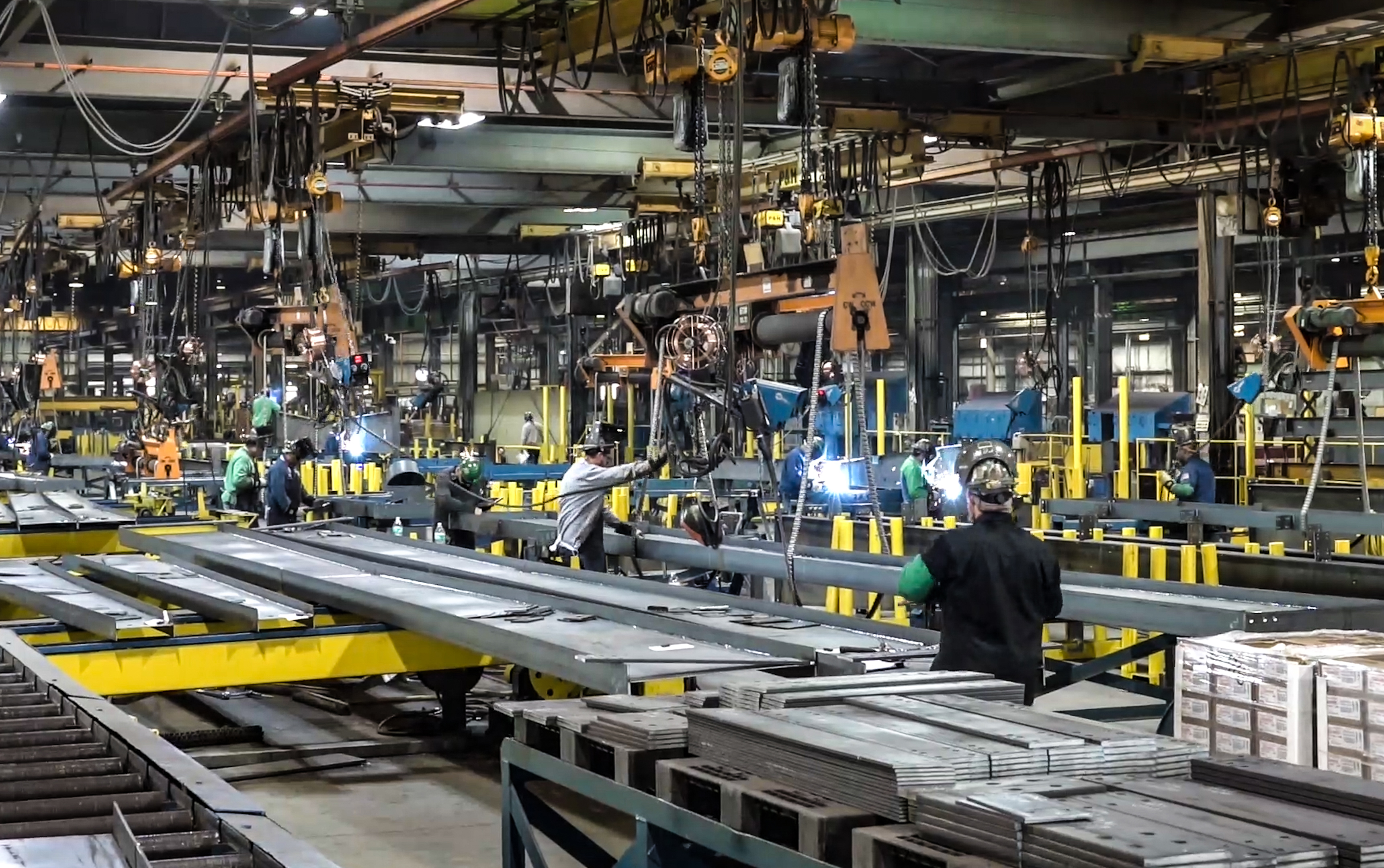
One metal building company experienced a 78% improvement in engineering lead time by implementing a process that held all areas accountable throughout design review and fabrication.
Lean principles were originally popularized by Toyota in the 1930s. In the spirit of the concept’s foundational premise of continuous improvement, these principles have been adapted to accommodate 21st century manufacturing processes and have been retooled to address the circumstances and diverse manufacturing practices relevant to different types of industrial businesses.
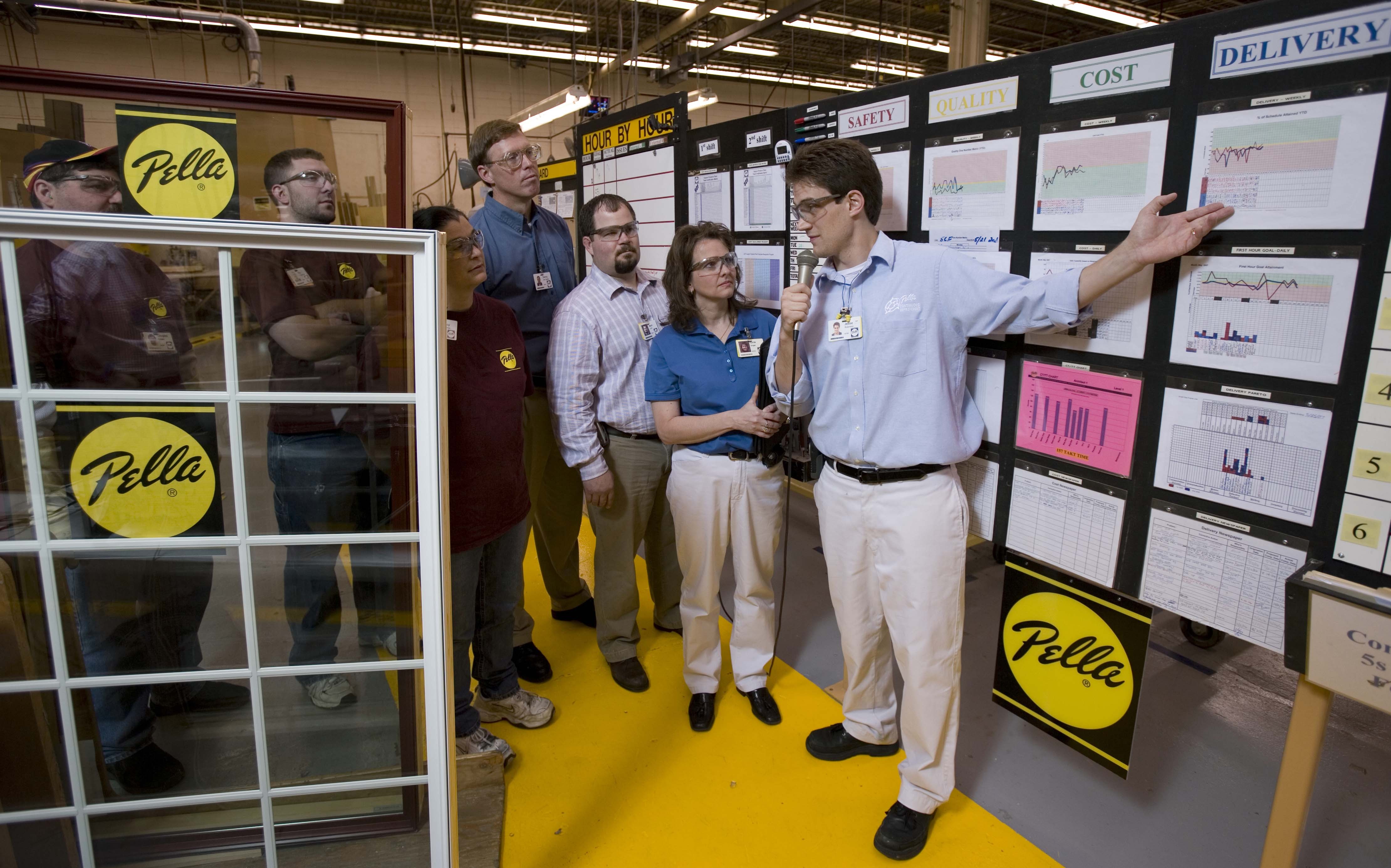
Metal building manufacturers and all companies who supply products to them can benefit from posting metrics on display boards in each department to instill accountability and ownership for daily decisions and influence cross-functional cooperation.
An Inherently Lean Industry
Lean manufacturing principles are foundational to metal building production and have allowed the industry to gain substantial ground in the low-rise, non-residential market. Consider these findings:
- Metal buildings generate about 6% in scrap material—and even that is typically reused or recycled. The materials are fully recyclable, multi-recyclable, generate a very low carbon footprint and the waste steel accumulated during fabrication is generally recycled.
- Metal building manufacturers who embrace lean concepts are able to deliver high-quality, custom-designed and manufactured products at competitive prices and with superior lead times that can improve profit margins. Metal building design and construction processes are more efficient than conventional construction— by some 25%.
- Job-site waste is minimal because the primary building components are manufactured in a quality-controlled factory setting, so all parts come to the site at the exact size needed.
However, lean manufacturing and lean management are two very different elements of the greater metal building story.
Lean Management Concepts Lead to Hefty Savings
Manufacturers of metal building systems continue to benefit by building their manufacturing policies and procedures on a lean management framework. Eliminating waste—the non-value-added components in any process—is foundational to their business activities. Most understand that, unless a management process has gone through lean principle analyses multiple times, it contains some element of waste. When done correctly, lean management activities can create huge improvements in efficiency, cycle time, productivity, inventory management, material cost management and scrap reduction—all leading to lower costs and improved competitiveness. And, lean management principles can enhance how a team works together—and how well that team ultimately works with customers.
Leaders in lean manufacturing at TBM Consulting Group Inc., Morrisville, N.C., founded in 1991, have assisted in optimizing industrial processes, including those in the metal building system arena. TBM has led improvement engagements to optimize systems and add value at companies that have had no exposure to lean principles, as well as those in inherently lean industries.
“Traditional command-and-control management systems often fail to sustain improvement initiatives,” says Bob Brennan, managing director–private equity practice at TBM. “This is evidenced by how frequent changes, no matter how brilliant, at most organizations fall back to the prior state. In contrast, a daily management system based on transparency, communication, frequent management reviews and responsive countermeasures, sustains changes and performance gains, which can take the business to the next level.”
Brennan cites the case of one metal building company that employed lean principles to achieve a 78% improvement in engineering lead time. This was accomplished by implementing a new process to better manage projects and hold all areas accountable throughout design review and fabrication. “They broke up engineering assignments into small, medium and large project cells, so they offered different lead times,” Brennan says. “But mostly they started one building and finished it before moving to the next one. This allowed blueprints to go to the shop floor with all of the information needed.” Reducing rework and back-tracking proved effective in keeping schedules—and costs—on target.
Brennan also recommends the use of SQDC boards that keep staff focused on Safety, Quality, Delivery and Cost metrics. He recalls a case in which TBM helped the Carlisle Companies to implement a consistent operating method across all of its factories. “When companies display performance metrics in each work area those metrics displayed on the boards align with the overall business and corporate goals,” he says. “During daily facility walkthroughs, plant managers review performance in each department and work cell, noting areas that require action. The system instilled accountability and ownership for daily decisions and forced crossfunctional cooperation.”
One metal building company, according to Brennan, had difficulty completing request for qualifications documents by the typically unbendable submission dates. “By working with the engineering cells and through implementation of SQDC metrics, we were able to help them cut lead times in half and achieve delivery deadlines,” he says.
Brennan further explains that one of the most challenging issues they’ve faced with metal building manufacturing firm clients has been the long-term institutionalization of bad habits. “For one firm this was clear in their manufacturing consolidation process,” he says. “They spent many labor hours looking for, finding and in some cases, remaking components. When it came to shipment day, they often missed the deadline because they could not find all of the components. When they went to a one building configuration, they consolidated activities and became more productive. They were ultimately able to start a building on Monday and put it on trucks or rail by the end of the week. It was a big move forward.”
Building a Better Business
Metal building system manufacturers—and the firms who supply them with everything from paint to bolts—can benefit from exploring their internal processes. By implementing lean principles, companies can find a ladder to take them up the rungs of continuous improvement and make a difference for their firms’ future.
Tony Bouquot is the general manager of the Metal Building Manufacturers Association (MBMA). To learn more, go to www.mbma.com.