In the world of metal construction, the stakes for quality and performance are higher than ever. Whether it is long-span architectural panels, high-visibility building facades, or precision-engineered roof systems, panel flatness, structural integrity, and aesthetics all depend on one critical phase of production: proper leveling and cut-to-length (CTL) processing.
Why panel flatness matters
Consider a large architectural wall panel stretching 12.2 m (40 ft) across a building façade or a roof panel exposed to high wind and thermal movement. Suppose the material arrives with coil-set, oil canning/center buckle, crossbow, or edge-wave defects. In that case, the result can be more than just an aesthetic flaw: unlevel panels can lead to poor panel fit-up, water intrusion, accelerated fastener fatigue, and compromised
structural performance.
Modern levelers on CTL lines are designed to eliminate coil set, oil canning/center buckle, crossbow, and edge wave, delivering blanks with outstanding flatness and dimensional accuracy. What happens during leveling directly impacts the downstream production throughput, construction quality, turnaround time, and warranty risk.
When providing rollforming equipment for metal building systems, whether for roofing, wall panels, trim, or purlins, the upstream condition of material is a foundational consideration. If the incoming flat sheet is out of spec, even the most advanced rollformer cannot fully compensate. That’s where advanced leveling and CTL technology become a strategic advantage.
What happens in a leveler + CTL line?
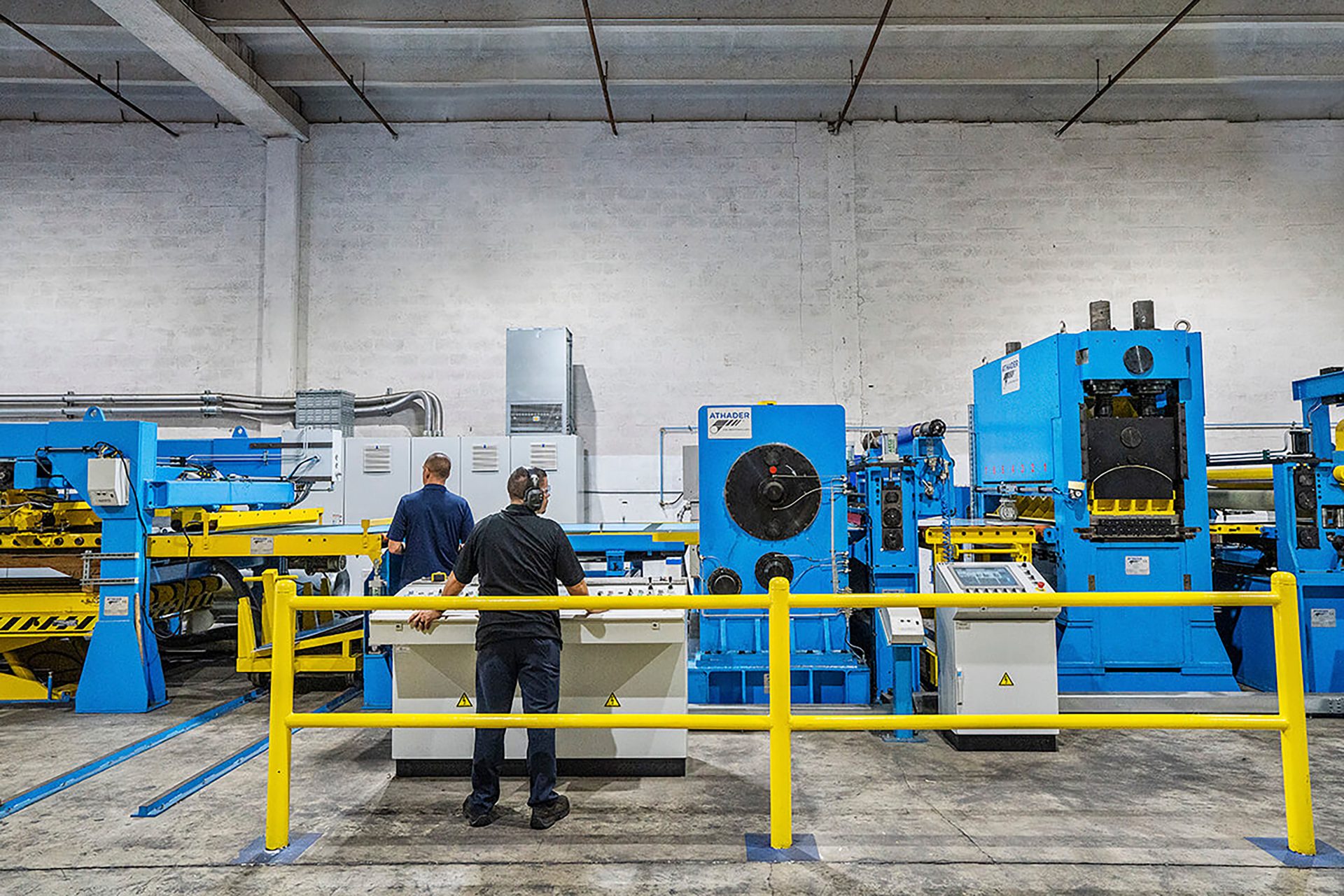
A typical leveling and CTL line begins with the uncoiler, proceeds through a leveler, then a shear to cut the sheet to length, followed by stacking and packaging. At the heart of this process lies the leveler:
- Roller levelers (4-high, 5-high, or 6-high) flatten material, including ultra high-strength steel (UHSS) and advanced high-strength steel (AHSS), by repeatedly bending it in alternate directions and stretching material to eliminate shape deformation and equalize stress.
- Stretch levelers apply tension in the lineal lengths to remove residual stresses and deliver flat sheets even in
high-tensile steels. - After leveling, the shear cuts the sheet to the specified length with precision, often 0.5 mm (0.02 in.) or better.
- The stacker organizes the cut sheets so downstream processes (rollforming, punching, and shipping) handle clean, flat product.
High-precision levelers are the core to CTL lines, and flatness is a fundamental aspect of the final product.
Connecting this to the mission
Investing in high-flatness blanks enables rollformers to consistently achieve tight tolerances, minimize waste, and reduce downstream frustration when panels stack, interlock, or line up on-site.
For example, when a panel rollformer receives coil blanks that are already flat and free from memory, the formed panel is less likely to warp, panel cover widths stay true, and assemblies align cleanly with architectural or structural requirements. That improves on-site fit-up, simplifies installation, and delivers a better result, both functionally and visually.
Key benefits of advanced leveling for metal construction
Structural performance
Flat panels reduce stress concentration, ensure uniform fastening engagement, and support wind/uplift loads as specified.
Aesthetic quality
On long-span panels, especially, visible waviness or deviation in flatness becomes noticeable. A properly leveled blank avoids aesthetic defects.
Formability and yield
When material is flat, rollforming is more efficient, with less scrap, fewer misfeeds, and smoother transitions through
the tooling.
Installation efficiency
Builders and erectors receive panels that stack properly, engage seamlessly, and integrate with trim and accessories as intended. Fewer adjustments mean faster build-out.
Warranty and longevity
Panels manufactured from flat, dimensionally accurate blanks are less likely to experience installation-related issues, thereby reducing long-term service risk.
Real-world technology in action
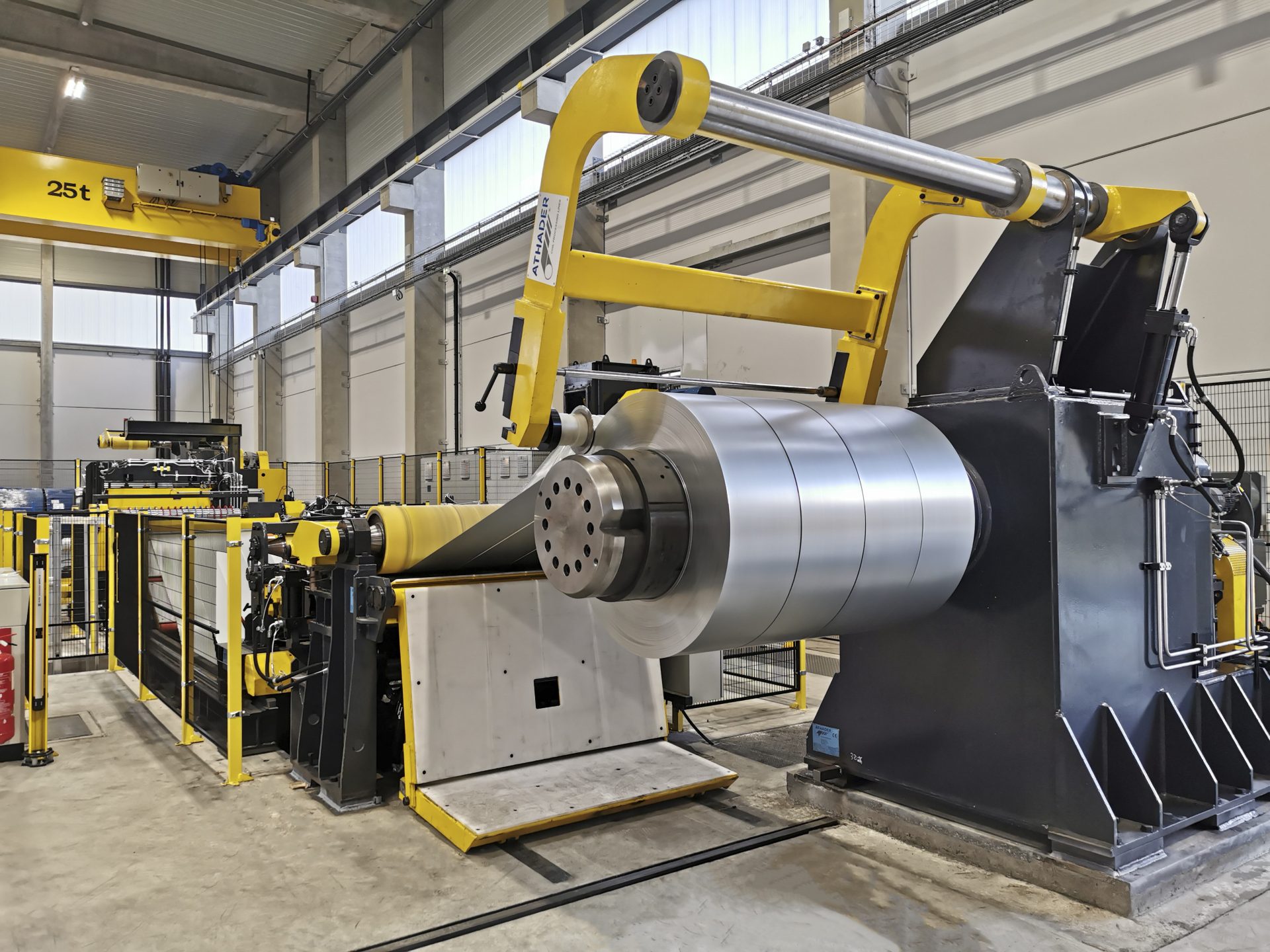
Modern cut-to-length (CTL) and leveling systems are engineered to meet the demanding precision and flexibility requirements of today’s construction materials. Heavy-gauge CTL lines can process material up to 25.4 mm (1 in.) thick while utilizing stretch leveling technology to eliminate internal stresses. This ensures panels maintain exceptional flatness and stability, making them ideal for use in heavy structural and architectural applications.
Advanced leveling systems are designed to remove the inherent stresses and “memory” within metal, ensuring panels remain consistently flat and stable. This level of precision yields material that meets the stringent requirements of laser cutting, fabrication, and high-end architectural applications, where surface quality and accuracy are paramount.
This matters to metal building manufacturers who supply long-span panels or architectural wall systems. The flatter the panel, the more predictable the performance—and the fewer surprises
at install.
Why this matters to customers
Customers such as rollformer operations and trim shops depend on equipment that can handle a range of tasks, from panel lines to trim shops and down to gutters and accessories. When the upstream material is optimized, several operational benefits follow:
- Improved throughput: Flat blanks reduce setup time and misfeeds on
the rollformer. - Better panel consistency: Repeatable cover widths and formed profiles promote quality.
- Reduced rework: Less warping, less fitting on-site, and fewer callbacks.
- Optimized production costs: Less scrap, better yield, and fewer stoppages lead to better ROI for equipment investment.
For example, one of our metal building customers recently attributed their improved sequence throughput and fewer installation surprises to the fact that their material supplier upgraded to a stretch-levelled CTL line. Because the blanks arrived flat, their rollformer ran parts more reliably, and the installed panels aligned better on the building site.
Future trends: What’s next in panel-leveling technology?
As demand grows for architectural roofing and wall systems, longer panels, more demanding aesthetics, and
higher-performance coatings, the technology behind leveling and CTL lines continues to evolve. Some trends worth tracking:
- Higher-strength steels and ultra-high-strength materials: As yield strengths climb, flatness requirements tighten. Levelers must be able to yield higher-strength steels and handle more residual stress removal.
- Broader alloy use (e.g., aluminum, stainless, coated steel): Surface-critical materials require leveling that preserves coating, appearance, and tight tolerances.
- Integration of automation and real-time flatness monitoring: Sensors enable material condition feedback, reducing defects and enabling predictive adjustments in the leveler.
- Sustainability and material efficiency: Better flatness means less waste, fewer rejects, and more efficient material usage, aligning with sustainability goals.
- End-to-end system optimization: The leveling and CTL line are becoming a part of a larger ecosystem. Coil-handling, blanking, roll forming, finishing, shipping, and each link must deliver precision to meet the next.
Final thoughts
Failure to address material flatness early in the manufacturing chain can undermine even the best rollforming equipment, trim lines, and panel systems. To achieve exceptional panel quality, both the equipment and the incoming material must work together seamlessly. Consistent, well-prepared blanks are essential to producing panels that meet the highest standards of performance
and appearance.
By embracing advanced leveling and CTLtechnology, manufacturers raise the bar for panel quality, delivering superior structural performance, aesthetic appeal, installation efficiency, and long-term reliability. Ultimately, it is not just about cutting and forming metal; it is about pursuing panel perfection from coil to completion.
For those in the metal construction industry seeking a competitive edge, partnering with a company that understands and leverages material-conditioning technology, alongside equipment purpose-built for panel production, is the path forward.