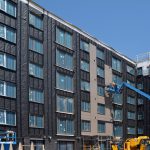
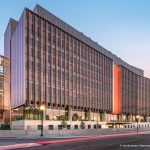
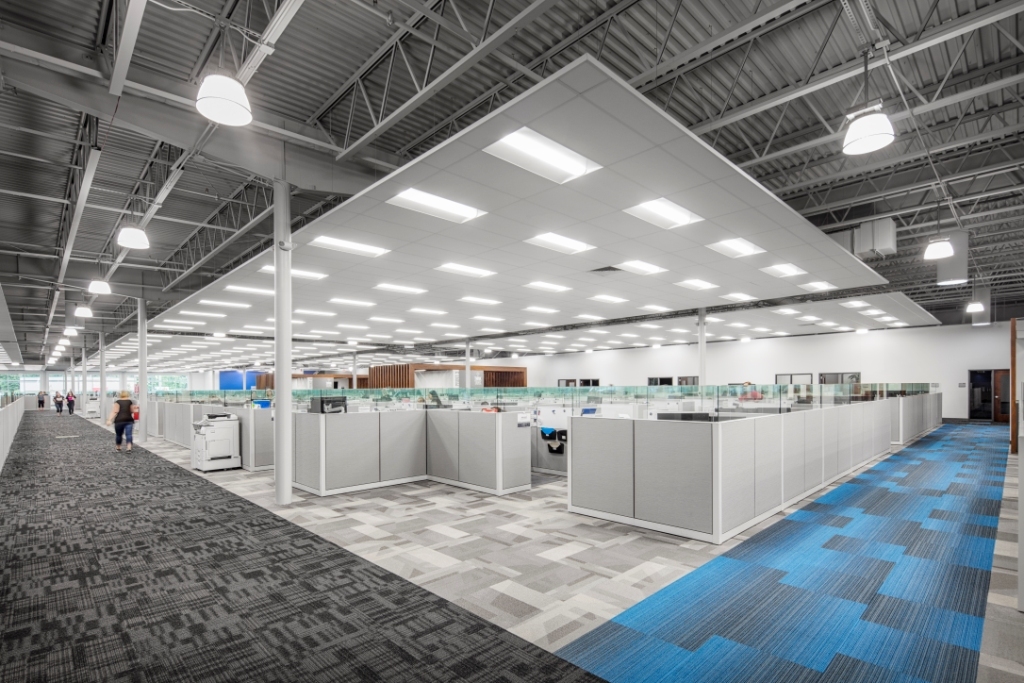
Calendars, key chains and pens are just some of the promotional products and employee recognition gifts that Sterling, Ill.-based HALO Branded Solutions has sold in its 66 years. In 2018, the company moved to a state-of-the-art headquarters in Sterling, Ill. This 157,500-square-foot facility is a metal building structural system and can house its 580-person headquarters team with room to expand to over 900 people.
HALO Branded Solutions’ new HQ is a complete turnkey project

Photos: AJ Brown Imaging
The new building has a 90,000-square-foot warehouse replacing two HALO warehouses. Situated on a 20-acre site, it is Phase I of what will eventually be a 430,000-square-foot facility. The 275,000-square-foot phase 2 will start this summer and finish by the end of 2019. Winter Construction Inc., Freeport, Ill., was the design builder, along with its in-house architect, Winter Design Inc., and Professional Steel Services, Machesney Park, Ill., was the installer.
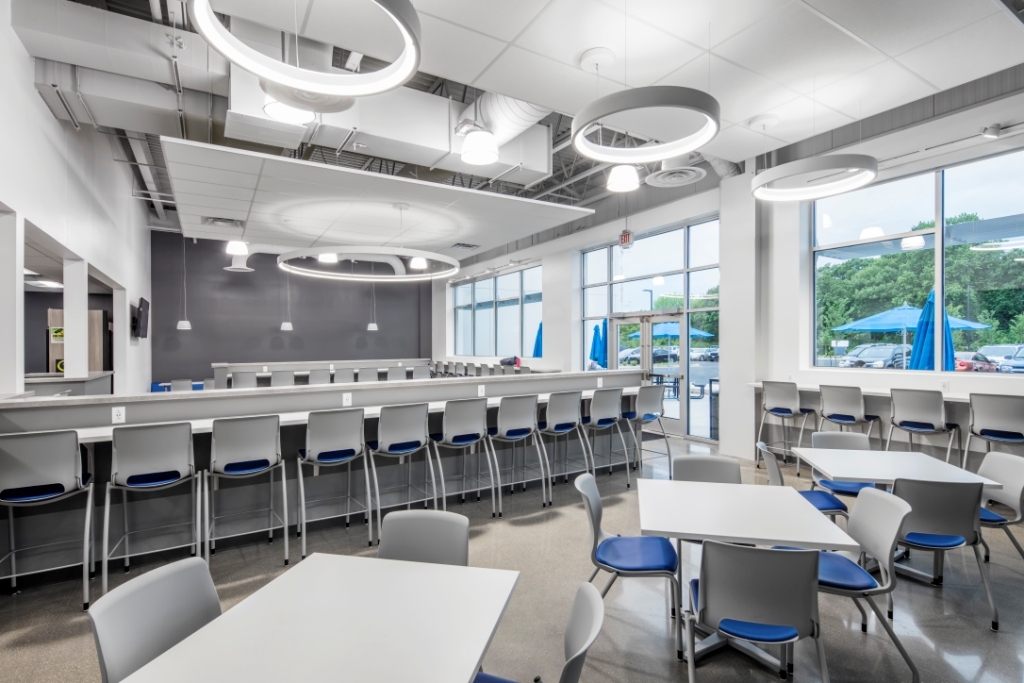
According to Marc Simon, HALO CEO, “This building was designed both for our valued employees of today, and for the employees we will be drawing to HALO for years to come. We have collaborative meeting space, a wellness room, additional training space, and the latest technology throughout the building to allow our support team to do the best job possible for our highly valued account executives and clients. We received excellent ideas from nearly every employee and incorporated many of those ideas into the building design. Our goals were to make this the most comfortable work environment possible while providing flexibility for substantial future growth. We have achieved these goals.”
Clear Spans, Cladding, Components
Metal was used in the HQ’s structure to optimize clear spans and for its ease of construction. Three-inch insulated metal wall panels (IMPs) that are Light Mesa Embossed in Charcoal Gray and Polar White from Metl-Span, Lewisville, Texas, clad the entire exterior. They were used to meet energy codes and regulatory design standards for architectural siding.
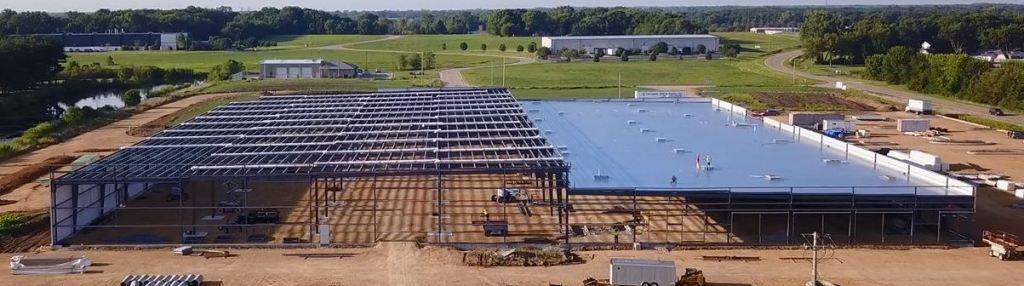
The building’s office section is conventional construction. Star Building Systems, Oklahoma City, provided the metal building system including long-bay truss-purlins and Double Lok standing seam metal roofing in Snow White that covers the 90,000-square-foot warehouse portion of the building. White aluminum composite material (ACM) panels with a 4-mm, non-fire-resistant, polyethylene core from Reynobond by Arconic Architectural Products LLC, Eastman, Ga., and wood-grained extruded aluminum siding from Longboard Products, Langley, British Columbia, Canada, create iconic cantilevered L-shaped entrance enclosures.
Kawneer Co. Inc., Norcross, Ga., supplied its Trifab 451T anodized aluminum for the storefront with Versoleil Sunshades. Three large skylights from Wells, Maine-based Wasco Products, part of Velux Commercial, illuminate a common recreation area, and 27 solartubes from Solatube International, Vista, Calif., scatter natural light across the entire open office. This daylighting reduces lighting energy usage and provides enhanced user comfort. Motorized roller blinds and perimeter fixture dimming automate the system for fine-tuned comfort.
A Complete Turnkey Project
Winter Construction’s design-build team, architects from Winter Design along with local engineering consultants, provided a complete turnkey project, starting with site development and zoning work, through construction and occupancy.
“The project’s size required us to aggregate multiple parcels within the business park and to vacate a public roadway, causing extensive work and coordination with public and private utilities,” says Scott Winter, vice president of design-build services at Winter Construction. “We also engaged our pre-engineered building manufacturer, Star Building Systems, early on in the design process, allowing us to push forward a progressive design while maintaining economy. Being able to direct all facets of the project allowed us to fast-track its development and construction. We provided the owner a timeline for decision making, pushing non-critical decisions like finishes until after the project start. We also worked closely with the HALO marketing/branding team as they developed the iconic interior graphics and wall art.”
This project utilizes both metal building and conventional building systems seamlessly. “From the metal building system side, it has rigid main frames with 50-plus-feet interior column spacing, fiberglass cavity roof insulation system, standing seam metal roofing and exterior gutters,” says Dan Smith, district sales manager, Star Building Systems, Oklahoma City. “From the typical conventional side, it has 40-foot foot-long bay purlins (similar to bar joists), steel roof decking with rigid insulation and membrane roofing, interior drains and rooftop heat/cool units. The roof slope is hidden by parapets and the walls are smooth with IMPs. Large windows, sunshades and composite metal panels add more interest that complements the base materials.”
The construction schedule proved to be a challenge. “We had to have the 67,500-square-foot office building and the 90,000-square-foot warehouse enclosed within two months,” says Bill Johnson, president, Professional Steel Services.
“This required considerable coordination with the design-build team and other installers. Also, installing 30-foot-tall IMPs and panels with numerous window openings in the office toward the end of the Midwest construction season where we faced rain, wind and snow [was a challenge].” The condensed timeline was to get the building enclosed before the winter season and to keep the schedule to allow them to occupy in 12 months from start to finish.
Winter explains that with any high-complexity, steel structural and cladding system, managing lead times is also a challenge. “Working with trusted installing contractors and providing constant communication between suppliers and the field enabled us to fluidly adjust to ever-changing delivery dates and shipping issues.”
Johnson says the building was unique in that it used a pre-engineered building system for both the taller, large-span warehouse structure with a standing seam roof, while the smaller, more traditional office building used a flat membrane roof. “Integrating the warehouse and office structures of different heights into a single building required unique detailing,” Winter says. “A lot of conventional construction [the office building] was blending into the pre-engineered structure [the warehouse], which required many flashing details and carefully thought-out transitions.”
HALO Branded Solutions, Sterling, Ill.
- Design-builder :
- Winter Construction Inc., Freeport, Ill.
www.winterconstruction.com - Architect :
- Winter Design Inc., Freeport
www.winterdesigninc.com - Installer:
- Professional Steel Services, Machesney Park, Ill.
(815) 633-1719 - Insulated metal panels:
- Metl-Span, Lewisville, Texas
www.metlspan.com - Metal building system:
- Star Building Systems, Oklahoma City
www.starbuildings.com - Metal wall panels:
- Reynobond by ArconicArchitectural Products LLC,Eastman, Ga.
www.reynobond.com - Metal wall panels:
- Longboard Products, Langley, British Columbia, Canada
www.longboardfacades.com - Skylights:
- Wasco Products, part of VeluxCommercial, Wells, Maine
www.wascoskylights.com - Skylights:
- Solatube International Inc.,Vista, Calif.
www.solatube.com - Storefront:
- Kawneer Co. Inc.,Norcross, Ga.
www.kawneer.com