Requirements for federal government construction projects that include metal building materials can be more stringent than other projects. Moreover, requirements, for both construction and labor, change over time. Contractors that understand and meet those requirements, and follow the proper process for bidding on them, win contracts, profit and grow their businesses.
Carefully following requirements can lead to business growth
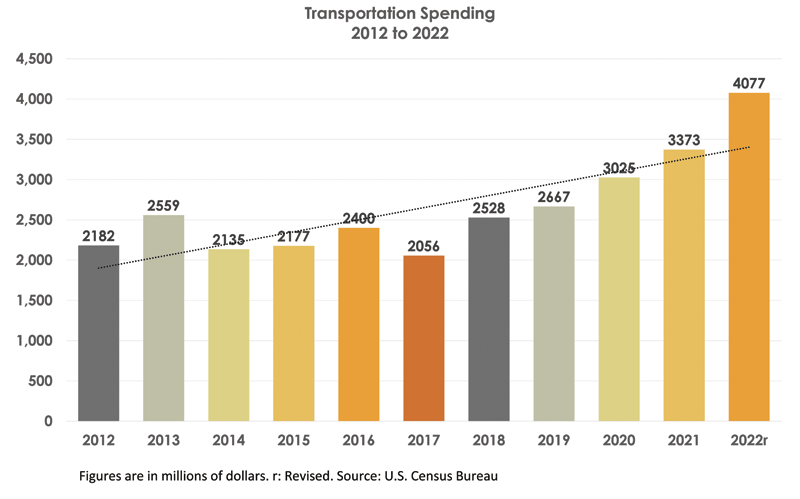
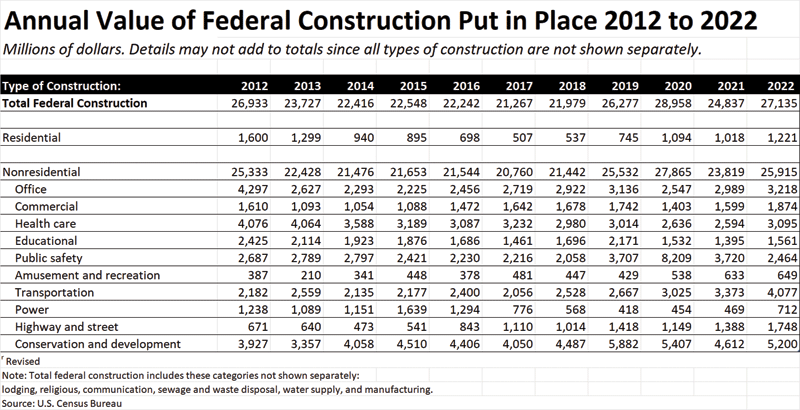
From 2012 ($2.2 billion) to 2022 ($4.1 billion), annual spending in transportation construction for the federal government expanded 86.8%. [Figure 3]
New York City-based Turner Construction Co., founded in 1902, has been completing federal government projects ever since then. During the last 20-plus years, Jerry Crawford, vice president and general manager, federal services, at Turner Construction, has worked on completing building construction projects for the federal government. In the past three years, Crawford has overseen Turner’s federal government projects across the U.S.
Enhanced Reporting Requirements
In terms of reporting requirements, federal government contracts can be a step above other types of contracts, Crawford says. “I would just say in general the reporting requirements across the federal projects are typically enhanced,” he says. “We understand these reporting requirements very well and we make sure we follow them.”
Scheduling, management, change orders and other aspects of projects are required to be reported during federal projects in specific ways to various agencies. “Those reporting requirements are probably the biggest difference in federal and private sector projects,” Crawford says.
It’s not a given that private sector projects have fewer requirements than federal government projects, but some do, Crawford says. “It depends on exactly what’s required per our contract. We know on federal projects the requirements are clearly spelled out and what would be required for changes. Some of our private projects might require the same level of reporting; some might require less.”
Business Requirements Differ
Relative to specific project requirements, there can be differences between building construction projects for the federal government and private sector. For example, federal government projects may require participation of small businesses, Crawford says.
Similar to federal projects, contracts for private sector projects may include requirements for using small businesses. Additionally, they also may have requirements for local, minority- and women-owned businesses.
“On most projects, we have requirements in our contracts to use a certain percentage of small businesses, meaning subcontractors and/or vendors that are considered small by the federal government,” Crawford says. “[What] is different is that some private sector projects require local, small, and/or minority and women-owned businesses.”
Shifting Requirements
Another requirement to consider is union versus non-union labor, which can shift depending on which political party is in power. Crawford says, “Every administration does things a little differently. In other words, changes come, our team adapts to them and we keep building.”
At times, new requirements come into play for federal government contracts. For instance, Turner Construction, like all companies working on federal projects, had to meet vaccination requirements for workers as a consequence of the COVID pandemic.
“Early in the COVID-19 pandemic, there were some federal projects that included the vaccination requirements,” Crawford says. “However, as those conditions changed, those requirements lessened. Changes that we’ve seen with the current administration have not affected our ongoing work. As they affect our work, our project teams and dedicated federal group will adapt.”
Safety and Quality Control
With respect to many aspects of projects including safety protocols and quality control, there aren’t any significant differences between how Turner Construction completes projects for the federal government or private sector.
“For us, the safety requirements align with our standard Turner program,” Crawford says. “So, it’s pretty seamless in our projects. We take the same approach to safety, whether it’s a federal project or private sector project.”
The same is true of quality control processes and requirements, Crawford says. “This is our standard way of doing business and, because we’ve been doing it so long, it’s just ingrained in our culture with our federal project dedicated teams. You could say that we specialize in federal government projects; our teams have a vast experience in building these projects. We know that the federal projects require robust safety and quality control requirements. And these requirements frankly align with Turner’s standard programs.”
Watching Budgets and Reading Contracts
In terms of assessing which projects to focus resources bidding on, Crawford says following and reading budgets is key.
“We track the government budgets very closely to know which projects are in the pipeline and which ones will come to fruition sooner than others,” he says. “We track when budgets get approved, which projects get funded, whatever gets passed or doesn’t get passed, and we know, therefore, when construction would begin.”
Crawford says perhaps the single best piece of advice he would give someone bidding on federal government projects would be to thoroughly read and comprehend the contracts. “It’s really reading, rereading and rereading,” he says.
Turner Construction’s efforts in the federal construction sector have resulted in growth in its business.
“In 2022, as many private sector clients and developers were evaluating their needs for new or renovated commercial office spaces, our work in the federal government office building market increased approximately 5%,” Crawford says.
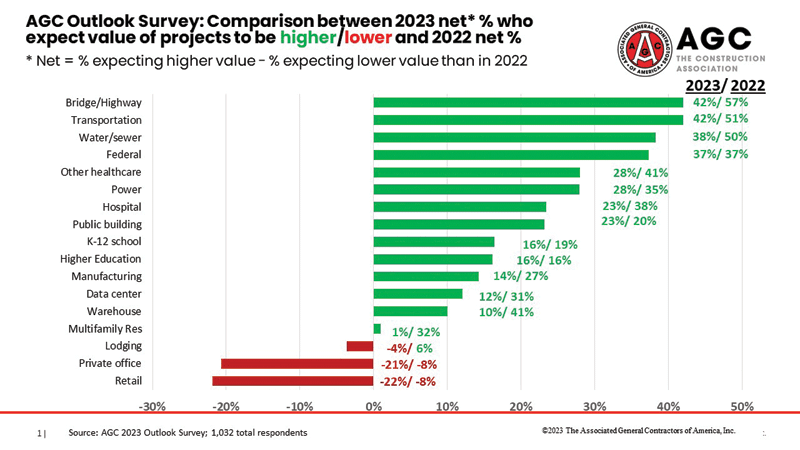
More than 1/3 of respondents to Associated General Contractors of America’s U.S. Construction Outlook survey anticipate federal construction projects to grow in 2023. [Figure 1] (Image courtesy of AGC)
[Figure 2]
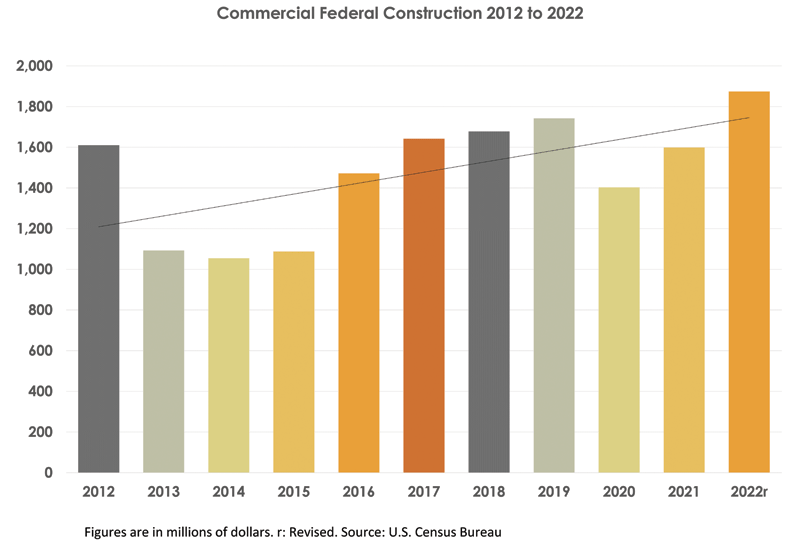
Spending on federal government commercial construction was $1.8 billion in 2022, a 16.4% rise since 2012 when it was $1.6 billion. [Figure 4]