Rollformed panels are an attractive option for many designers and builders due to their versatility, cost efficiency and range of design options. At Kovach, we have been handling this product for over 50 years and have completed many rollformed metal panel projects in that time. Below are some of the frequently asked questions we receive from our clients on rollformed metal panels.
Versatile, cost efficient and a range of design options

How are Rollformed Panels Made?
Rollformed panels start their life in large coils and can vary in size from 6 inches to 48 inches wide. Steel and aluminum products must be painted prior to being formed. The sheet metal is sent through a continuous coil coating paint line, which applies primers, base coat and top coat. The metal is recoiled at the end of the line and sent off for fabrication.
Rollformed metal panels can be shaped in either shop-like conditions, or, with special equipment, they can be formed in field conditions. The metal is de-coiled and flattened before sending through the rollformer. By passing through a series of rollers, the panels gradually take shape to the determined profile. An added benefit of the rollforming process is that panels achieve almost perfect profile consistency which reduces quality control concerns.
What Are the Profile and Metal Options?
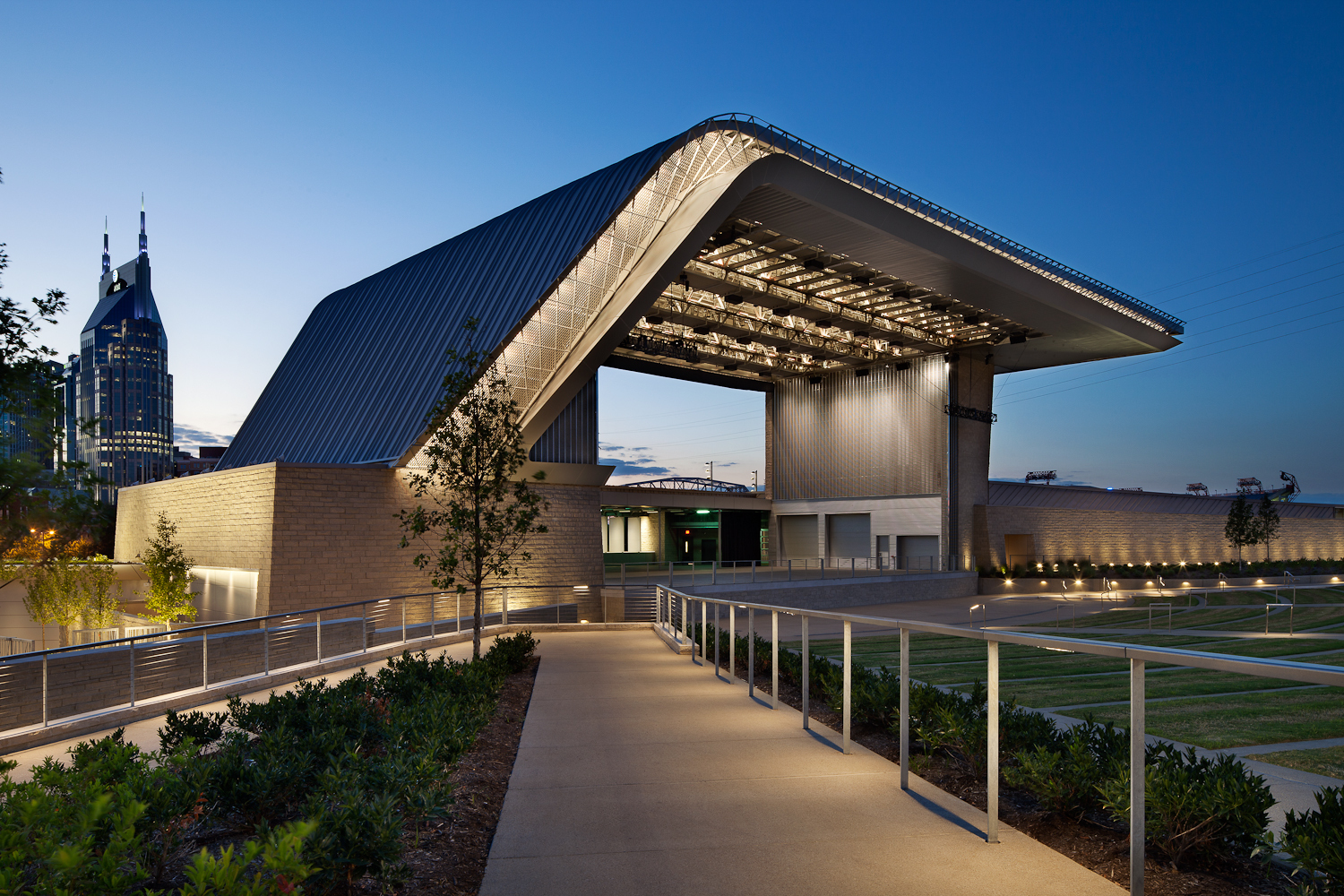
There are many standard profiles to choose from. Mills can typically support metal gauges ranging from 0.010-inch to 0.250-inch thick. Bend radii are mostly determined by the ductility of the metal. Custom profiles are also available but carry additional setup costs and may require unique machinery. A benefit to selecting standard profiles is that performance testing has already been completed by the manufacturer. If the project moves forward with a custom profile additional testing may need to be performed. Additionally, attachment systems for custom profiles may need to be engineered, whereas this is not a concern for standard panel options.
Rollformed panels have options for both exposed and concealed fasteners and can come in perforated material. In most cases rollformed panels come in painted steel and aluminum, however other metals such as copper, zinc, cold-rolled, hot-rolled, galvanized and stainless steel are also available on the market.
What Are the Max Dimensions?
One of the main advantages of rollformed metal panels are the spans they can achieve. Long panel lengths make installation simple and efficient. Rollformed metal panels can come in widths of 6 inches to 36 inches, and up to 40 feet in length. However, depending on profiles, gauge and material selection, there may be limitations on max dimensions. Consult with suppliers and installers on max panel length for desired profiles and metal type prior to making final decisions.
What Are Some Other Major Benefits?
In addition to their ability to span long lengths, they offer tighter bend tolerances than some other forming methods, which is great for high-volume projects with repeating patterns. Rollformed metal panels have a wide range of design options, are cost effective, and can be easily replaced if damage occurs long after installation.
Summary
Rollformed metal panels are a great option when long profile runs, and repeated design is desired. Their cost and install efficiency can make them a great solution when facing budget and schedule constraints but a durable, long-lasting product is still in need. With plentiful options on metal types, profiles and limitless color selection these panels can fit a variety of projects and applications.
Brian Davis is director of sales operations at Kovach, Chandler, Ariz. To learn more, visit www.kovach.net or call (480) 329-7885.