Achieving greater sustainability and energy efficiency on construction projects means architects and designers must do their due diligence. As they put pen to paper, they know they must meet the escalating requirements set forth by building codes across the nation.
How do IMPs improve sustainability?
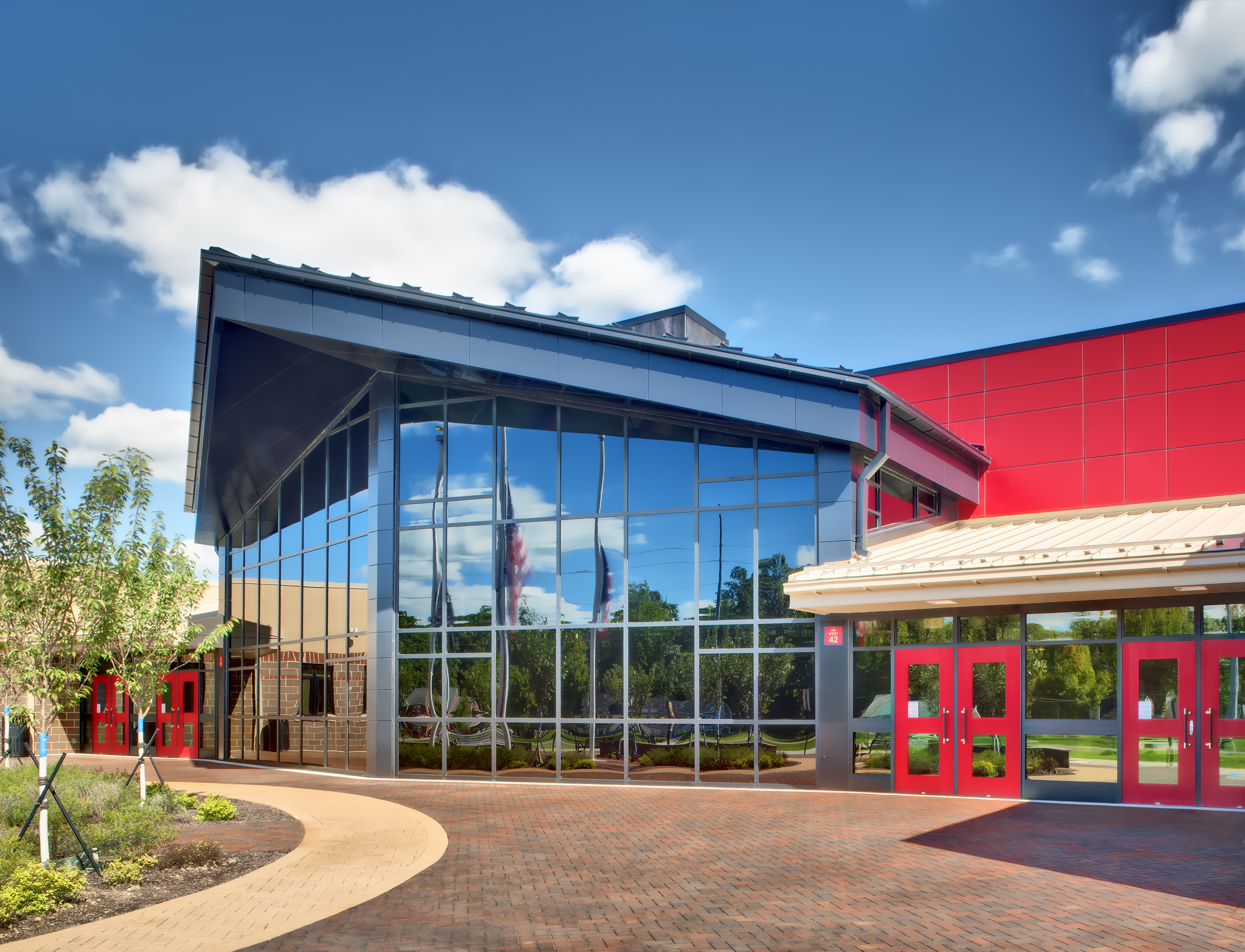
Insulated metal panels (IMPs) address stringent codes with a system that stands the test of time, provides superior continuous insulation and offer design flexibility.
The increased insulation and reduced air leakage presented by IMP assemblies can achieve significant energy savings—as high as 22% depending on the application. Regulating the four control layers—water, air, vapor and thermal—is critical to high performance and to delivering an efficient building with lower operating costs. The key: an all-in-one barrier system.
Going Green with IMPs
IMPs provide a single-solution cladding system that delivers cost savings with built-in higher R-values and energy savings. IMPs offer an airtight and watertight system; therefore, aggressive heating and cooling systems are not needed to maintain comfortable interior environments.
Heat island effect. Insulated metal roof panels coated in most standard color options for steep-sloped roofs meet or exceed the Solar Reflective Index requirements to claim one point for LEED certification.
Construction and demolition waste management. IMPs are a single-component solution for the building envelope, contributing to less job-site waste and a reduction in transportation emissions.
Building reuse. IMPs used in an existing building’s envelope can be disassembled, moved and reused for the envelope of a new project or renovation. This means less material waste and contributes to points for LEED certification for maintaining at least 55% of the surface area of existing structures.
Recycled content. Steel faces on IMPs have a post-consumer recycled content of 19.8% and a pre-consumer recycled content of 14.4%. The polyurethane core has a pre-consumer recycled content of 7.32%. These percentages can contribute one to three points for LEED certification.
Maximized energy performance. As an all-in-one system with optimal air and thermal performance, IMPs ensure the highest level of insulation to decrease energy consumption and improve building performance. IMPs contribute to higher energy efficiency of a building that complies with a 10% improvement compared to benchmark ratings, a requirement for LEED certification. In addition, when using insulated metal roofing panels, cool colors can further reduce heat gain and loss from the building to promote energy efficiency.
Water use reduction. IMPs integrated into a building’s rainwater harvesting system can contribute to LEED Certification points for implementing a strategy that uses 20% less water than the baseline. Innovation in design. IMPs allow designers to apply novel design ideas to buildings and improve building performance above requirements. Low-emitting materials. Sealants, adhesives, paints and coatings used with IMPs contain no VOCs and are free of hazardous air pollutants.
The Future of IMPs
Choosing IMPs for a building’s façade is a sound investment, delivering environmentally conscious materials, construction efficiencies, energy savings, longevity and more. As product development advances, more sustainable foam cores and steel faces are on the horizon to bring innovative green building envelope solutions to the market.
Joseph Calsada is business development manager at Metl-Span, Lewisville, Texas. To learn more, visit www.metlspan.com.