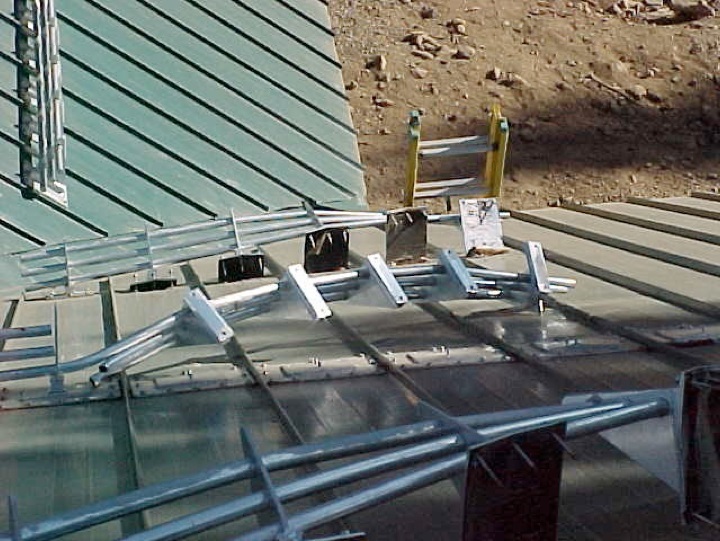
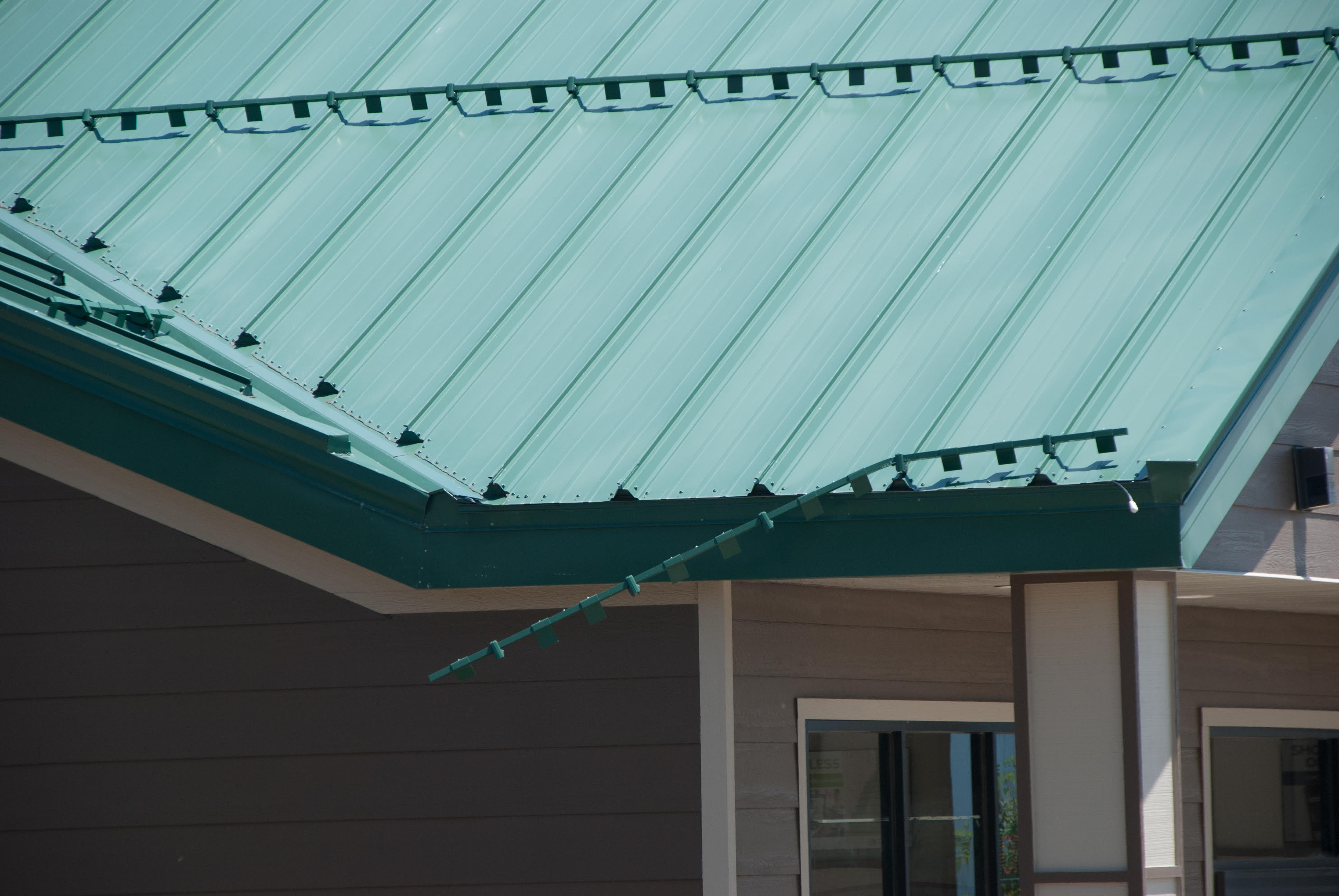
A plethora of non-penetrating seam clamp vendors have appeared in the market for the attachment of roof-mounted ancillaries to standing seam rooftops. The applications for such products vary widely but should be engineered because they transfer live loads into the roof sheathing and structure, and are life-safety related, i.e., snow retention, solar mounting and roof service walkways, to name a few.
Unqualified components devalue metal roof construction and are subject to failure
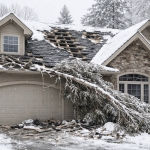
An example of what can happen when proper testing and site-specific engineering is not conducted.
While the responsible use of such devices compliments the roof—making our roofs much more user-friendly—the downside is the design and manufacture of metal roof attachments is completely unregulated. No codes or standards govern this practice. Many of these applications are not engineered for design-load conditions nor can they be because vendors have not conducted sufficient testing or provided quality assurances in production to enable the necessary testing and meaningful engineering.
If these devices are not properly tested and engineered for their specific application, their failure can cause death, injury, and property or roof damage. Creating a standard of practice would serve as a guide to vet these devices, to establish industry acceptance and also eventually lead to codification for the use of the same devices. It would, at minimum, insulate contractors from liability issues related to roof and other damage if published, available and followed.
Liability of Installing Non-Engineered Systems
The market is inundated with metal roof attachment systems, each claiming to be the first or best. Often by default, the contractor becomes the ultimate decision maker and may assume liability when it comes to the selection of underdesigned, untested systems. If the contractor believes the sales hype without vetting, the pitfall is this: Even if the product is installed according to the manufacturer’s instructions (but is underdesigned), it may fail, leaving the contractor holding a bagful of liability.
How Can a Contractor Properly Vet Systems/Products?
Manufacturer transparency is at the heart of vetting a rooftop attachment system. A vendor who lauds the capabilities of his system but fails to provide proof of those claims is blowing smoke. A contractor should scrutinize manufacturer qualifications and demand transparency to ensure a safe, engineered application and long-term service on every project. If the manufacturer has truly done his due diligence, he will be pleased you asked him to prove it.
Prove the Engineering Behind Products
Tensile Load Testing. To resist the forces applied to any system, we need to know at what point the attachment fails. Then we can calculate the required population and spacing of the attachment so it doesn’t fail. This requires an enormous amount of testing, and the panel-specific results should be published on the vendor’s website for your inspection. If not, it may not exist.
Long-Term Performance/Vendor Expertise. You cannot make a product perform better than its design. Has the vendor demonstrated sufficient expertise? How long the company has been in business is irrelevant. The question is, “How long has the system been in use?” Can the vendor substantiate his track record and prove service/durability with interactive load testing tables? Ask for evidence!
Warranties. Does the manufacturer offer a meaningful performance (not just material) warranty? Are you confident they will be in business for the long term to honor it if needed? Ask for it prior to purchase—and read the fine print!
Engineering Calculations. These must be provided by the vendor on a project-specific basis and should incorporate the tested strength of the device with an appropriate factor of safety applied. Insist calculations are provided. If you don’t feel qualified to review the calculations, have the vendor provide them stamped by a registered Professional Engineer.
Further Vetting Should Include:
• Use of chemically and mechanically certified materials. Ask for certifications.
• Testing by a third-party ISO 17025 accredited lab. Ask for lab reports specific to your roof profile and manufacturer.
• Following ASTM material standards. Require a letter of compliance.
• Utilizing certified manufacturing processes and third-party audits in an ISO 9001-15-compliant facility. Ask to see the current ISO Certificate.
• Check out the Metal Construction Association (MCA) technical reports, which provide industry consensus. At a minimum, ask your vendor to provide a written statement that their system fully complies with all MCA recommendations.
A lack of standards provides a free pass to unqualified rooftop components. The industry needs standards for the design, testing and manufacture of such products to aid users in product/vendor selection of them. Contractors need to understand the liability they take on without these standards and with products not thoroughly vetted.
Rob Haddock is CEO and founder of S-5! Metal Roof Innovations Ltd., Colorado Springs, Colo. For more information, visit www.s-5.com.