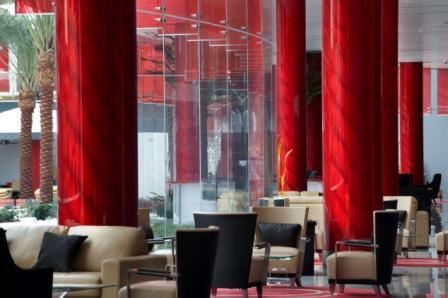
Column covers add aesthetic values and signature looks
Encasing drab structural columns in decorative metals is an increasingly popular design treatment for commercial centers, hotels, health care facilities, airports and other high-profile public places. The finished product adds an aesthetic value to the property and creates a signature look to the site.
Architects and interior designers have led the way in specifying attractive column covers as part of an overall design plan, and they typically decide on the shape, color, grain, finish and pattern. More recently, however, general contractors and installation tradespeople find they have the skills to specify and install column covers for new construction or building renovations, and offer this service to property and facility managers.
Materials and Tools
Tradespeople who have skills as iron and sheet metal workers, carpenters, architectural glazers or general construction workers can easily learn to apply column covers with basic tools, including a screw gun, drill, ladder and level.
 Most standard column covers are designed to wrap any existing structural column, including steel I-beams, wood or concrete. Standard column cover shapes are round, oval, square or racetrack. They are available in a range of metal thicknesses from 0.063-inch to 0.125-inch, and are 12 feet in height. Columns over 12 feet tall require stacking, in which the pre-formed column segments are stacked on top of each other with horizontal butt joints between the segments.
The most popular materials used to wrap columns are 0.09-inch aluminum or 18-gauge stainless steel. Both materials perform equally well for impact and dent resistance. The only differences are aesthetic appeal and weight, with aluminum being lighter.
Manufacturers typically deliver column covers pre-formed, pre-rolled and finished, ready to install with key slot attachments for direct mount to metal studs. Standard vertical and horizontal butt joints allow for a clean, precise installation, revealing only a hairline joint.
During the ordering phase, you or your client should review the design choices available and decide on the color, pattern and finish (polycoat gloss or polycoat satin). New fluoropolymer coatings are also now offered for superior durability in exterior applications. Before shipping, the column covers will generally be wrapped for protection, and securely packaged and crated for safe ground, air or ocean transport.
Ordering Column Materials
At the manufacturer’s website, you will be directed to a Column Covers Request for Quote form. On the form you will need to provide information, such as the minimum clearance dimensions around the existing column; the finished floor-to-ceiling heights; the desired column diameter; any reveal, base or capital options; and the choice of materials, shape, color, pattern and finish. Other options include insulation and sound-deadening materials. Depending on the column’s dimensions, a round column can be ordered in two, three or four sections with diameters ranging from 16 to 70 inches.
Oval columns are ordered in four sections with diameters from 24 to 90 inches; square columns in four or eight sections with diameters from 24 to 90 inches; and racetrack shapes in four sections with diameters from 18 to 81 inches.
Reputable manufacturers will include installation components made to your specifications, such as all attachment hardware, including brackets, angles, trims and clips; reference drawings; and, most importantly, customer service in the event complications arise in the field. Before delivery, the manufacturer should also supply an actual sample to verify color, pattern and finish.
Finished Appearance
Decisions on the column’s visual appearance should involve the client, designer or facility manager. The overall design theme of the site will need to be considered before a color, grain and pattern is chosen. There are nearly limitless options for a custom look. Some clients prefer subtle colors and patterns, while others want a vibrant, visually exciting finish. Other custom options may be offered by a manufacturer, including tapered shapes, custom colors, perforated effects, cap closures and more.
Tripp Sandford is executive vice president of Móz Designs, Oakland, Calif. To learn more, go to www.mozdesigns.com or call
(510) 632-0853.