Satisfactory workmanship begins with selecting the correct tool for the job
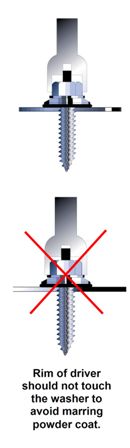
A contractor must have a selection of quality hex driver bits to reduce or eliminate problems when driving screws. A quality driver bit will fit hex head screws with no wobble, and will feature an adjustable magnet. Insert the fastener and tap the point of the screw to move the magnet and seat the washer face flush to the end of the driver bit. Lobular bits, driver bits used with convex bearing surfaces on the screw, drive-painted or powder-coated screws on the flats, thereby protecting the painted corners from chipping.
A quality driver bit may cost $4 and drive up to 10,000 screws before wearing out. Compare the performance with a big box store hex bit costing less than a dollar. Buy the premium bit; you won’t be disappointed. Don’t forget to clean the magnet of steel filings. This will ensure the screws seat into the driver with no wobble. A small piece of butyl tape or putty pressed into the recess of the bit will quickly remove any filings on the magnet.
 Fastener Facts
Regardless of the fastener being specified or left to the discretion of a reputable contractor, both parties should be aware of the following: North American manufacturers produce to internationally recognized standards and are available for consultation in case of unforeseen problems. Domestic products may be more costly, but they have the advantage of current standards being applied to production, to platings and to any enhanced coatings. Sealing washers are more likely to feature EPDM rubber for increased resistance to ultra-violet light.
Small-diameter fasteners used to install metal roofing to metal framing may include self-drilling, self-tapping screws, or the older self-tapping screws, which require pre-drilling a hole of the correct diameter to ensure the performance of the screw. Self-drilling, self-tapping screws, available in carbon steel wire or 410 stainless wire, are the most common choices. Also, 300 Series stainless screws are commonly available as self-tapping screws.
Self-drilling fasteners began appearing in the 1960s using carbon steel wire, having a self-drilling point and finished with 0.00015-inch electrozinc plating. Fifty years later, electro-zinc plating is still the most common finish applied to imported self-drilling screws. Mechanical zinc plating, a process whereby zinc powder is peened to the fastener and built up to a thickness of approximately 0.0010-inch is also available. Regardless of any minor advantages available with mechanical plating, the buildup of zinc arising from the tumbling and peening action looks like fish scales when viewed under a microscope. Complete coverage of the fastener requires an inordinately thick coating of zinc. Moisture can penetrate under the scales, allowing rust to form.
Advances in zinc plating technology adopted by North American manufacturers offer protection up to 1,000 hours in salt spray testing; no imported product can match this performance. Self-tapping screws were used to attach metal panels to metal framing for many years prior to the introduction of the self-drilling, self-tapping screw. One major advantage enjoyed by the self-tapping screws is that they are available made from 304 HT
(high-tensile) stainless wire. Stainless tapping screws cannot be heat treated, but are work hardened during the manufacturing process and will form threads in the framing structure. 304 HT stainless fasteners do not rust, but the piece cost is much greater than for carbon steel. Having to pre-drill holes in the sheet and structure further adds to the cost.
Use the Best Fastener
Regardless of preference for self-drilling or self-tapping fasteners, cost should never be the deciding factor. Use the best fastener available. If your choice is for a painted or powder-coated screw, inquire about the warranty on the color coating. If the colored panel has a 40-year warranty, shouldn’t the screw?
To conclude, two factors will guarantee callbacks to repair deficiencies. Drilling the panels will produce steel chips that will show as red rust flecks almost immediately. Sweep the roof clean of steel chips or filings.
The definition of screw refers to advancing by turning. Impact drivers hammer on the screw. If this your method of driving screws, buy a hammer! Today, all reputable producers void any warranty where impact drivers were used. Paint chips, unseen stress fractures, over-torqued heads; all can result from using impact drivers.
Dave Webster works in marketing at Leland Industries, Toronto. For more information, visit www.leland.ca or call (416) 291-5308.