

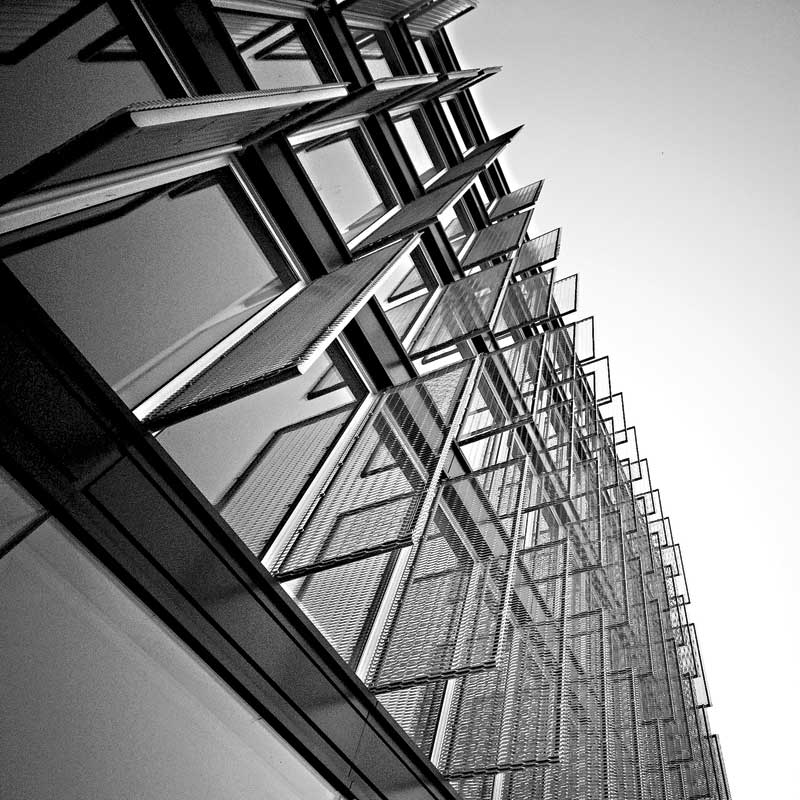
Expanded metal is an extremely versatile building material; it can achieve numerous and varied project goals. In terms of controlling daylighting, expanded metal can be used in many different ways to achieve a variety of results.
How it works
Expanded metal’s strands and openings determine how much light is blocked, lines of sight, and even aesthetics. By its very nature, expanded metal has a percentage of open area which can be modified to provide shading, ventilation, privacy, and security. Bigger openings let more light to pass through it, or even fluids, air and sound for that matter, but the pitch and width of the strands also affect not only illumination, but also direct and indirect views.
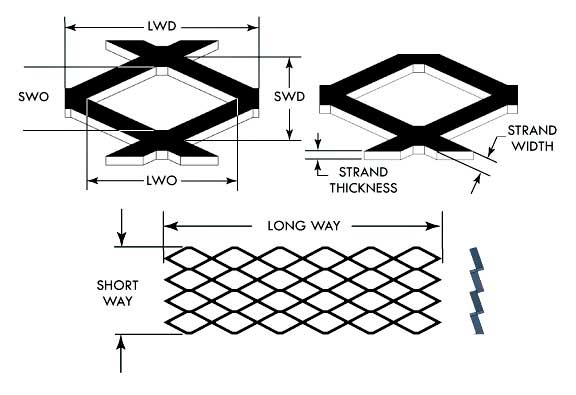
The greater the pitch and width, the less light passes with a more restricted line of sight, such as horizontal blinds. When the strands are flattened, a wide viewing angle with minimal shading is achieved, but this is dependent on the size of the openings. Large openings will always allow more light to pass, regardless of whether the strands are flattened or not. The size of the openings, and the pitch and width of the strands determine the amount of light that passes through it
Shading
Shading is the most common application to control sunlight using expanded metal. It can also reduce the ambient temperature.. As the sun reaches its zenith, sunlight that shining down is blocked by raised strands, providing maximum shading. As much as 85 percent of the daylight that would normally penetrate an uncovered window is blocked. This also affects lines of sight.

Specifically, expanded metal applications that provide shading include facades, sunshades, and window shutters. Expanded metals are an attractive and popular way to control daylight on facades as applications typically cover large sections of buildings. Commercial building facades will have larger strands and openings, usually 127 mm (5 in.) on the long way of the diamond (LWD), because the smaller sizes would not let enough light in and restrict outward views. Flattened expanded metal can be used, but it provides minimal shading, which is why it is mainly used for aesthetics.
Expanded metal sunshades can make shaded areas -12 C (10 F) to -6 C (20 F) cooler. Attractive and functional, expanded metal sunshades are an effective and aesthetic application to reduce solar heat gain and filter direct sunlight. Shades can cover entrances, loading docks, and eating areas in commercial buildings. They can even run the length of a building and be mounted above the windows on each floor. Interconnected buildings on a campus can have covered walkways. Bus shelters can provide shade for patrons, and restaurant patio covers can allow dining al fresco. Further, expanded metal panels can be formed into shapes, such as curves, to maximize shading and enhance aesthetics.
With respect to window shutters, although individual strands cannot be adjusted, multiple expanded metal panels can be linked in an accordion style to form shutters that can be opened or closed.
Light diffusion
Expanded metal’s open pattern allows light to pass through it, but also breaks it up and distributes it into smaller, uniform beams. Less light passes through raised strands, but more light is scattered. More direct light passes though flattened strands with almost no diffusion. In addition, expanded metal can also help to reduce glare, address heating concerns, and improve the overall quality of interior illumination.
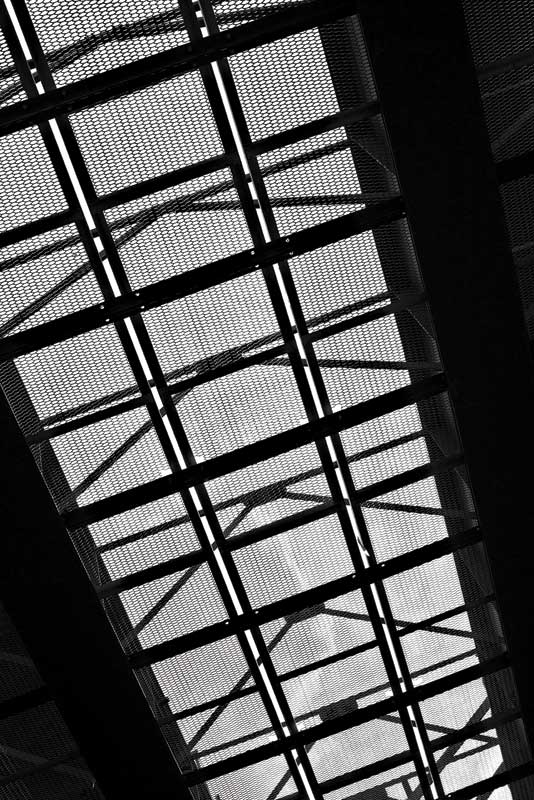
Expanded metal applications that diffuse light include ceiling panels, wall panels, and partitions. When used for ceiling panels, expanded metal softens light from overhead fixtures, creates a more evenly lit space, and reduces glare. The panels can also obfuscate conduit and HVAC ducts. For translucent ceilings, it is an aesthetic way to diffuse natural daylight. In addition, expanded metal panels can prevent access through a skylight, such as in a museum.
Relative to wall panels, expanded metal panels can be affixed to a backlit wall to soften the lighting to create a more inviting and comfortable indoor space. Freestanding partitions are a mobile solution when a permanent fixture is not an option. They can be placed in front of a window for instant shading or moved to an area to establish a private space. Smaller openings will also muffle sounds.
Reducing solar heat gain
Controlling daylight also reduces the amount of radiant heat that enters buildings. The reflectiveness of expanded metal can reduce solar heat gain; the sunlight and its heat are reflected, lowering the amount of heat absorbed by a building’s exterior, reducing its heat gain and requiring less energy to operate HVAC systems. The openings also allow air to circulate, which lowers the ambient temperature.
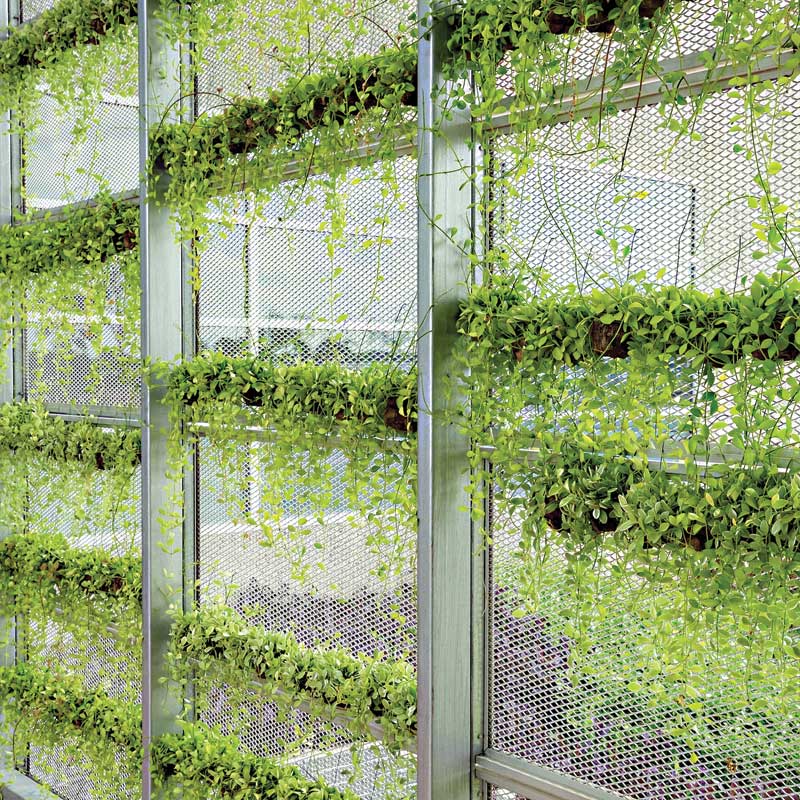
Agricultural applications of expanded metal are one example of a use that reduces solar heat gain. Similar to a greenhouse, a garden enclosure made with expanded metal protects plants and vegetables that are sensitive to extreme heat. Intense sunlight is diffused through the openings, radiant heat is reflected, air can circulate, and the plants can be watered. Also, animals cannot chew through it to reach the vegetables. Expanded metal is also wonderful for living walls and canopies. Climbing plants and vines weave themselves throughout the openings, resulting in a natural partition and green escape from the sun.
Manuel Menchaca is senior marketing manager at Wallner Expac Inc., based in Ontario, Calif. He can be reached at mmenchaca@expac.com.