Consider these four trending construction applications
Perforated metals have long been popular in construction for both their visual interest and functionality in hospitals, offices, schools, airports, transit centers, concert halls and beyond.
One of the primary reasons behind these advantages lies in the versatility of metal punching. Options include round holes, square holes, rectangles, triangles, slots and decorative patterns. Hole sizes range from a few thousandths of an inch in diameter to more than 3 inches. Material can be perforated to be as thin as foil or as thick as a 1-inch steel plate. Perforated metal panels can be used to cover, enclose, divide, decorate and ventilate space, while also adding a unique aesthetic element to any design and helping to create just the right environment. And these applications continue to grow as more architects and contractors grasp the possibilities of what perforated metals can do.
Based on current work and market observations of the Industrial Perforators Association (IPA) and its member companies, here are four key ways perforated metals are increasingly making a difference in construction applications.
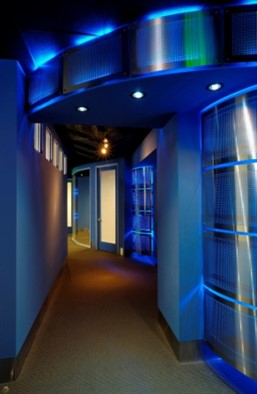 Improving indoor air quality
With the variety of hole shapes, sizes and patterns to suit different air-circulation needs, perforated metal is a great option to help aid in airflow. Because perforated metal has a smooth surface, the material also is easy to clean and does not allow bacteria and/or microbes to hold easily. Additionally, the material is lightweight, allowing for easier installation and maintenance, as well as being rust resistant and extremely durable.
Using sustainable materials
Perforated metal is an environmentally sound material choice, which is increasingly important in many construction projects. Perforated panels are often used to lessen the environmental impacts of HVAC systems by helping to better control airflow and reduce noise pollution from these systems.
Large, lightweight perforated panels can also contribute to efficiencies by protecting the system from mold and debris while optimizing energy performance, saving money over time. Additionally, perforated metals have a high level of recycled content, sometimes 100 percent. IPA members typically recycle all waste materials, and the finished product is fully recyclable after its architectural life cycle ends, which can help earn LEED credits and reduce the carbon footprint.
Supporting daylighting initiatives
Compared to many other building materials, perforated metals offer a more effective, efficient option for increasing and managing the daylight that reaches a building’s interior. Perforated metal is a popular choice in using natural light to enhance the ambiance of a room, as well as boost productivity and worker performance. Properly designed perforation can also help absorb and deflect heat from sunlight, another way perforated metals can improve the efficiency of an HVAC system. In addition, perforated panels can complement the aesthetics of a daylighting design in a fresh, new way that typical blinds or shades can’t.
Producing some peace and quiet
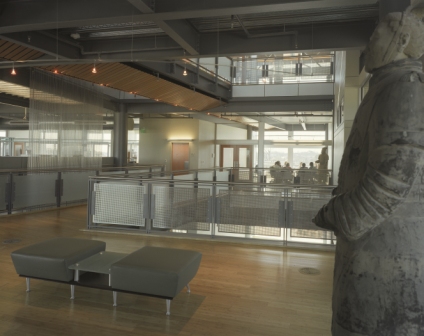
Perforated metal is ideal for reducing sound in today’s increasingly common open floor plans, while ensuring privacy and securing personal space. It can be designed to eliminate specific frequencies in sound-filtering systems, such as enclosures for HVAC systems. Beautiful, durable and highly effective, perforated metal is highly functional and built to last in acoustical uses for swimming pool areas, gyms, concert halls, offices and other public spaces. The material can be formed into complex designs, giving alternatives to typical room separators.
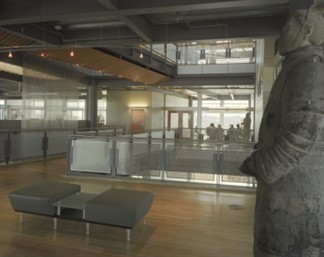
Perforated metal panels work well in a wide range of building features, including walls, floors, ceilings and stairways. In many cases, using these materials can also improve structural integrity without adding weight or material costs. This strength makes it suitable as a stand-alone component in several architectural designs such as sunscreens and panels.
Keith Zinn is president of Industrial Perforators Association, Milwaukee. For more information on the latest perforation uses, including how-to details on designing and specifying perforation materials for
your projects, visit www.iperf.org.