The Institute for Contemporary Art (ICA) at the Markel Center on the campus of the Richmond, Va.-based Virginia Commonwealth University (VCU) is known for its contemporary art.
Metal allows art’s fluid characteristics to be represented in museum’s design
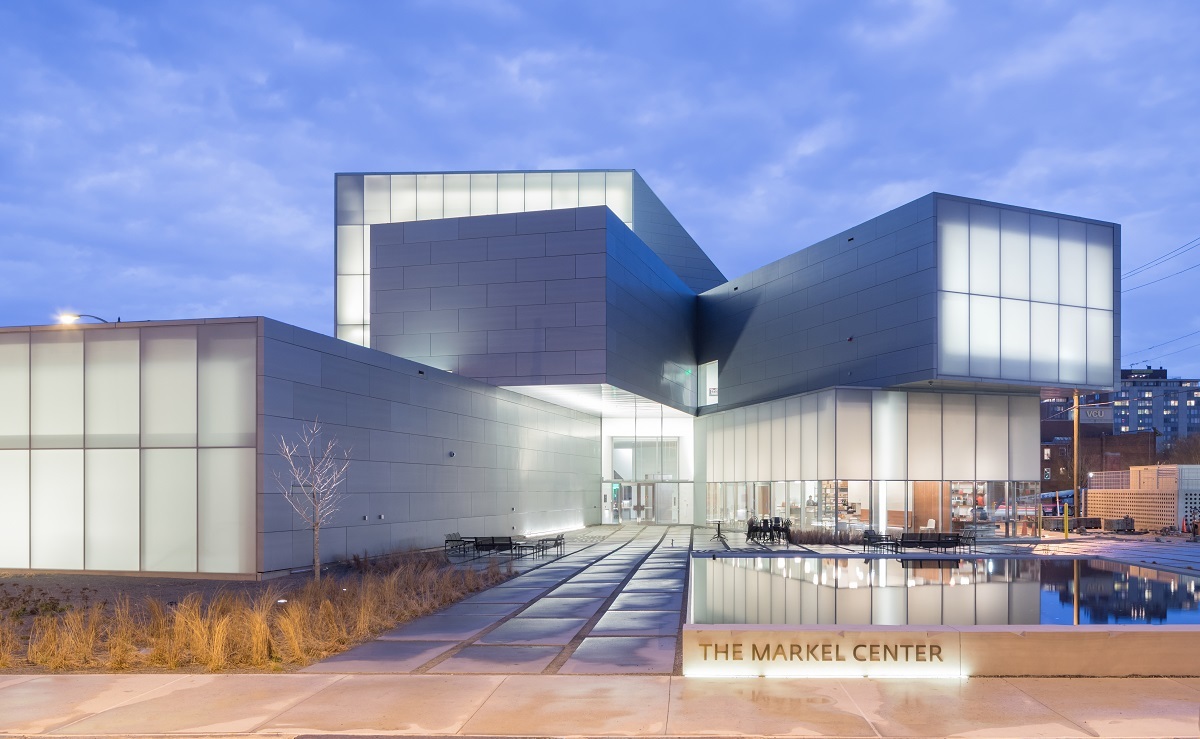
Photos by Iwan Baan
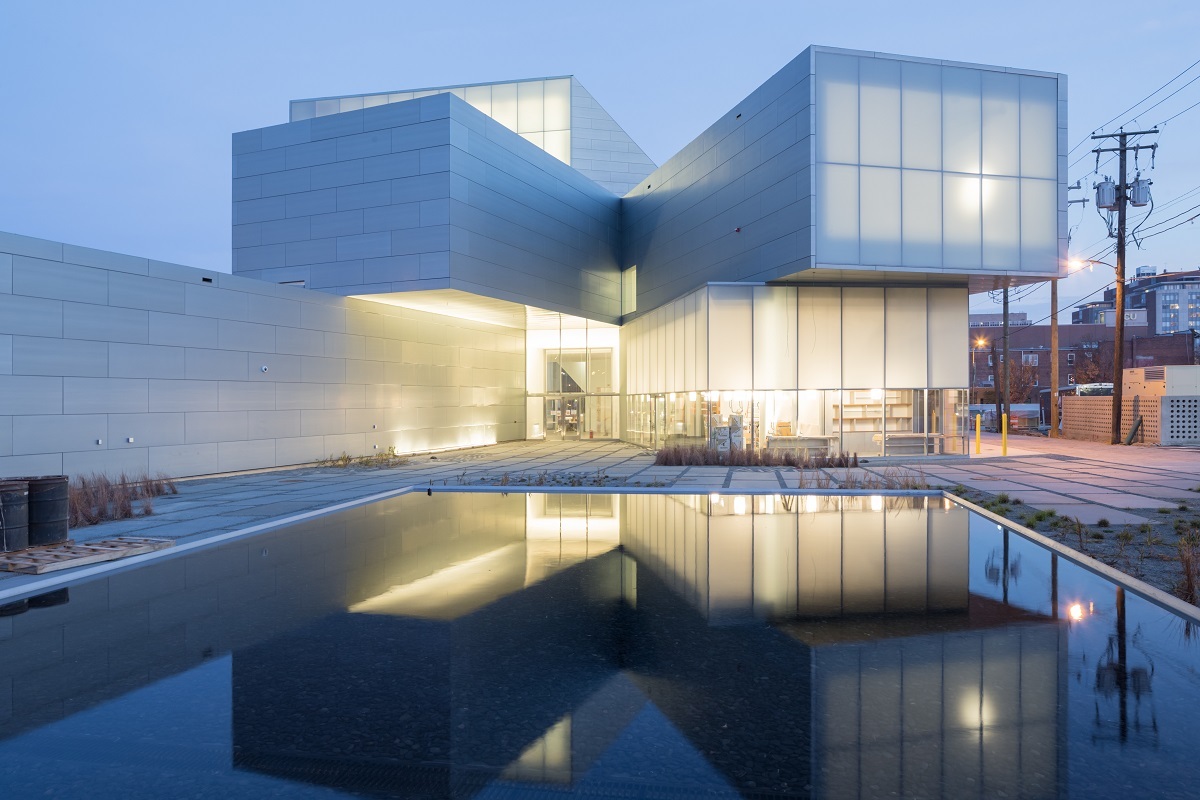
The ICA is intended to inspire students, faculty and the general public by bringing nationally and internationally respected artists and scholars to the city of Richmond. As a non-collecting institution, it showcases an ever-changing slate of exhibitions, performances, films and special programs that VCU claims, “translates our world into every medium.” Designed to be Richmond’s first true cultural cornerstone, this freestanding institution has four galleries, each with a different character. However, it’s the museum’s unique, multishaped exterior and its 33-foot-high central forum that gather as much attention and interest as the artwork it houses inside.
According to its architect Steven Holl, principal of New York City-based Steven Holl Architects (SHA), “We designed the ICA to be a flexible, forward-looking instrument that will both illuminate and serve as a catalyst for the transformative possibilities of contemporary art. The fluidity of the design allows for experimentation and will encourage new ways to display and present art that will capitalize on the ingenuity and creativity apparent throughout the VCU campus.” Flexibility allows for four separate exhibitions, one continuous exhibition, or combinations.
Galleries can be closed for installations without affecting the circulation to the others. Visitors can begin the sequence through the four galleries by taking the oversized elevator to the top and circling down, or by beginning at the lower gallery and moving up, allowing for a host of everchanging perspectives.
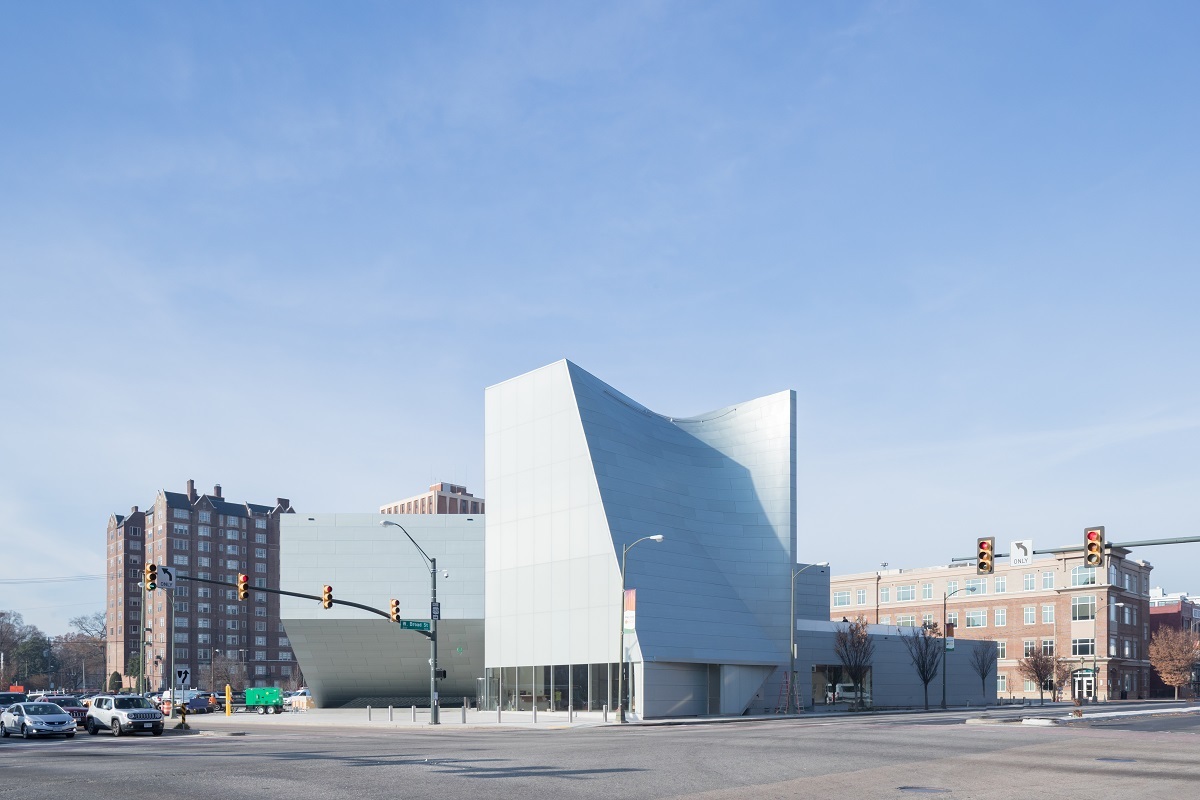
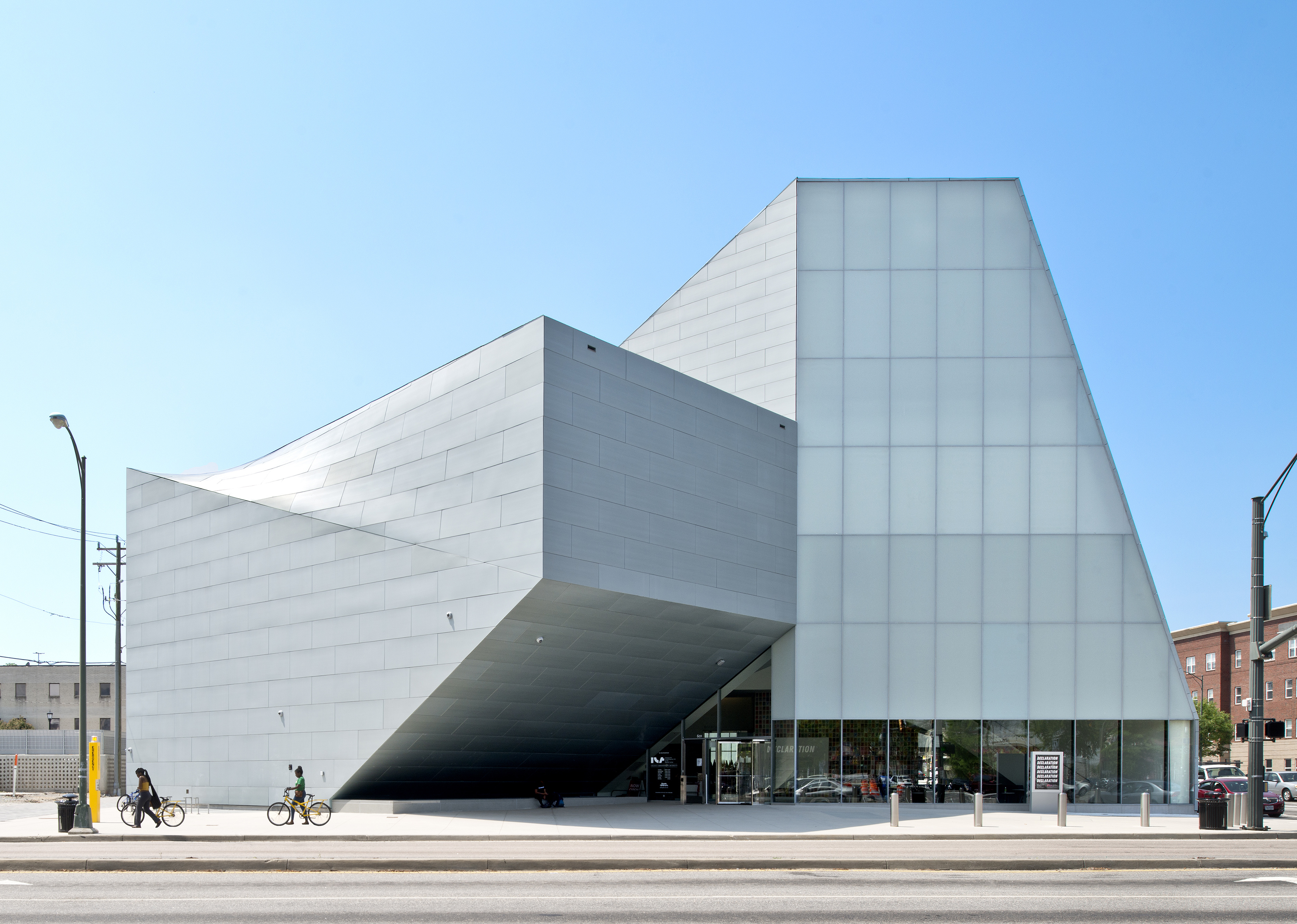
The ICA is located on a street that once marked the boundary between Richmond’s black and white communities. Sited on the edge of the VCU campus on one of Richmond’s busiestintersections, city planners hope it will serve as a gateway to the university with an inviting sense of openness, one that will link the university with the surrounding community. Dual entrances open to the city’s arts district on one side and VCU’s Monroe Park campus on the other.
An inviting, double-fronted forum opens to a serene sculpture garden, and both serve as a meeting space for the community and the university, linking city and campus. According to SHA architects, the ICA’s main entrance is, “formed by an intersection of the performance space and forum, adding a vertical Z component to the X-Y movement of the intersection.” The torsion of these intersecting bodies is joined by what Holl calls the “plane of the present” to the galleries in “forking time.” The idea of forking time suggests that in the world of contemporary art there are many parallel times. The notion of one ongoing time and its “grand narrative” of history is questioned.
A Smooth Vortex
Metal was selected because of the contrast to the brick architecture that surrounds the museum and metal’s ability to be used in the challenging design. The museum is clad in pre-weathered titanium 1.75-mm prePATINA blue-grey zinc panels from Woburn, Mass.-based RHEINZINK America Inc. for its roof and walls. The paneling contains 40 percent recycled content, resists corrosion, and is a natural fungistat, which educes the risk of mold, mildew and fungus. A structural benefit of the zinc paneling is its physical flexibility for some of the museum’s curved walls, particularly a section that will span more than two stories.
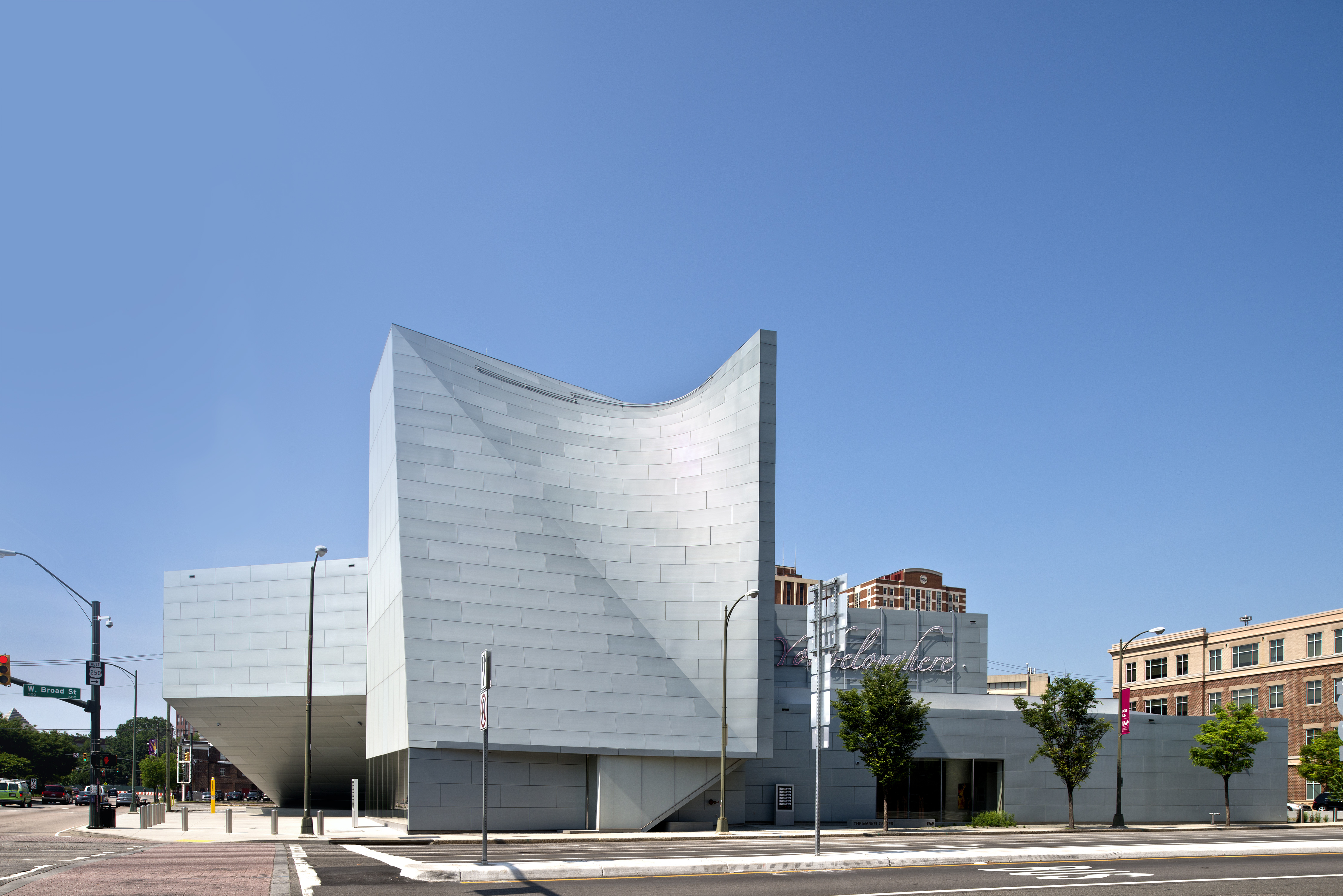
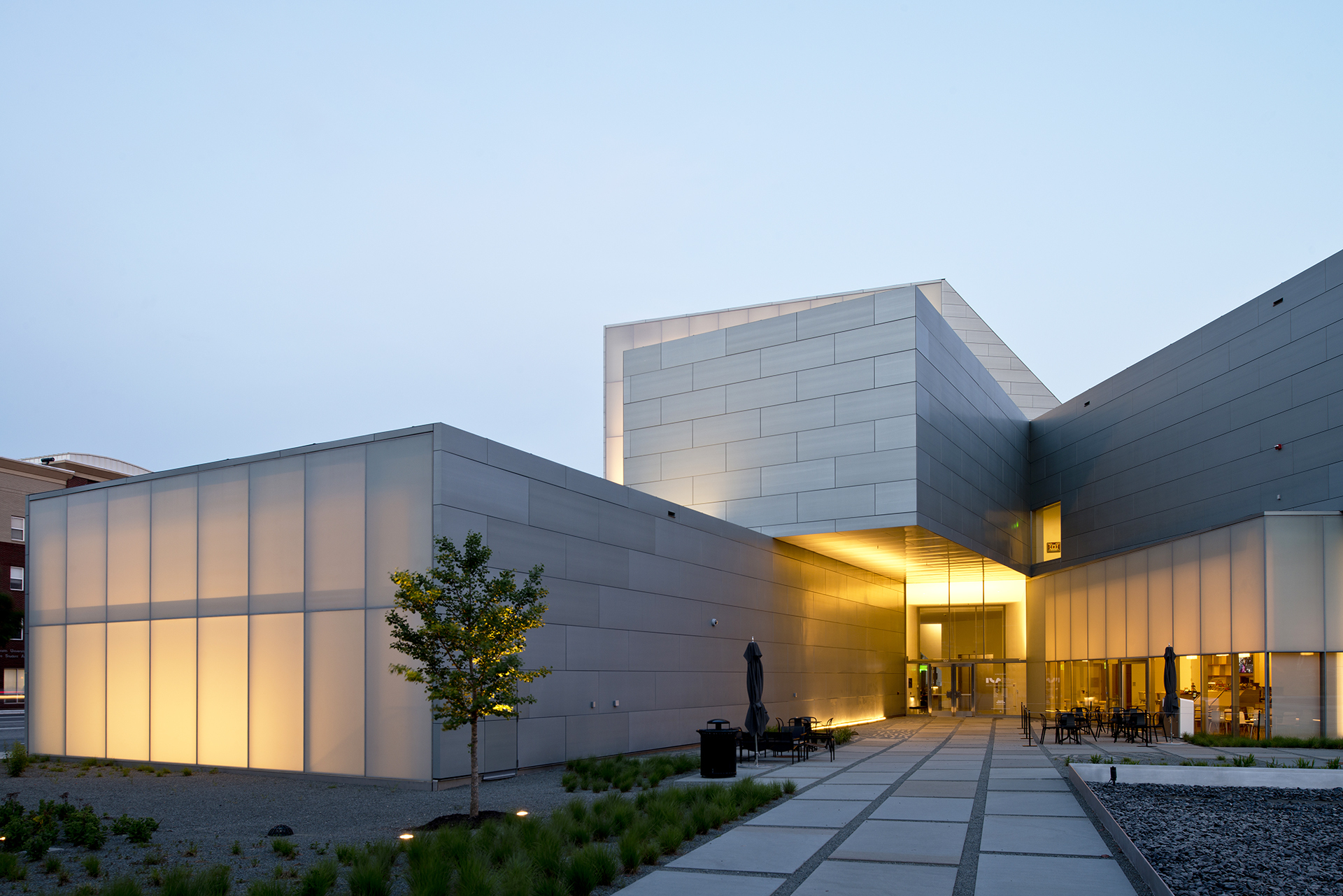
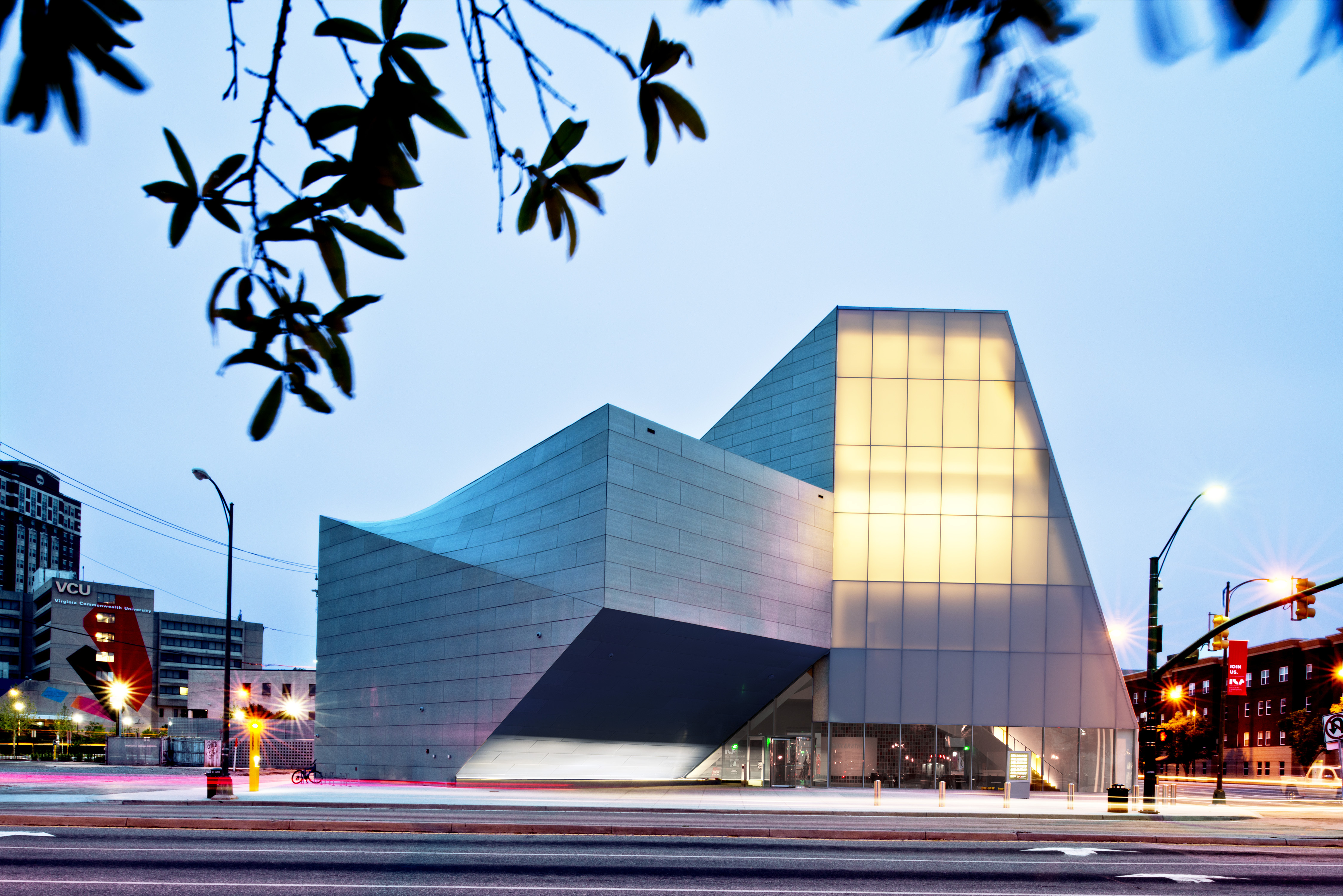
According to Steven Holl Architects, “The RHEINZINK exterior interfaces with clear and translucent glass walls and skylights that infuse the building with natural light and lessen reliance on nonrenewable energy. The zinc shares the same greenish-gray tonality as the matte glass, giving the building a shifting presence from monolithic opaque to multifarious translucent depending on the light.”
The custom cassette panels were designed and fabricated by RHEINZINK systems partner A. Zahner Co., Kansas City, Mo. According to Zahner project manager John Owens, “The 1.75-mm zinc is a little heavier than normal but that’s what the architect wanted.” Zahner provided 1,200 total panels, of which 200 were curved. Achieving a smooth, abstract surface with minimal joints required developing a back-ventilated system. The curved torqued surfaces were made by Zahner as unique shaped panels on CNC-milled frames, ensuring smooth surfaces. “We cut those panels radially as needed to fit the curved aluminum frame,” Owens adds. “All of that fabrication was done in our shop.”
Gary Davis, Zahner’s director of marketing, adds, “We developed multiple panel systems using RHEINZINK materials on a supply-only basis. To create museum-quality edges and detailing, Zahner digitally defined the scopes of work and fabricated from our 3-D model. Preceding construction tolerances were dealt with in a timely manner.”
Green Museum
The LEED Gold-certified museum was designed to incorporate technologies that ensure a positive environmental impact. In addition to using 100 percent recyclable titanium zinc panels, 43 geothermal wells drilled to depths between 400 and 600 feet below ground, provide energy converted into radiant floor heating and cooling. The energy harvested from the ground during winter to heat the building is then put back in the ground during the summer to cool the building.
Permeable landscape design includes Pennsylvania blue stone and native plant. Six species of native Virginia vegetation honor the local biodiversity of Central Virginia. The variety of plants, which includes broom sedge,Pennsylvania sedge, little bluestem, stonecrop, northern sea oats, and blue-stem goldenrod, will offer a range of color, texture and height. These species are drought tolerant and thus promote water-efficient landscaping.
More than 8,000 square feet of green roofs, blanketed with native species, cover three of the four gallery roofs. They reduce stormwater runoff and insulate the building during cold months and reduce the creation of urban heat during hot months.
Windows from Houston-based Cristacurva Co. and skylights from Berwick, Pa.-based Acurlite Structural Skylights Inc. are place strategically to ensure spaces receive plenty of natural light, reducing the need for artificial lighting. Vertical glass and skylights are featured in all galleries, the Forum, and the third level administrative suite. Approximately 3,350 square feet of glass cavity walls exist on significant portions of the western and eastern faces of the building. These double-paned glass walls will reduce heat transfer out during winter months, and reduce heat transfer in during the summer. The glass is formulated to modulate light and optimize transmissivity for ideal daylighting of each space, while also filtering out the ultraviolet radiation that can damage works of art.
Integrated Installation
SHA architects explain, “The making of architecture—from ideas, through tectonics to experience—is a collaborative art. This museum’s conceptual design pushed structural, material and environmental innovations. Associate Architect, Richmond-based BCWH, worked fearlessly with us throughout the project to develop the spatial and material integrity of the design with fine details. Wes Higgins [of Weston, Wis.-based W.J. Higgins & Associates Inc.] did an excellent job as the exterior consultant developing the zinc system.” Its construction manager was Gilbane Building Co., Providence, R.I., and its structural engineer was Robert Silman Associates, New York City.
Wheeling, W.Va.-based Kalkreuth Roofing and Sheet Metal installed the zinc metal plate panels, including the Ziff extruded rails and 3-D laser scans for installation coordination/fabrication.“Setting up the Ziff system on the curved wall was a challenge,” says Dave Kopko, project manager at Kalkreuth. “Getting the elevation of the panel face from the curved system was tough and that Ziff system got us there. We had to run numerous level lines to acquire those elevations.”
The Ziff Clip and Rail System is a proprietary system developed by Zahner to install curved wall panel systems. It allows some minor adjustments of the curved panel when fabricated panels do not meet the exact as-built conditions.
Marcus Gough, estimator at Kalkreuth, says the curved wall also utilizes an aluminum internal drainage system that sheds rainwater away from the building, all under the panel system that is completely invisible from pedestrians. Also, “The compound curved walls had strict tolerances for the panels, and being over a concrete structure, compensating for the ins-and-outs of the concrete was a challenge. With the help from our 3-D scanning software, we were able to recognize the problem and correct the issue before panels were delivered to the site.”
National Enclosure Co. (NEC), Ypsilanti, Mich., installed the glass wall and skylight systems. “Due to the fact that our systems transitioned many times [to other museum components], we had to work in close harmony [with other museum companies],” says Paul Becks, executive vice president at NEC. “The real challenge to a project of this sort is to make sure everyone is working from the same geometric model, and using the same complicated layout system. A coordinated BIM geometry model with total station layout can tame this tiger. We understood the importance of early collaboration and coordination with all parties to provide success and museum-quality execution.”
Carly Wagner, PE, project engineer at WDP & Associates, Manassas, Va., the museum’s building envelope consultant, says its geometry was “almost literally out of this world.” “This was the first project we have worked on where it was not immediately clear what areas of the façade constituted a roof versus a wall,” she adds. “Literally, the areas of roof versus wall—and thus what performance aspects were required—had to be delineated and defined. Whether or not an area was a roof or a wall drove many of the requirements including the minimum insulation requirements, the waterproofing versus air/water barrier and drainage/flashing provisions. The interior climate of the museum space, specifically with respect to the stringent humidity requirements created a larger-than-normal vapor drive toward the exterior in the winter for Richmond’s climate.”