Here’s how to correctly order bent metal panels
Sheet metal can be bent and folded in many configurations to serve a variety of functions for both roofing and siding applications. Some of the most common applications for these pieces are hip and ridge caps, gable edge treatments, wall panels, electrical enclosures and covers, HVAC ductwork, valley pans, drip edges, wall flashings, channels and corner treatments. Thomas J. Carron, president of Floline Architectural Systems in Plainfield, Ill., feels the most common construction applications where metal must be bent involve exterior building moisture and weather resistance, walls, roofs, entry canopies, protective covers for walkways, and as part of the curved structural support system (i.e., curved metal deck). “Other uses are interior applications such as perforated acoustical wall/ceiling panels, decorative coverings, as well as unique applications like cladding for kiosks,” he says.
 |
|
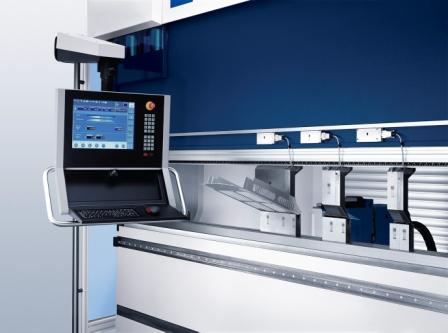
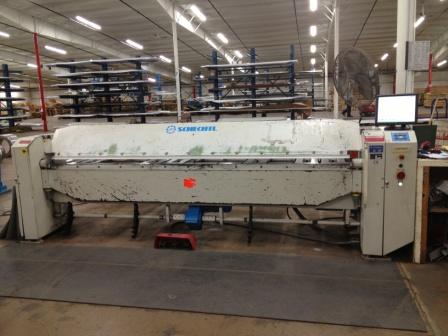
Fabricators are now able to bend panels more successfully and at greater lengths than ever before. “With the widespread use of CNC folding machines in most of today’s fabrication facilities, almost any angle or profile can be produced accurately including radiuses and complex shapes that previously were difficult or impossible to make using conventional machinery,” says Bret Lyon, president, Lyon Metal Roofing, Piney Flats, Tenn. “Parts are often available in longer-than-normal sections of up to 40 feet due to the recent popularity of folder lengths of 20-, 30- and even 40-foot lengths in some shops.”
Right sizing
Once a building’s structure is complete, the doors and windows are installed, and the building is ready for panel installation, field measurements can be taken. “Based on these field measurements, calculations are made to determine the placement of individual panels,” says Shawn Crouthamel, national sales manager,
Laminators Inc., Hatfield, Pa. “With this information, the fabricator or installer can determine the amount of panels, extrusions and other accessories required for the installation and place the order. These measurements are crucial, so the manufacturer or fabricator can bend the panels to fit the building perfectly.”
 |
|
Taking these thorough field measurements is extremely important so panels with the correctly placed bends and folds can be successfully ordered. Crouthamel cautions that since buildings are often not built exactly to the architects’ drawings, field measurements must be taken once the building is constructed, and after the windows and doors are installed to take into account any discrepancies and to account for the trim. These measurements will determine how many bends, corners, etc., are on the building.
For correct sizing of the bends and folds, reviewing the architect’s drawings during the design or ordering stage will confirm desired bends and folds. Additionally, “if framing is provided by others, working from the steel fabricators fab/erection drawings or having accurate field measurements is an absolute necessity,” says Ernest Mann, engineering and design manager, Floline Architectural Systems. “It is always less costly to modify, add on to or tweak the panels during the design phase than to remove and replace an inadequate panel after installation.”
Communication is key
Drawings are typically prepared by the manufacturer or the manufacturer’s representative to determine where the panel is to be bent, in addition to quantities, lengths, trim and accessories required for a complete project. These drawings are sent to the architect and owner for approval, and once approved; the material list is entered for fabrication.
 |
|
“Some suppliers provide the ability for the material list to be entered electronically on their website,” says Denny Koska, senior product engineer at CENTRIA, Moon Township, Pa. “This eliminates the common mistakes-transposed numbers, incorrect parts, etc.-that occur when material lists are manually entered in the system. The top quality manufacturers offer standard drawing formats that are designed to be incorporated in the set of field-use drawings for the erector. These drawings include material description and information, as well as fastening and sealing details that are critical to the ordering and installation process.”
Gary L. Davis, AIA, director of marketing at A. Zahner Co., Kansas City, Mo., agrees that once the architect’s and designers’ specifications are in, “dimensions must be confirmed, preferably using a digital survey which would be imported into our 3-D model, thereby minimizing the potential for mistakes.” For Davis, other important communication components of ordering metal with bends and folds include: Was the architect/designer thinking about the crispness of an extruded shape? For best effect should the piece be v-cut prior to braking?
Nathan Libbey, division III manager, Best Buy Metals, Cleveland, advises that the end user verify panel bends and lengths before ordering, especially if the original quotation was provided based on a blueprint, before the building is actually up. “This ensures that if the design of the structure was in any way changed, the end product still lines up with the actual conditions on the roof,” he says. “In addition, having the customer verify and sign the estimate/proposal also gives them another chance to go over the list. Understand where everything on your estimate/quotation goes.”
The drawing itself, which is the backbone of the process, will show the dimensions, bend angles, color side, hems and any kickouts. “Written communication and detailed drawings with the customer’s signature for approval are advisable because of the complexities involved with custom trim,” says Lyon. “Lead time for custom trim is typically longer than standard shapes due to the extra time involved in designing, programming the folding machine and fabricating unfamiliar parts.
Many companies require prepayment or credit card on file for custom trims because if the customer fails to pick the items up the vendor is left with a piece that may not have any value to anyone else and cannot be placed back into normal stock. Often times the vendor will actually allow the person that will be supervising fabrication of parts to speak directly with the customer to discuss any questions or concerns that they may have so that everyone is on the same page and the likelihood of mistakes being made is greatly reduced.”
Frank Albert, founder of Albert’s Specialty Roofing, Richmond, Va., says when it comes time to order bent panels he gives this advice which has helped him as a roofer: “I always order the panels a few degrees underbent or overbent so I can ‘pop’ them into place so they hold themselves where I want them. When ordering, you have to expect mistakes, so you order your paired ‘sections’ so as to have a built-in tolerance, or fudge factor if you will, so they will work straight out of the box.”
 |
|
One thing that ensures accurate metal bends is a focus on quality. At Raleigh, N.C.-based Umicore Building Products USA Inc., each customer placing an order works with one project coordinator (PC) throughout their project, and the PC will be responsible for the project, as well as for all communication with customers to answer any questions or address any concerns they might have. “Our project coordinators not only handle the products’ care, but are also very focused on providing high-quality customer care and service,” says Alex Pittman, inside sales manager at Umicore. “We have very high standards for each of our quality checks and a low tolerance for any mistakes made in the processing of customers’ orders and handling of their materials. Throughout the entire ordering process, as well as fabrication, we hold ourselves to the highest standards.”
[sidebar]
Bend it on-site
One way to potentially eliminate the problems of ordering bent panels would be to bend them on-site. A rollformer, metal brake and advanced knowledge of fabricating metal are necessary. “This enables the contractor to cut down flat stock and bend it on-site for their specific need; saving many hours of lost labor waiting for these custom shapes to be bent and sent back to the job site,” says Gary Weinert, director of sales and marketing, Van Mark Products Corp., Farmington Hills, Mich. But, according to Tom Bailey, product manager, TRUMPF Inc., Farmington, Conn., “a portable metal brake will be limited in terms of capacity, whereas a metal fabricator with a press brake in its shop will have greater ability to produce more complicated parts, with consistent tolerances, in a shorter period of time.” Also, “braking metal in the plant increases the dimensional tolerances of the piece,” says Gary L. Davis, AIA, director of marketing at A. Zahner Co., Kansas City, Mo. “Given that we’re typically doing metal that is 14-gauge or heavier, most on-site portable brakes would not have the capacity needed.”
[sidebar]
A fabricator’s ordering role
Metal Construction News asked fabricator MG McGrath Inc. to describe the process of ordering bent metal panels.
In the early stages of a project, MG McGrath will receive a schematic design of a project from an architect. MG McGrath will work collaboratively with the architect to create precise shop drawings so that a project can be completed within budget. Once shop drawings are approved, field measurements are taken so that the panels can be formatted with exactness that will be needed to complete the project, without the need to make adjustments at the job site. In terms of the panel function, angle and length, this takes into account complete shop-optimized drawings that are accurate at the time of approval.
This will allow for the raw material to be manipulated to the angles and lengths that are needed for the project. To avoid mistakes in the fabrication of ordering bent metal panels, it is important that communication lines are kept open between all those that are involved in the project.
Mike P. McGrath, president, and David Rassmussen, business development manager, MG McGrath Inc., Maplewood, Minn.