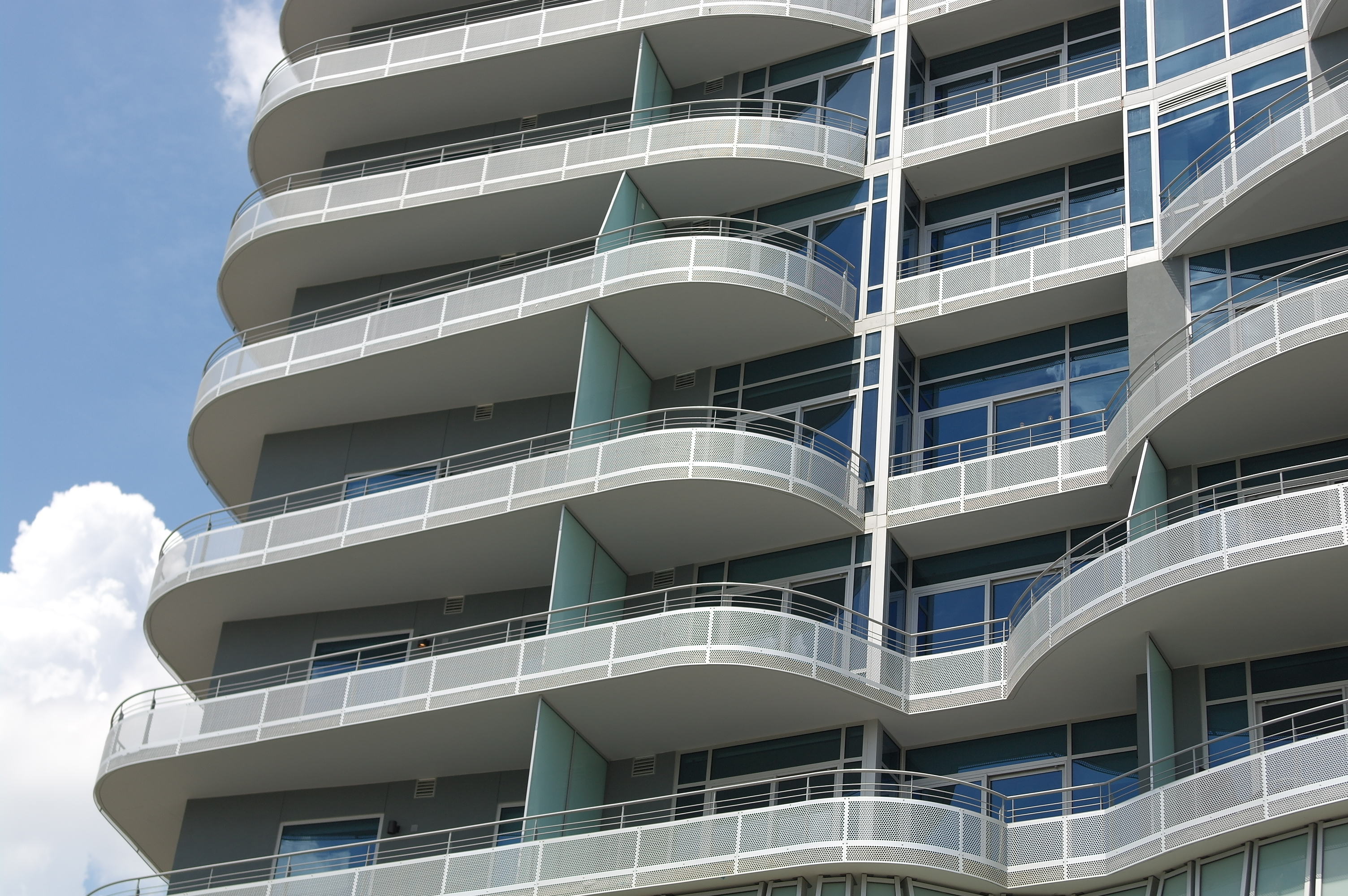
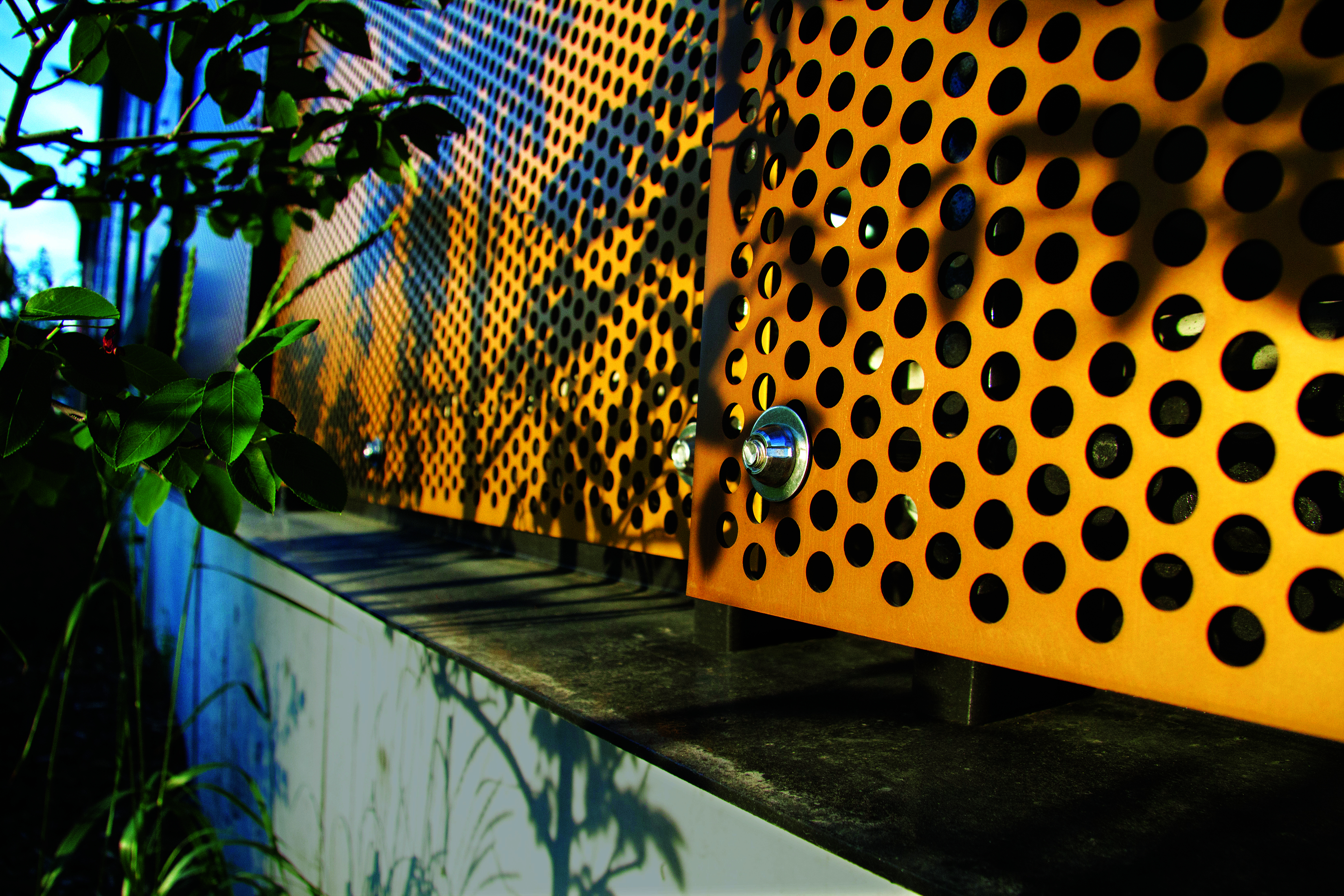
Many people know of the tremendousvariety and flexibility of perforated metal. There are thousands of patterns and numerous hole shapes that can be perforated in a wide range of materials, gauges and sheet sizes. Additionally, the material can be finished with many different coatings in thousands of different colors.
Guaranteeing an efficient, economical and beautiful result

The adaptability of perforated metal gives architects the ability to shape a building’s environment by controlling everything from light, sound and airflow to an occupant’s access and even the view. While architects love the material because of the myriad options that allow them to do exactly what they want, contractors and installers value perforated metal because of its ability to be customized to precisely fit the needs of the project. By eliminating waste and reducing installation time, perforated metal provides an overall better value than comparable materials.
Customizing Perforated Metal
You don’t have to settle for basic 4- by 8-inch carbon steel sheets. Perforated metal can be manufactured to precisely fit a project’s requirements. Sheets are no longer limited to traditional 4-foot spans; lengths of up to 12 feet are possible for more creative designs. Perforators can use a wide variety of material from carbon steel, galvanized metal and aluminum, to stainless steel, weathering steel and copper.
The gauge (thickness) of the material can be adjusted to suit the precise requirements. Margins (unperforated sections) can be added to the panels to provide a solid surface for quick attachment to the structure. Mounting holes can be cut into the solid margins to make installation even easier. Additionally, perforated metal can be formed in a myriad of shapes and profiles to provide further options for securely and effortlessly fastening the panels to the building’s framework.
Proper Preparation
Before the panels are even made, an experienced perforator employs engineering, design and architectural project management to produce the ideal perforated components. Takeoffs created from the building’s drawings ensure what is required for the project will be manufactured. Perforated panels can be produced at the last minute using field measurements to guarantee a custom-tailored fit integrating seamlessly onto the structure. More advanced projects utilize building information modeling (BIM) to not only provide a perfect fit, but to also identify unforeseen requirements. Perforated BIM patterns that are realistically transparent will show you the look and feel of the material while demonstrating the amount of visibility and light allowed through the panels.
According to McGraw Hill Construction’s 2014 report, “The Business Value of BIM for Construction in Major Global Markets SmartMarket Report,” contractors in the world’s top construction markets report that BIM helps them improve productivity, efficiency, quality and safety on their projects as well as increasing their ability to compete in today’s challenging market. After perforating, fabricating and finishing, the components can be packaged into specially designed crates to ensure the material arrives on-site in perfect condition and ready to be installed.
Easier Installation
Receiving custom perforated material on-site made specifically for the nuances of a project helps installation go faster. The panels are designed and fabricated to be attached with no rework and no waste. They can be configured to securely attach to nearly any type of structural material, including wood, metal, composite metal, brick and concrete. Further steps, like component labeling and mapping, can significantly reduce the amount of time it takes to install the perforated components.
With a project-based packaging list and alphanumerically labeled parts, each panel can be easily located and identified. A building-specific project map and instructions can provide to allow for assembly of all the perforated panels onto the structure like a fool-proof, labeled jigsaw puzzle. No time is wasted trying to locate the right panel or determining where they should be fastened.
Perforated metal can satisfy even the most demanding requirements due to its vast customizable options. Designing the perfect building environment is easier than ever with perforated metal and a proficient architectural component perforator.
Be assured the best methods and materials will be utilized in creating your construction project’s required solutions. Architectural experience is evident when the perforated components arrive in perfect condition, on-time and labeled for easy installation. Using perforated metal from a qualified architectural component perforator guarantees an efficient, economical, and beautiful result.
Damon Henrikson is director of marketing for both and Angel Ngan is marketing manager for both Chicago-based Accurate Perforating Co. Inc. and Accurate Metal Fabricating. To learn more, email dhenrikson@accurateperforating.comor visit www.accurateperforating.com and www.accuratemetalfabricating.com.