While metalworking has revolutionary effects in human evolution and global expansion, the roots of metal-bending equipment started in the 18th century with the introduction of equipment constructed of metal instead of traditional wood forms. In the 19th century, machinery began to include locking levers and the use of valve-controlled hydraulic force. As folding technology evolved through electrification, modern iterations of equipment first saw numerical controls utilized in the 1970s, allowing control of clamping and forming pressure, depth, and degree of bend. Further innovation has mostly occurred through the computer interface, which allows operators to draw parts on a touchscreen and work with software to test feasibility and gain efficiency prior to production. The two main categories of equipment to fold architectural metal are press brakes and folding machines, each offering distinct advantages and characteristics.
Subtle, yet important, differences in bending
A press brake bends metal using a series of matching male and female dies and mechanical, pneumatic, hydraulic, or servo-electric generated force. Gauging material depth is done through backgauge fingers; on modern press brakes these can operate independently and in several different axes for high precision and tapering.
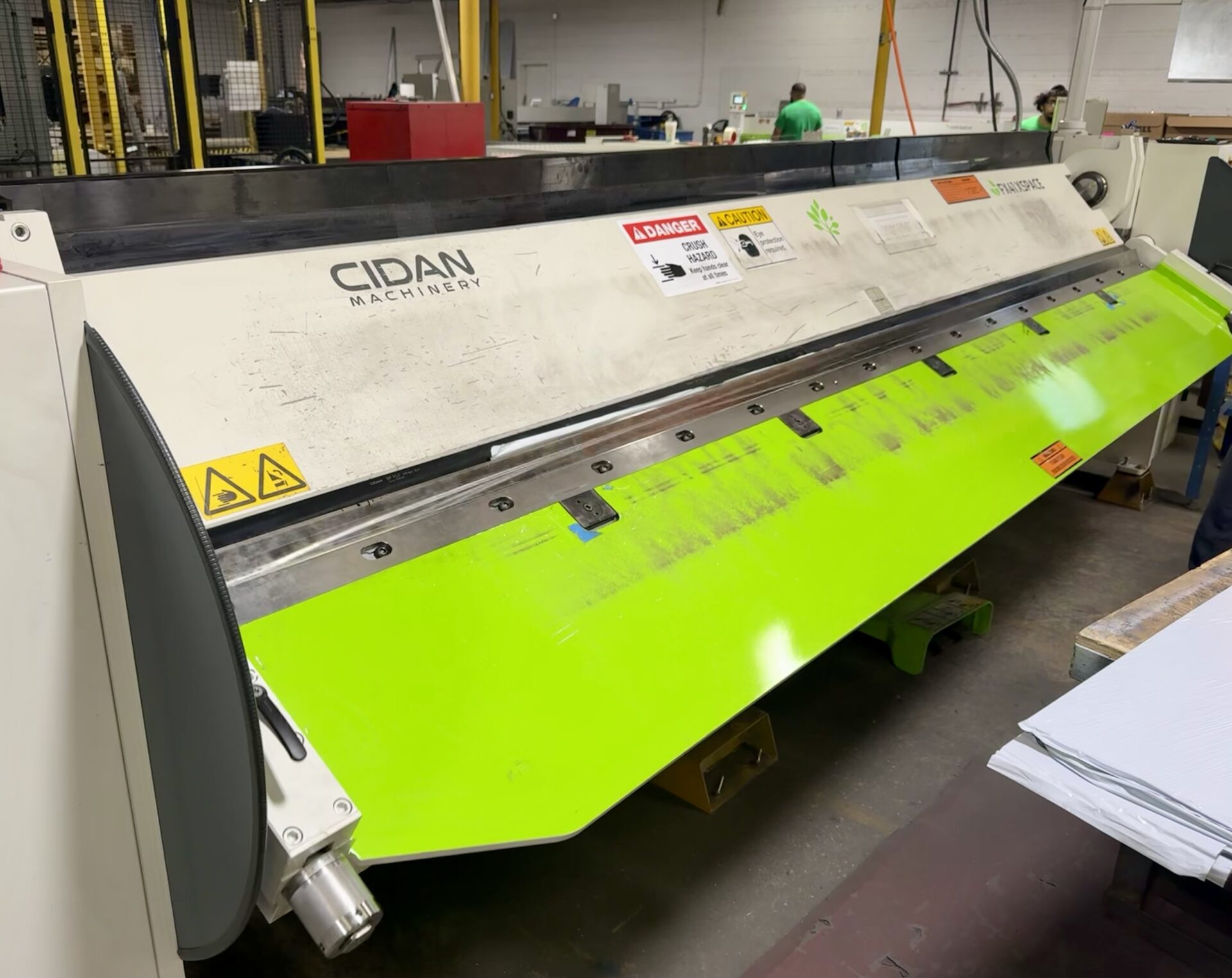
In contrast to a press brake’s use of dies, a folder works by clamping metal between upper and lower beams and using a third beam, the folding beam, to produce the desired bend angle. Typically, this is from below the folder, but most recent advancements include folding beams above and below the clamping beam for very efficient production with minimal human involvement. The gauging is like a press brake in that it uses fingers and can be modified to produce a tapered part, but these fingers are typically arranged just above the plane of the bed behind the clamping beams that support the material, a very useful feature for large and light gauge blanks.
Ideal folding applications
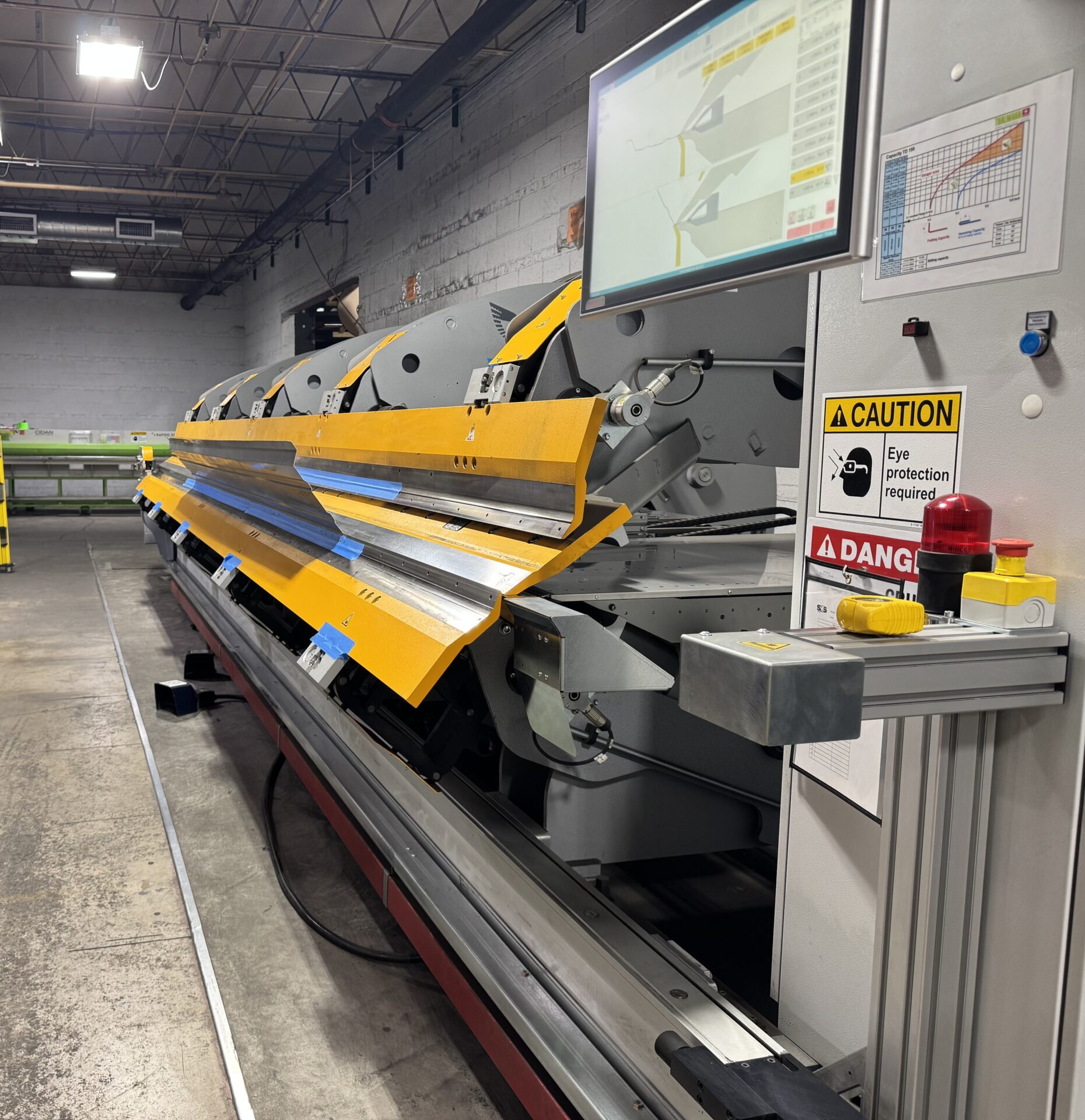
Press brakes are the most popular option for folding operations in automotive, aerospace, and heavy machinery industries due to their ability to form thick sheet metal into potentially complex parts with tight bends. Modern controls allow for off-site programming and digital assistance in part design, sequencing, die selection, and crash avoidance. They are very versatile in their use of dies; small complex parts can be designed to have multiple stations of different dies running on the same machine while the backgauges move from each set, allowing a part to go from blank to complete in one run. The same machine can subsequently run large, thick, and high-precision parts by simply changing to an appropriate die arrangement. The vast assortment of tooling, coupled with the ability to design and produce custom dies and even adapt turret and punch tooling, makes press brakes an especially useful option, especially when material thickness exceeds the capability and capacity of
a folder.
As versatile and robust as a press brake is, a folder is much more commonplace in the construction industry, and for good reason. Folders stand out when it comes to light gauge (thinner), painted, and surface critical materials, while still maintaining high precision, repeatable, and consistent production. Internal to the clamping and folding beams, folders are designed with flat beds incorporating a series of gauging fingers to control the depth of the part and position the material precisely for exact folding dimensions. The bed may simply be fabricated from textured metal or incorporate a supportive brush surface or even ball transfers for ease of movement when folding heavier material. The depth of these beds is dependent on the manufacturer and intended use, starting at 1,219 mm (48 in.) to incorporate a standard size full sheet, though options nearing 4.3 m (14 ft) are available to gauge long parts that need end folds (such as drive cleat copings, large chimney caps, long cassette style panels, etc.). Many folders include the ability to flip the upper clamping beam, with the option to either have a full-length beam or segmented tooling, giving the operator the ability to only fold certain sections of a blank rather than folding the entire length. Modern programming is done through a touchscreen interface, where the part is drawn digitally and software assistance is offered for sequencing and crash avoidance.
Choose equipment wisely
Folders generally operate on a listed capacity, while press brakes use material properties, available die sizes, and their operating tonnage to determine feasibility. The common gauge of demarcation is typically 16-gauge steel or 0.2 mm (0.08 in.)
aluminum; if a material is at that point or lighter, a typical folder has the capacity to operate well. Anything heavier tends to be better suited to the strength and design of a press brake. Within its capability, a folder typically utilizes one operator, is comparatively easy to set up, and is cost-effective. Hemming a material to control part size variation, provide an interlock for cleats or adjacent parts, or to hide a raw edge, is also a key advantage of a folder. Additional surface protection is typically unnecessary for parts with a factory-applied removable film, and painter’s tape can be utilized for materials such as copper that do not come with any protection. Producing radiused bends is possible through a series of very slight but straight bends, and the calculations necessary to do so are easily produced with the embedded software. While these bends can be somewhat apparent when a sample is in hand, it can be very hard to discern from a smooth bend once installed.
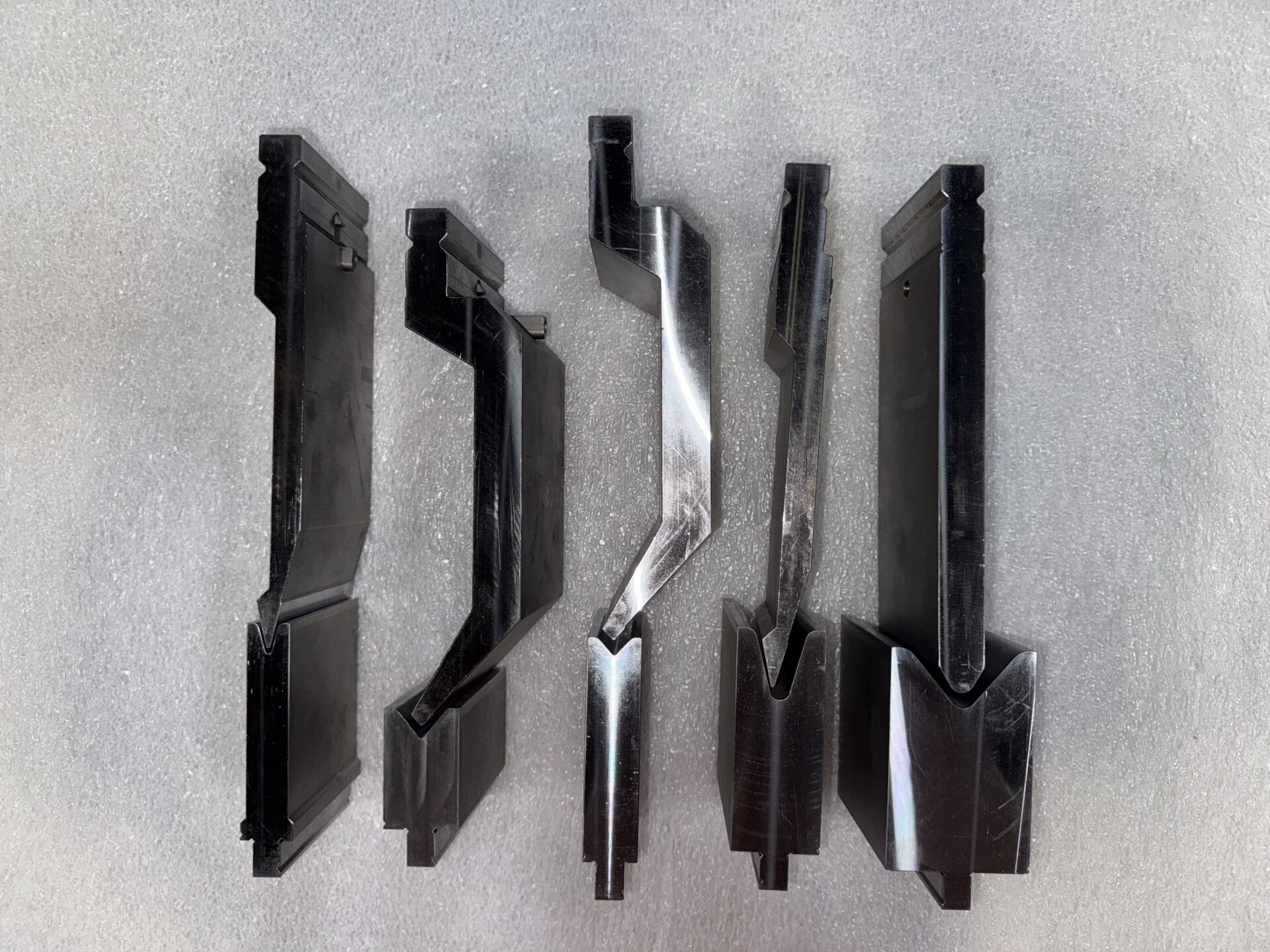
In contrast, often a press brake is used simply because it is the only way of folding a given part due to either material thickness or complexity. Custom dies can be designed for specific applications, ranging from producing louvers to holes, slots, offsets, etc. Surface critical components can be protected through the fabrication process by using urethane strips to protect the material from the dies or specialty woven fabrics designed to protect brushed stainless high-end appliance faces. This makes it easily adaptable to bespoke architectural panel fabrication. If necessary, specialty hemming tools or a hemming lower die can be added to a press brake, though with the machine typically being aimed at thicker material, this is uncommon. Depending on dimensions, radius bends can be produced with a combination of standard die offerings, or, for very custom work, job-specific dies can be custom-cut for both the upper and lower to produce a very accurate and exacting final part.
Safety
Modern equipment is designed around Occupational Safety and Health Administration (OSHA) guidelines with built-in safety measures. Both types of equipment will typically safeguard the speed and depth of the approach prior to clamping or folding the sheet. Laser or light curtains ensure that an operator is safely positioned outside of the working area of a part before and during the bending operation. Special care is required when folding heavy material in a press brake, as this may necessitate a second (or even third or fourth) operator to assist with material support and positioning.
Labor considerations
Typical day-to-day operations require one operator for either type of machinery to load and position parts and collect finished goods. As the blanks get larger and heavier, additional assistance may be needed. Proprietary software across all machinery continues to advance at a rapid pace; most of the programming and sequencing can be done by computer if an operator can draw a part on a touchscreen.
Press brake programming and operation tend to necessitate a more skilled programmer and operator (most commonly one in the same person) due to the vast tool library and complexity of the parts. Experience-based knowledge from a seasoned operator and tribal knowledge is the most common conduit, although online and hands-on courses are available.
As machinery software advances, so does the implementation of robotics to help alleviate labor constraints. While they may be tethered to either style of machinery, press brakes make up most robotic cells. Smaller and lighter parts can even utilize a collaborative robot (cobot), while large industrial robots can handle parts that far exceed the capacity of modern press brakes. Note that even though a cobot can be implemented and programmed very quickly by someone without an engineering degree and is designed to work alongside humans in most applications, when you give any robot a piece of metal, the robot has now been weaponized and must be in a fenced (whether physical or light/laser curtained) autonomous area to protect workers. Advances in software design, robotic interface, and even AI have reduced programming time from days to hours to now minutes, and it is expected that repeatable part production will shift to robotic cells more in the future.
Final thoughts
As our industry evolves, so follows the equipment, and so, more and more machines are being designed and produced that blur the lines between folding options. High-speed press brakes with custom tooling (oftentimes incorporating a robotic operator) will outperform a folder for small and repeatable parts, while new, high-capacity folders exist with the capability to bend 3.1 m (10 ft) lengths of steel more than 13 mm (0.5 in) thick.
Just as any craftsman would have more than one hammer in the toolbox, and for good reason, it is increasingly common for fabricators to use a variety of machines to deliver a given design and, on some occasions, to even use a folder and a press brake in separate operations on the same part as necessary to meet increasingly intricate fabrication demands.
Ben Kweton is the president of Sheet Metal Supply Ltd., a North American zinc fabricator as well as a leading fabricator/supplier of custom-formed perimeter edge systems, wall facades, flat lock tiles, substructural components, ES-1 rated products, glazed-in panels, standing seam, ACM/MCM/plate panels, and much more.