A quality emphasis produces better buildings
By Mark Robins, Senior Editor
A significant problem with metal buildings can be improper installation caused by a lack of effective quality practices. Not stressing and monitoring quality from a building’s research and development, all the way throughout its life can lead to system failure, warranty invalidation, liability and lawsuits.
Without a quality emphasis, serious building problems develop over time. Limited expansion and contraction, penetrating-through fasteners, poor detailing and reliance on exposed sealants can lead to serious performance issues long after the installer’s limited warranty is up.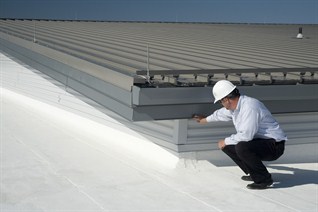
For instance, a metal roof can represent 10 to 25 percent of a building’s cost. But 90 percent of improper installation procedures are concealed and unviewable upon work completion and their resulting defects will not be identified until problems occur at a later date. Without a quality emphasis, metal building deficiencies can be so serious a metal roof may have to be torn off and replaced at great expense. “A $100,000 metal roof can cost $500,000 or more to correct when it is in place on an occupied building,” says Robert Stanford, president of Robert Stanford & Associates Inc. Metal Roofing Consultants, Missouri City, Texas.
Without quality…
One of the most common failures of metal buildings, according to Stanford, and the single largest allegation in lawsuits resulting from a lack of quality emphasis is waterproofing.
“Water leaks will involve time to investigate, and the removal or ripping out of panels and components, and their replacement and repair,” says Dr. Denis Leonard, ASQ Fellow and president of Business Excellence Consulting LLC, Bozeman, Mont. “Leaks create associated damage to the building which may include nonstructural or worst off, all structural components. The leaks can also damage materials stored by the owner of the building which can become very expensive.”
Joe LaFave president of LaFave’s Construction Co. Inc., Landis, N.C., has a lifetime of experience seeing metal structures installed with and without a quality focus. He believes most problems come at the hips, valleys, curbs and other roof areas where the panel runs are interrupted.
“We have seen work from unqualified contractors who have fastened panels at both ends not allowing movement from thermal movement,” he says. “This condition manifests itself into panel tearing, clip disengagement and seam separation resulting in leak locations and possible structural instability. In general, as long as a qualified contractor is utilized, who has experience in the details associated with metal, these problems are all avoidable.”
Without a quality management emphasis, other problems like wind damage resulting from failure to follow wind design requirements can occur. “Poor installation in areas with high winds or that have high rainfall or snowfall annually can result in catastrophic damage,” says Leonard. “The ramifications of poor installation need to be clear to the owners, managers, supervisors and installers of all roofing businesses.”
Early quality emphasis
A quality program must begin in the initial project planning stages. It starts with the owner’s selection of a design team and the design team’s attention to detail. Then, final-approved installation drawings, schedules and specifications must be reviewed with a cross-functional team of client, architect, installers, manufacturer’s representative, the main contractor and representatives from other trades that will be involved in work in and around the roof.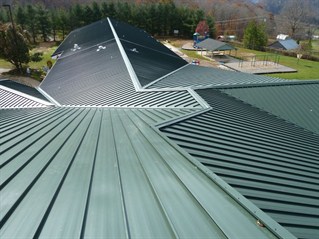
All parties should be held responsible for their respective portions of the construction process to ensure a quality finished product. Early on, all those involved must agree with what is designed. Understanding the problems and logistics involved will prevent defects and find root causes during and after construction. Time spent at this planning stage is not wasted.
“The majority of problems can actually stem from the wrong design, product or profile being specified during the design stage,” says Leonard. “At the design stage, live loads, dead loads, snow loads, wind loads, thermal impacts and rainfall levels need to be considered; membrane components, flashing, sequencing of installation and other trades all need to be discussed and agreed upon. Ensure communication about the advantages and disadvantages, and the additional cost or problems with certain systems during installation. This will be a final opportunity to raise a fundamental design or specification issue.”
“The design team must understand the effect each trade has on another, as well as have experience in the design of quality projects,” says Shahn Corter, vice president of operations, BRB Roofing and Manufacturing, Muskogee, Okla. “The most common design errors we see are usually based on a ‘one design fits all roofs’ attitude where a designer uses the same design and ‘canned’ details/specs for all situations. Vague specifications, and specifications prepared by one supplier are very common and often confusing. More importantly, from a roofer’s standpoint, quality assurance begins by gathering the proper information to accurately estimate a quality system.”
Stanford insists quality installation can be ensured by proper specification of metal panels and materials. For instance, “Hydrokinetic metal roofing systems and profiles should not be used or installed on any project that must be covered by a weathertightness warranty, regardless of the issuer of the warranty,” he says. “Hydrokinetic systems are, by definition, subject to water infiltration. Despite this, many architects and design professionals will specify a hydrokinetic metal roofing panel profile because they like the way it looks: appearance over function.”
QA officer and a punch list
A quality assurance officer is a critical component of building quality management. His responsibilities include substantial completion inspections and final inspections to ensure metal buildings are installed as per the design and engineering documents, manufacturer’s requirements, building code requirements, owner’s insurance requirements, as well as in accordance with sound and accepted roofing practices. Additionally, although safety oversight is not a direct responsibility of the quality assurance officer, most building owners expect their quality assurance officers to assist in ensuring that safety standards are met.
To assist a quality assurance officer’s function, “punch list inspections, which are performed after substantial installation completion, should reveal issues with water tightness, fastener concerns, seam concerns and proper flashing, and they provide an opportunity for the contractor to make repairs to ensure satisfaction for warranty purposes,” says Deirdre Dolgin, vice president, Roof Resources Inc., Palm Coast, Fla. However, it does not ensure the proper installation of the underlying components.
A properly written quality assurance punch list establishes plans and inspection for a quality project. “Integrity is built on these steps,” says Jerry Spores, president of AARA Construction Inc., Phoenix.
The punch list should be linked directly to the inspection forms and should be a key point of debrief at the end of the project. Sometime issues end up on the punch list due to other trades or because of a delay at the request of the client. But it is essential that everyone involved in the project knows what those punch list issues are so that they know they have yet to be completed. Leonard stresses that if any punch list issues are from a construction or scheduling problem, find out why and attempt to ensure that they can be corrected before the next project.
Manufacturers’ quality role Manufacturers’ information and involvement are integral to the punch list, the quality assurance officer and overall quality building delivery. “Nearly all manufacturers provide engineering, specifications, details, training and quality assurance inspections during installation, as well as provide technical assistance to architects, consultants and contractors,” Dolgin adds.
Manufacturers should inspect structures to ensure they meet their standards prior to issuing their warranty. In fact, for warranties, most manufacturers require the contractor to retain their services for a technical service representative to inspect the project at the beginning, midpoint and at the completion of the project.
“Manuals, websites and instructions are important reference information, but the manufacturer needs to be intimately involved with the application of its products,” insists John Pierson, PE, engineering services manager, The Garland Co. Inc., Cleveland.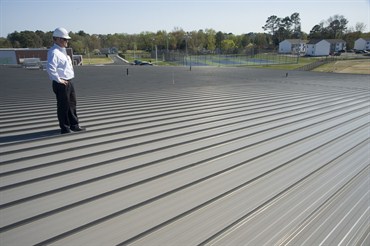
For effective coordination and communication between manufacturers and contractors, installation manuals are important, but of more importance to quality building delivery are specific installation drawings for each specific project.
“Installers can get confused looking at a standard manual that do not quite match their application,” says Corter. “The same goes for websites and other information. These avenues, especially in this day and age, are the first source for most people, but standardized information should never take the place of project specific information.”
To further ensure quality and stop defects, make use of any training materials the manufacturers provide. Their online training materials and videos can be incorporated into regular ongoing training. This is important in understanding installation procedures and staying up-to-date on new materials, methods and techniques. It is also critical for new employees.
Manufacturers willing to travel to training on-site or in offices give a unique hands-on opportunity for all employees to learn quality building principles. Employees get hands-on practice and can ask the trainer questions, raise issues about problems on the job and hear lessons learned from other businesses.
Quality inspection
The cornerstone of building quality may be in-process inspection. Conducting ongoing inspections at regular phases and stages during installation, and making whatever corrections and/or adjustments need to be done at that time is critical. “Inspections should be conducted routinely throughout the installation of a project,” Pierson says. “Inspections should be performed several times a week during installation. During critical detailing, work inspections should be as often as once per day. The more often an inspection occurs, the earlier deficiencies can be addressed and corrected.”
Unless the quality inspection process is conducted on a scheduled and continual basis during construction, there will be uninspected “gaps” that simply cannot be certified as being installed in compliance with industry standards for proper installation and waterproofing.
In-process quality checks should be documented by reports prepared by the consultants/experts in writing. Inspections can be recorded at stages with digital progress photographs and video showing both proper and improper installation. Digital storage and backup is easy today. Videotape key component parts, noting with a simple sheet of paper the exact location of the component and the time recorded.
“Immediately inform the contractor of any conditions that are contrary to the accepted design and contract documents,” LaFave says. Improper installation should be corrected (and documented) before proceeding with the next stage of the work.
Finalizing quality
As a conclusion to an effective quality building program, there should be a final inspection. Again, since the majority of work has now been covered up, rely on the pre- and in-process inspections that caught errors. This is a final check on obvious and visual issues. However, this also means there is no reason for overlooking something at this stage, such as missing fasteners or flashing. “An outside consultant experienced with metal buildings can also be hired to do an independent study,” Spores says.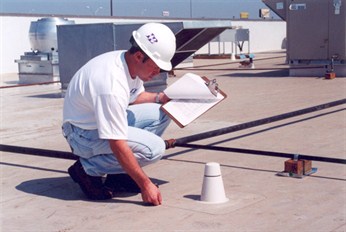
Leonard agrees, saying: “at the end of every project there should be a debrief, find out what worked well and incorporate that into your process, or if something didn’t work well ensure a solution is found. Do you know what your fellow trades, your client and the building owner actually think of your work and what it was like to work with your team? Many forget this stage. Create a simple survey, and sit down and talk with your contractor to learn what went well and how you can improve. I have seen companies rehired for other work simply because they cared enough to ask this question.”
This quality building post-mortem does have an upside. It’s an opportunity to ensure defects never happen again. Reviewing construction processes to find how they can be improved is a great way to save costs in the future. Don’t just fix the problem and move on, ensure quality by making sure it never happens again.
Sidebar
A contractor’s quality process
Metal Construction News asked a roofing contractor to describe in his own words how he ensures quality.
Attention to detail is critical. If you don’t pay attention, you are going to be going back to make repairs and try to make it up to an unhappy client. A lot of people feel that they have time to go back and fix their work, but they don’t have time to do right the first time. Quality is pretty important start to finish. Metal is not always forgiving. If you don’t have every move planned ahead like a chess game, you’re going to mess it up. You’ve got to have plans. Without quality, problems can include leaking and metal panels blowing off the roof. If panels are put together too tightly, they’ll buckle or oil can and then eventually just fail. If they are moving around too much, the cleats will actually loosen up and then loosen nails in the substrate. It could even loosen screws. Metal has a lot of movement to it. You go in a building one day with an exposed fastener roof, sit back and read a book, and you are going to hear things like pops and twangs and sounds you’ve never heard in your life, especially once the sun hits it. It doesn’t matter how much insulation is in there. With exposed fasteners, there’s nowhere for that metal to move.
One error is exposed caulk. If you have a lap joint where the metal just laps over and the joint is caulked, you’ve created a spot where in six weeks the caulk will just separate from one panel to another. The water is just going to wick up there as if you were hosing it. Never have your caulk exposed. Personally, I crawl onto every penetration and wall. I watch what others are doing and see if it goes with my plans or not. If not, or if it is being done wrong, or if they don’t have a clue, I will attempt to teach that in a class.
If you are paying attention to installation, you don’t need much instrumentation. I carry with me a 1-inch extension mirror, so I can look at standing seams. With a single-lock panel, when the seam is folded over, it looks like a “T.” I use a mirror along those seams and if the metal isn’t reflective enough, I look at the bottom side. Stop the water from getting in there in the first place. Water will run 2 to 3 feet uphill when two metal panels are tied together. You can stop that by putting beads of caulk down, across the panel, inside the lap. By doing so, you can stop the capillary action of the water and make the roof last longer. Overlapping panels that stay wet will rust out eventually.
Frank Albert, owner and operator, Albert’s Specialty Roofing, Richmond, Va.