Most credit unions strive to provide their customers reasonable-to-competitive interest rates and other financial services. Madison, Wis.-based Summit Credit Union’s branch location in Muskego, Wis., does this, while showcasing multiple applications of architectural metal.
Credit union showcases multiple applications of architectural metal
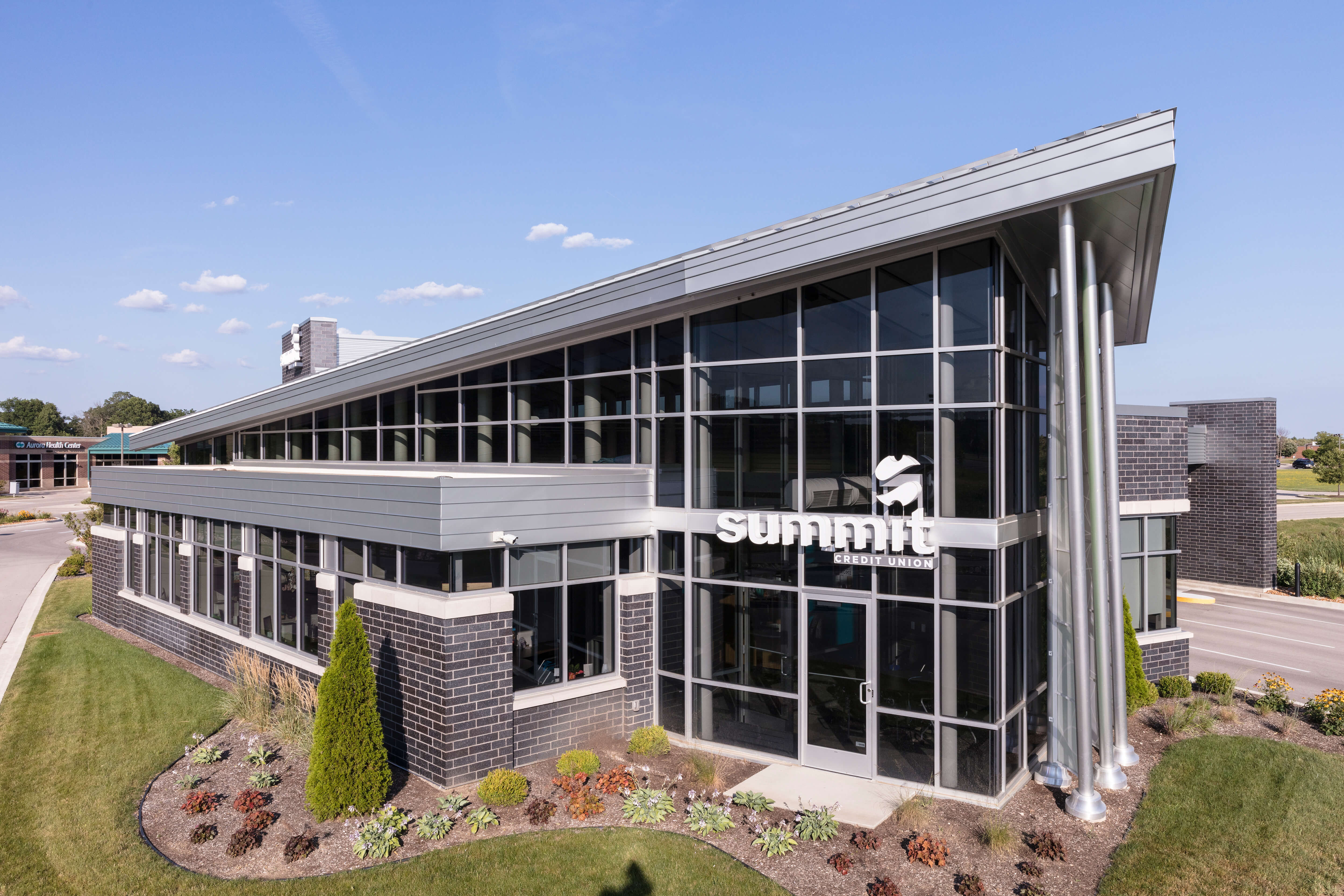
The credit union has a specific brand style for its branches throughout southeast and south central Wisconsin. The brand is youthful, forward-looking and welcoming with bright colors. The architectural forms of each branch building reflect the personality of the credit union, says Peter Tan, AIA, NCARB, LEED AP, executive vice president and chief design officer at Strang Inc., Madison, the building’s designer.
Elk Grove Village, Ill.-based Petersen Aluminum Corp. provided its PAC-CLAD metal roof and wall panels to the installing contractor, Alois Roofing and Sheet Metal, West Allis, Wis. Petersen also provided sales and technical support to the architect and installers. H.J. Martin and Son Inc., Green Bay, Wis., supplied the glass. The general contractor was J.H. Findorff and Sons, Madison.
Prairie-Style Vision
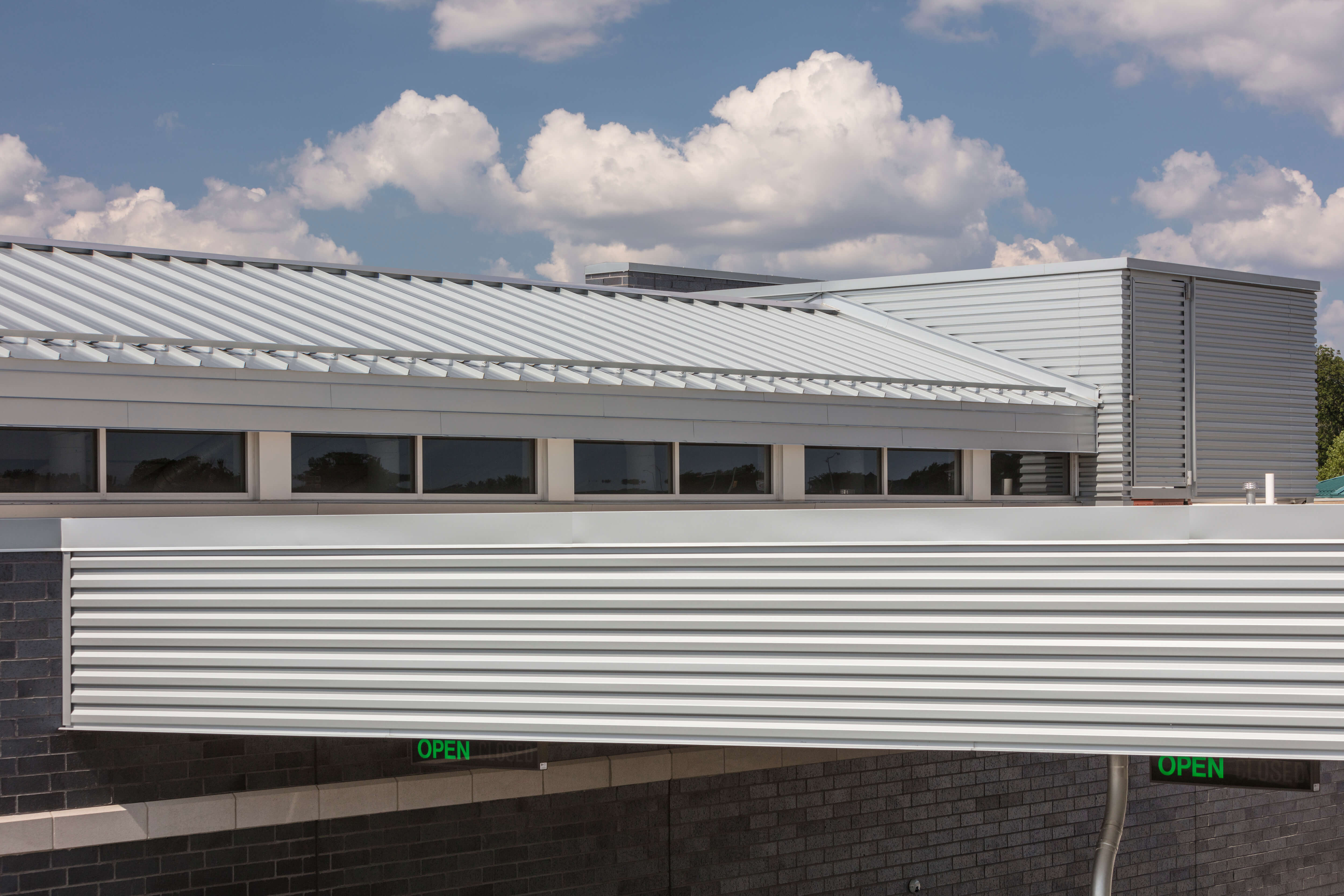
The building’s roof evolved from a single-slope flat style into a truncated gable roof, because the Muskego city planning guidelines required a Prairie Style expression to the building.
“The architect chose metal panels for the roof material in a bright silver color to contrast the dark brick on other parts of the credit union building,” says Rob Heselbarth, director of communications, Petersen Aluminum. “And, when plans changed to a gable-style roof, the roof became a more visible feature of the building, and the architect needed a sloped roof system that was appropriate for a high-end commercial building.”
“The mitred corners of the wall panels were prefabricated in the factory, which contributed to the ease of installation on the job site. The mitred corners add a clean, crisp look to the wall panels, and are in line with the architect’s prairie-style vision for the building’s design.”
The Muskego branch is the only branch with a gable roof. “Most regular gable roofs are rectangular, and if you truncate the eaves such that they are not parallel to the ridge, you end up with an eave that’s sloping even though the ridge is horizontal, and you create a more dynamic roof form,” Tan says. “When plans changed to a gable-style roof, the roof became a more visible feature of the building. So of course we wanted to highlight it with metal. The choice of a standing seam roof was pretty obvious for this building.”
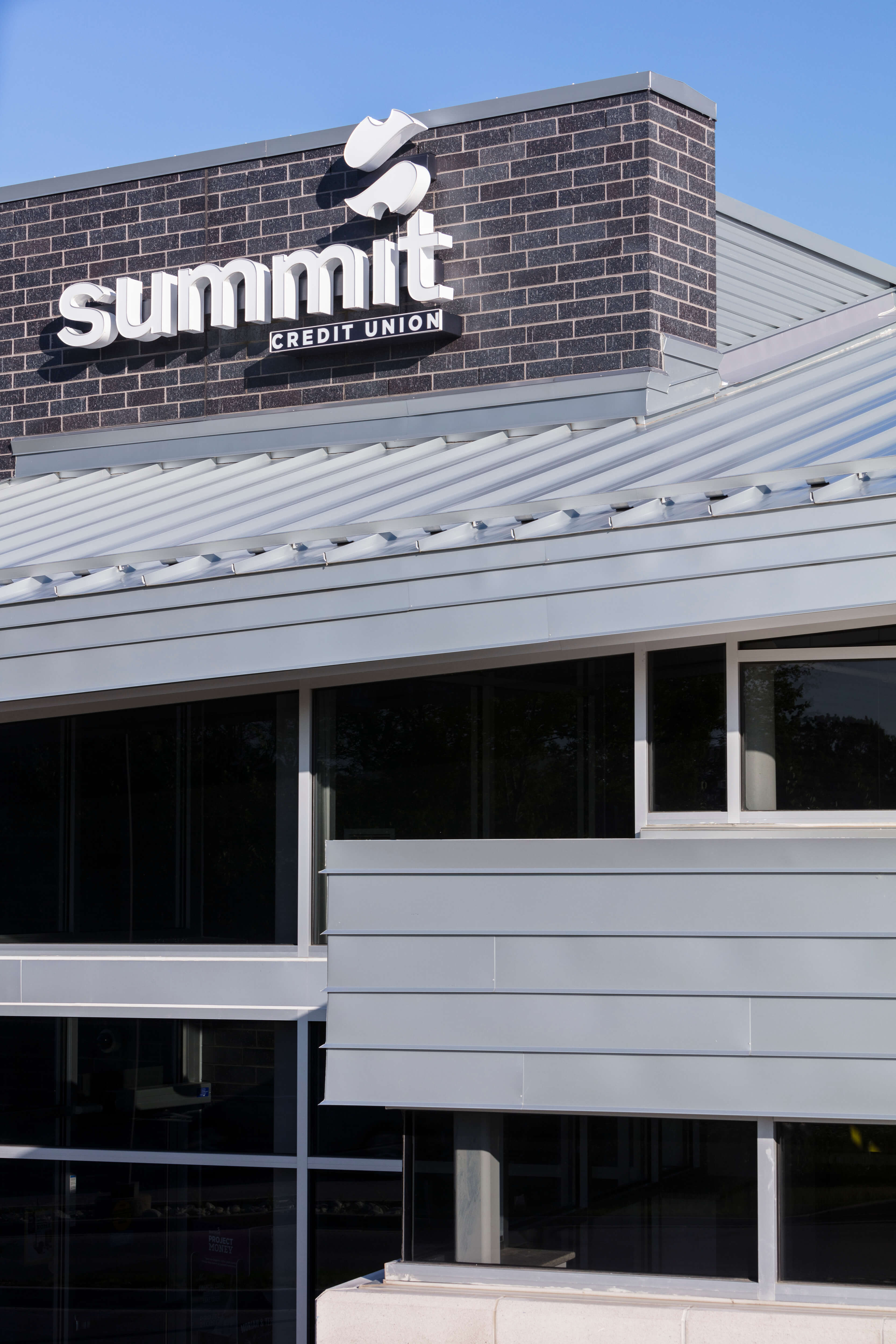
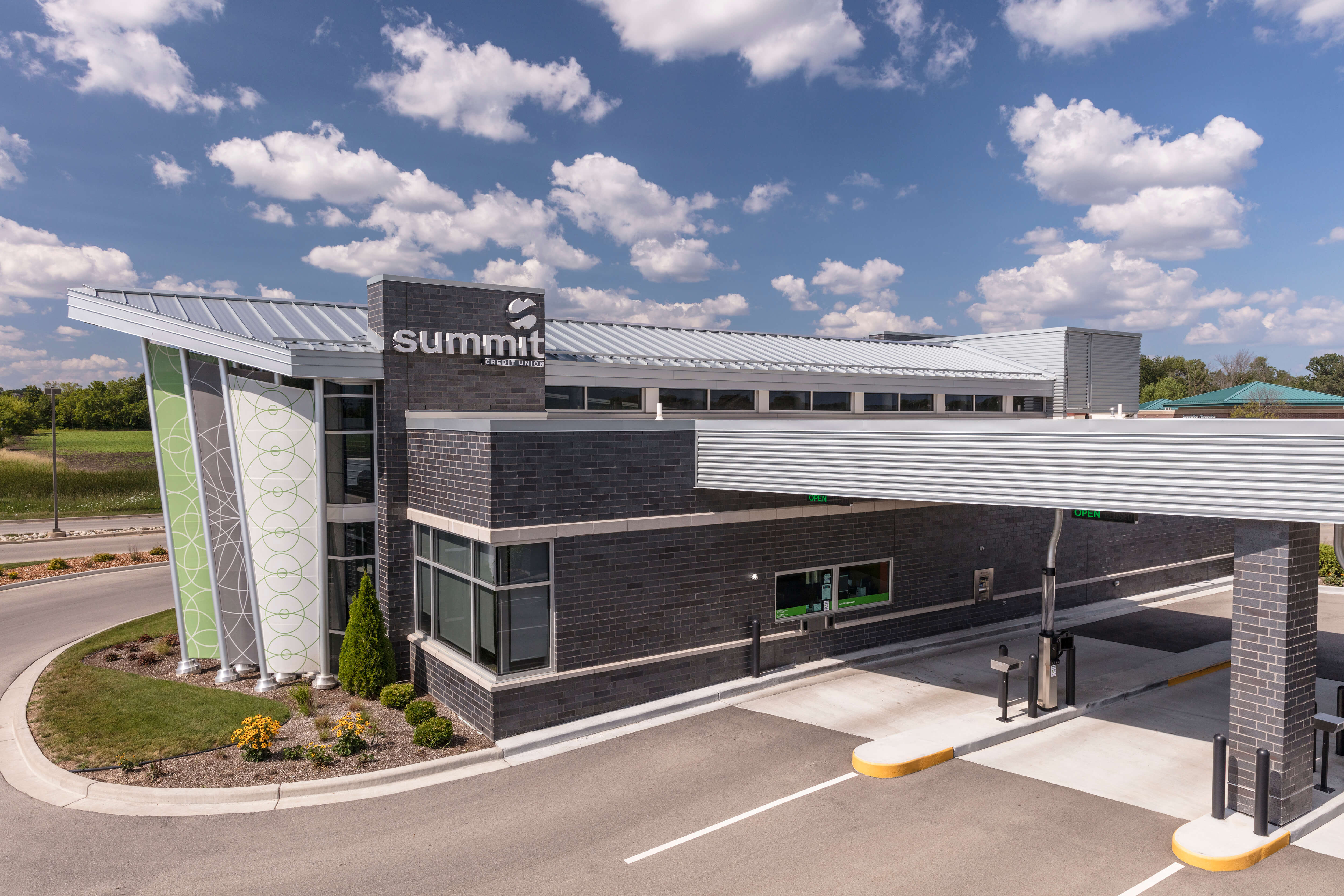
The metal siding is a staple of the Summit branches. “I’ve found that the concealed fastener rib panels are economical and a good-looking solution for many applications,” Tan explains. “The panel’s success is all in how you detail it.”
Metal applied to the Muskego branch includes Petersen’s Snap-Clad 24-gauge, 16-inch standing seam panels on the roof, HWP 16-inch ribbed wall panels on the interior and exterior walls, plus 12-inch Flush Panel in 22-gauge steel for soffits and interior accents. The exterior metal siding extends through a glass wall and wraps around portions of the credit union’s interior. All of Petersen’s PACCLAD metal is finished in Cool Silver Metallic. Fascia trim was fabricated from PAC-CLAD 24-gauge steel.
Alois Roofing and Sheet Metal completed all metal work in roughly two months. “When it’s the right manufacturer there is nothing more lasting and beautiful than the look of prefinished metal,” says Michael Pum, Alois Roofing project manager. “We helped fulfill the architecture’s design by installing an all metal roof, wall, fascia and soffit system on this job; transforming it from a single-slope flat style roof into a truncated gable roof. We even installed cladding and HWP panels inside the building to really tie in the beauty of the prefinished metal on the outside. We coordinated material orders with the architecture and Peterson, but also fabricated some of our own sheet metal and accessories in-house for edge material.”
Summit Challenges
Pum says the amount of metal work used in the design gives the building a modern and beautiful, sleek look to it. “Overall the Summit building was small in scale but large in workload considering the level of metal detail involved,” he adds. “For instance, the mitered corners on the wall panels—most of these were prefabbed by Peterson, but we had to make some on-site adjustments to keep the panels square and achieve that nice, flush look.”
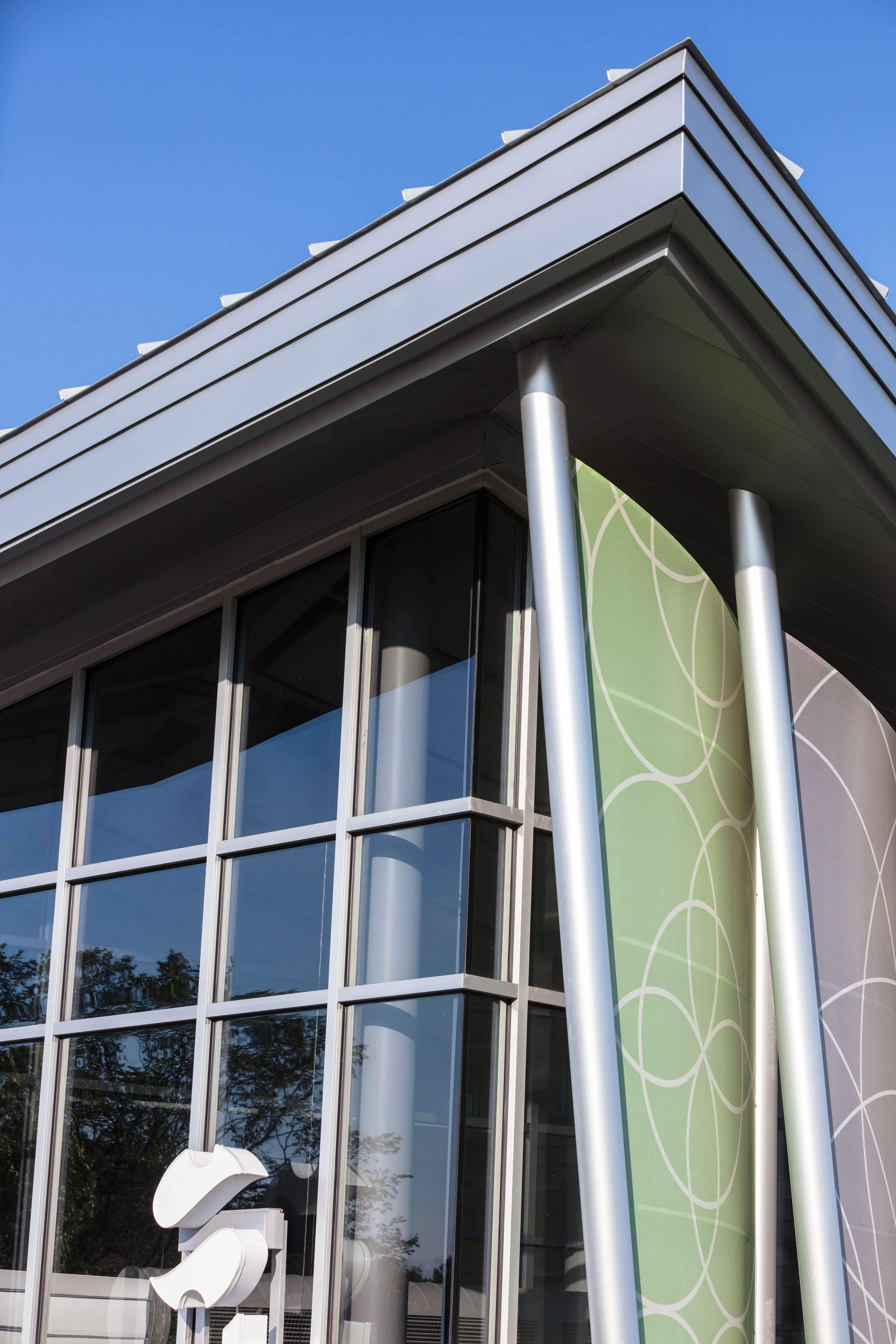
Mitred corners were specified because tenets of the Prairie style include horizontality, openness and “breaking the box,” Tan explains. “When you have a J-trim at the corners of a building’s horizontal ribbed panels the corner becomes visually enclosed, which does not let the horizontal lines wrap around the corner. The mitred corners on the metal wall panels on this building express the unbroken horizontal lines we wanted. We absolutely needed to specify the mitred corners to meet the planning department’s requirement for true Prairie-style design.”
One of the more challenging aspects was the angled drip edge along the front of the building. “Not only did we need to keep the panels square, but we also had to allow for that angle in conjunction with the panel, including allowing for expansion,” Pum says. “The angled soffit panels posed an even greater challenge with multiple angles tying in to others. But we’ve got a great crew here with lots of experience so we were able to knock these challenges out easy enough. One other challenge was the fast-paced nature of the project. It took a bit of jumping around and coordinating with other construction crews so everyone could complete their work on time.”
Summit Credit Union, Madison, Wis.
- General contractor:
- J.H. Findorff and Sons, Madison
www.findorff.com - Architect:
- Strang Inc., Madison
www.strang-inc.com - Sheet metal and roofing contractor:
- AloisRoofing and Sheet Metal, West Allis, Wis.
www.aloisroofing.com - Glazing:
- H.J. Martin and Son Inc., Green Bay, Wis.
www.hjmartin.com - Metal wall/roof panels:
- Petersen AluminumCorp., Elk Grove Village, Ill.
www.pac-clad.com