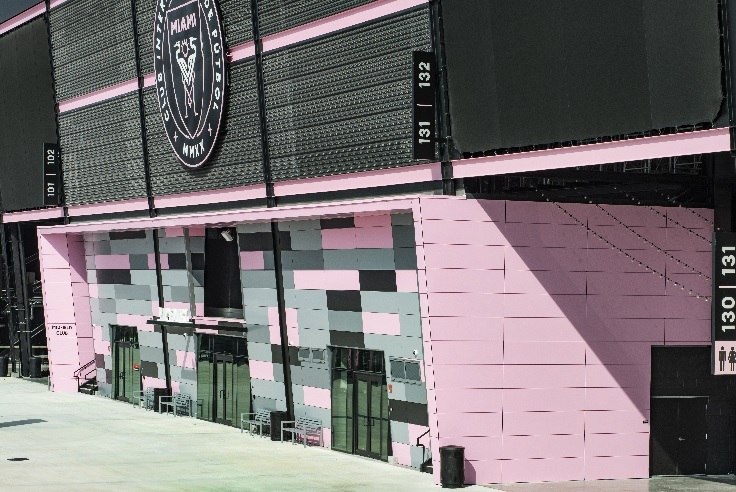
Insulated metal panels (IMPs) are the perfect building material for many projects. As the demand for data centers, distribution centers, cold-storage facilities and warehouses rises to meet the needs of our changing economy, more architects are turning to IMPs when they need performance and speed of build. In order for IMPs to provide top-of-the-line performance, the key is in the installation. Here are five steps to consider to successfully install metal wall panels from pre-installation meetings to lifting IMPs into place.
Successful IMP performance depends on installation
Steel Alignment
The steel alignment is the first step in a good wall panel installation. Fastening members should be in line as per the manufacturer’s specifications, otherwise issues can occur with the performance and aesthetics of the panels. It is important to check the steel alignment first and to make the necessary adjustments prior to installation. A pre-installation meeting is crucial, so that everyone understands the importance of the alignment and potential problems that can arise.
Misaligned steel can cause an issue with engagement of one panel to the next. There will not be a proper seal with the butyl caulking in the panel joint and a misalignment with the foam-to-foam contact will occur. A misalignment can also put stress on the panel when the contractor forces the panel to the steel framing by pulling it in with the clip and fasteners. The panel joint can get crushed, causing a leak, and the panel itself can have a waviness, commonly referred to as oil canning.
Butyl Sealant Application
Butyl sealant is used in the panel joints and is applied to the steel structure in predetermined areas to form a weathertight seal. The butyl sealant is for areas that are not exposed to the sun, so the material does not dry out, and stays pliable for expansion and contraction.
The size of the bead is very important and must be applied to the proper areas. While contractors often think they’ve ordered too much, there should not be much left over with proper bead size and application. The more butyl, the less chance of a leak. If panels are ordered with factory butyl caulk, the panel joint should be inspected before installing.
All terminations of a panel, whether at the base or the opening of a window, door or another area where a horizontal bead of butyl sealant is applied, need a pig tail or marriage bead. This tie-in is very important to stop the flow of air.
Foam-to-Foam Contact
Foam-to-foam contact is very important for any temperature transmitting through the panel joint to keep temperatures steady. The amount of R-value is determined by the thickness of the foam panels. This R-value changes from commercial/industrial applications to cold-storage applications with the different thickness of panels. It is also critical for locations with extreme cold, like Alaska.
When installing panels, use a wedging device, such as a ratchet or clamp, at the top of the panel and at the bottom to ensure tight foam-to-foam contact. It helps to keep the alignment of the panels. Steady pressure is the best method of tightening up panels.
Cutting Panels
There are many methods used for cutting panels. One of the best is a circular saw with a carbide tip blade. For thicker panels, a larger saw will be needed to cut completely through the panel. Thicker panels, up to 6 inches, might require cutting both sides. If there is some foam left uncut in the center, a serrated knife will easily slice through.
When cutting openings, knowing a large amount of panel will be removed, it is best to cut through the tongue and groove of the panel edge. Then, the circular saw can be adjusted to a depth of 1/4-inch to cut the skin on both sides, or a nibbler can be used. Damage to the small leg can be avoided by leaving the plug of the panel in while it’s raised into position.
Lifting Panels
Over the years, contractors have developed many methods of lifting panels into position. While a crane can be used along with a channel at the top of the panels, a vacuum lifter is the best and safest method for lifting panels into place. It uses suction cups placed at the proper location on the panel. The panels can be lifted right off the bundle and carried to the steel framing. These vacuum lifters help speed up the job and reduce the cost of labor.
Al Detmer is field technical services manager at Kingspan Insulated Panels North America, Deland, Fla. To learn more, visit www.kingspanpanels.us.