Coil coatings on the market today are available in a number of technologies, all offering a certain level of protection for metal exteriors. Commonly known coating systems include PVDF, FEVE, SMP, and polyester, all applied via coil coating lines to steel or aluminum.
Today’s coil coatings are diverse, with varying properties
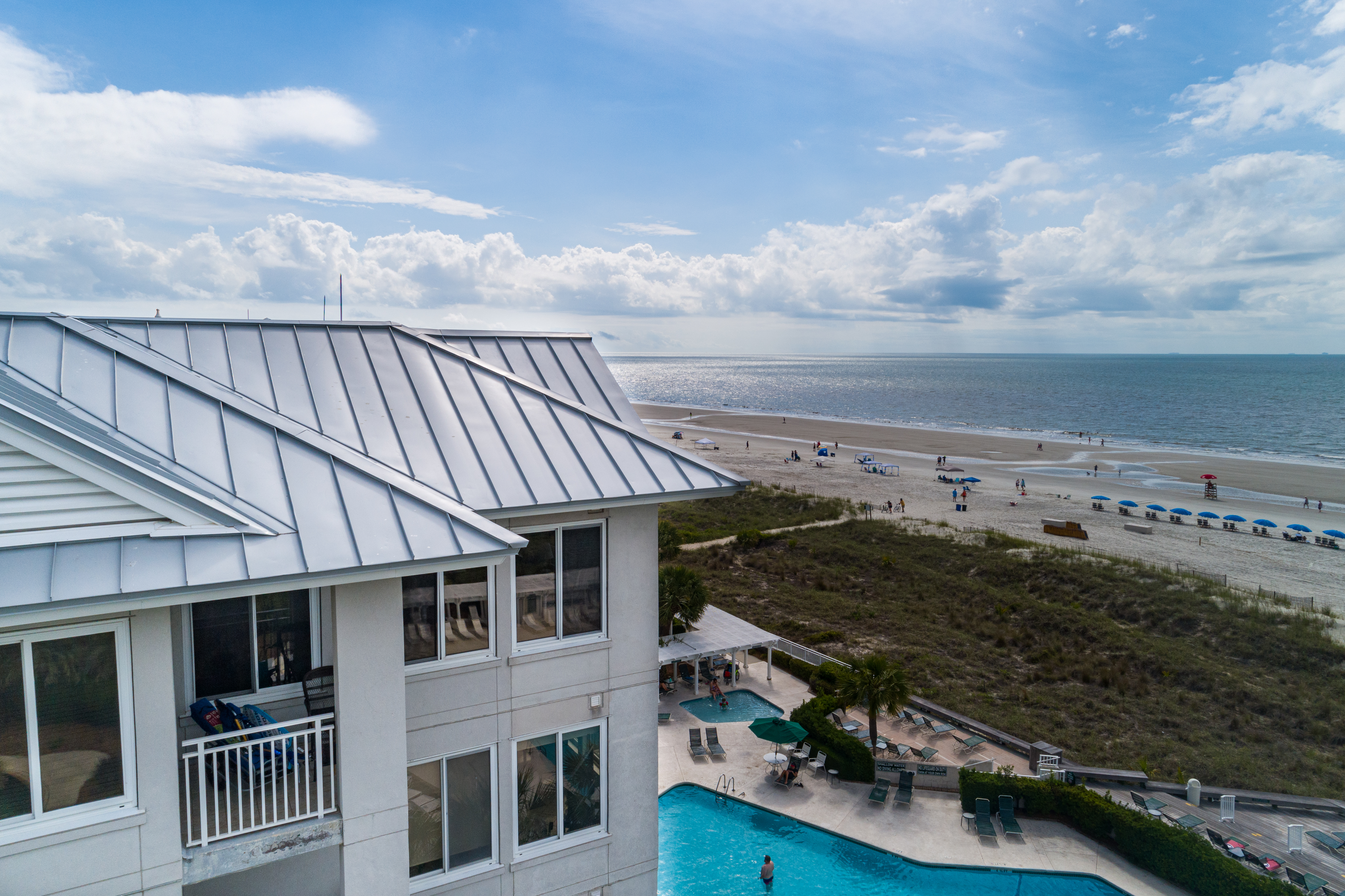
A metal roof using PVF film in Hilton Head, S.C.
PVDF coatings have long been considered the highest performing metal paints for exteriors, known for their track record of durability. FEVE is regarded by some to achieve similar performance. These paints are preferable in harsher environments that require the greatest degree of environmental resistance, providing enduring film integrity with long-lasting aesthetic stability despite exposure to UV light, thermal cycles, moisture and other corrosive elements in the environment. Polyester-based paints are typically lower cost and performance, with warranties that reflect that; they are better suited to less-demanding environments. When dealing with coastal and highly demanding environments, even PVDF will not always provide adequate protection against corrosive elements.
PVF Technology
PVF technology is based on a fluoropolymer similar to PVDF in many ways, but with some significant performance benefits. PVF can be formulated as a coating or a film and distinguishes itself as much more robust, durable protection in a number of ways. The first reason is the inherent properties of the PVF polymer, which include unparalleled resistance to chemical corrosion and excellent formability. Compared to other fluoropolymers, PVF is naturally flexible, even without addition of plasticizers or non-fluorinated polymers, ensuring it can bend with formed panels without any risk of cracking.
Other fluorinated materials like PVDF or FEVE require acrylic to be added to achieve a similar level of flexibility, but these additives can compromise the level of chemical resistance and outdoor performance levels. PVF has a significantly tighter bend than other coating systems can achieve, thus ensuring there will be no cracking or weakness on tight bends when panels are fabricated. This ensures that the high level of chemical and corrosion resistance is maintained in the final installed structure. PVF can withstand a vast range of corrosive elements significantly longer than any other coating system, demonstrated through extensive lab testing and real-world exposure data.
PVF film, when used as a replacement for a coil coating system, has some distinct benefits even before application. PVF film is made with a biaxially oriented process, which means the film is stretched in two directions during its manufacture to optimize its mechanical properties. With this approach, if there are any holes or weaknesses in the film, they will be revealed before the film is applied to metal. This stretching process makes the film stronger and tougher, ensuring it exhibits optimal mechanical properties through panel fabrication and in use. Conversely, with coil coatings like PVDF, FEVE or SMP, during the coating process, as the solvent dries off, gas bubbles may form and pop under the paint surface, causing tiny pinholes. These defects can be harder to detect and control than in a web of free-standing polymer film. Over time, corrosive elements like salt water can penetrate these weak areas in the coating and damage the metal beneath.
Evolution
Coil coating technology has evolved slowly over recent years, with contractors and building owners demanding higher levels of performance. The coating is the barrier that protects architectural metal from corrosion, which protects the investment in quality building materials and ensures longevity.
Technologies like PVDF offer excellent protection. However, PVF technology offers warranties superior to even PVDF and ensures a durable and unchanging surface that can withstand even the most challenging environments.
Performance and warranty are just as important as color when choosing the right coating for your project, and are all critical considerations to ensure lasting appearance and protection for your metal building panels. Choosing the optimal durable solution for your environment will lead to longer building lifetime and lower maintenance and replacements, thus reducing material and labor costs, as well as environmental footprint, over the building’s life.
Mike Demko, Ph.D., is research and development director at DuPont Tedlar, Wilmington, Del. To learn more, visit www.dupont.com/brands/tedlar.html.
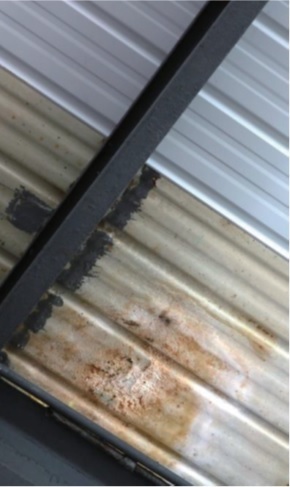
This chemical plant interior roof shows PVF film (on the top section) at six years old, and PVDF coating (on the bottom section) at less than two years old.