Installing insulated metal panels (IMPs) has become a cornerstone of modern commercial and industrial construction. From distribution centers and manufacturing plants to cold storage facilities and architectural facades, IMPs offer a high-performance building envelope that combines insulation, a vapor barrier, and a finished surface into a single component.
However, as panels grow longer, thicker, and heavier, the need for safer and more efficient handling methods becomes critical. This is especially true with the advent of fire-rated cores and architectural finishes.
Vacuum lifters engineered for IMP applications have transformed how contractors approach installation. Purpose-built equipment allows crews to lift, position, and secure panels with greater control, improved jobsite safety, and reduced risk of damage.
The challenge of installing IMPs
IMPs are engineered systems, as each panel typically consists of two metal facings bonded to an insulating foam core, such as polyisocyanurate (polyiso). While this design delivers superior thermal performance and an airtight seal, it also creates unique handling challenges:
- Long panel lengths that can exceed 40 ft (12 m).
- Heavy weights, especially with thicker cores or fire-rated assemblies.
- Surfaces that need to stay unblemished throughout installation.
- Tight tolerances for alignment and joint engagement.
Traditional handling methods, such as slings, spreader bars, or manual manipulation can introduce bending stress, surface damage, or safety hazards. Panels may flex excessively if unsupported along their length. Slings can dent or crease finished skins, while manual handling increases the risk of strain, injuries, and hazards associated with dropped panels.
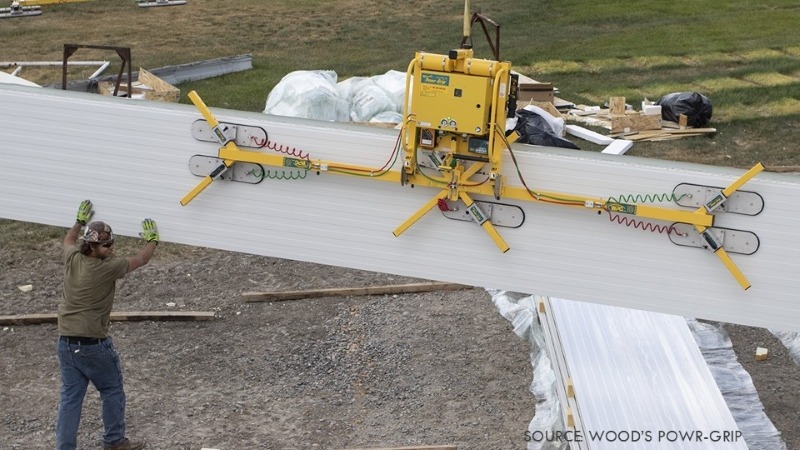
As IMPs continue to grow in commercial construction, contractors are turning to vacuum lifting systems for even load distribution and non-penetrating attachments.
Why vacuum lifters are ideal for IMPs
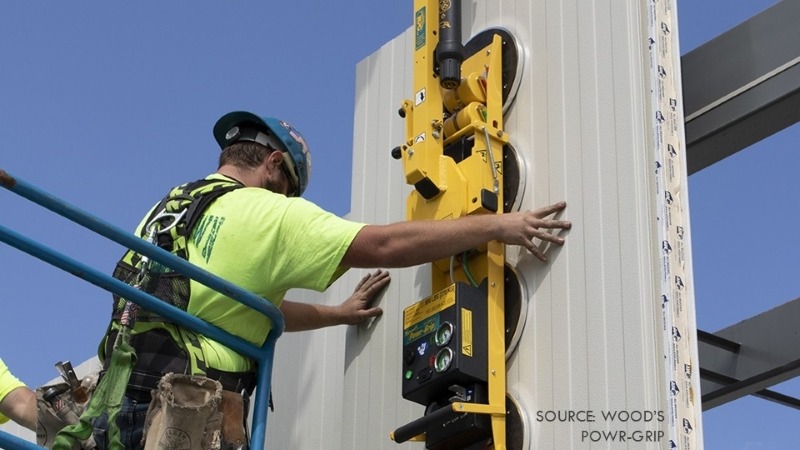
Vacuum lifters use suction pads connected to a powered vacuum system that creates negative pressure between the pad and the panel surface. When properly applied, the system distributes lifting forces evenly across the contact area, reducing point loads and minimizing flex.
For IMP installation, this technology offers several key advantages:
Surface protection. Since vacuum pads grip without hooks, clamps, or penetrating fasteners, they protect architectural finishes and factory-applied coatings. This is particularly important for visible facades or high-end architectural projects.
Improved load control. Vacuum lifters allow operators to rotate, tilt, and precisely position panels during installation. This makes it easier to align panel joints, engage tongue-and-groove connections, and maintain consistent reveals.
Enhanced safety. Modern vacuum lifters incorporate vacuum monitoring systems, audiovisual alarms, and reserve capacity to maintain grip even if power is interrupted. These features significantly reduce the risk of dropped loads.
Increased efficiency. With a dedicated IMP lifter, smaller crews can install panels more quickly. Reduced manual handling lowers fatigue and speeds up installation cycles.
Purpose-built solutions
While generic vacuum lifters exist, IMP installation demands specialized engineering. Certain manufacturers have developed models specifically for IMPs, offering dramatic improvements over other vacuum lifters when used for IMP applications. These lifters are designed to handle:
- Long horizontal wall panels
- Vertical wall installations
- Roof panels at various pitches
- Heavier architectural panels
Certain models also accommodate heavier, fire-rated IMPs that have increased in popularity due to stricter building codes. Fire-rated panels often weigh significantly more than standard polyiso-core panels, requiring greater lifting capacity and rigidity.
By incorporating adjustable pad frames, advanced wireless cell phone integration, and remote-control operation, these lifters allow operators to safely maneuver large panels from delivery trucks to final placement with minimal repositioning.
Safer and more efficient handling on today’s jobsites
Recent industry discussions have emphasized both productivity and workforce safety. Labor shortages and increasing project timelines mean contractors must do more with fewer crew members. Vacuum lifting systems address both concerns. Using IMP-specific lifters:
- Reduces the number of workers required to guide and install panels
- Minimizes the need for workers to climb or reach excessively
- Decreases risk of musculoskeletal injuries
- Improves installation precision
This shift aligns with broader construction safety initiatives that prioritize mechanical handling solutions over manual labor whenever possible.
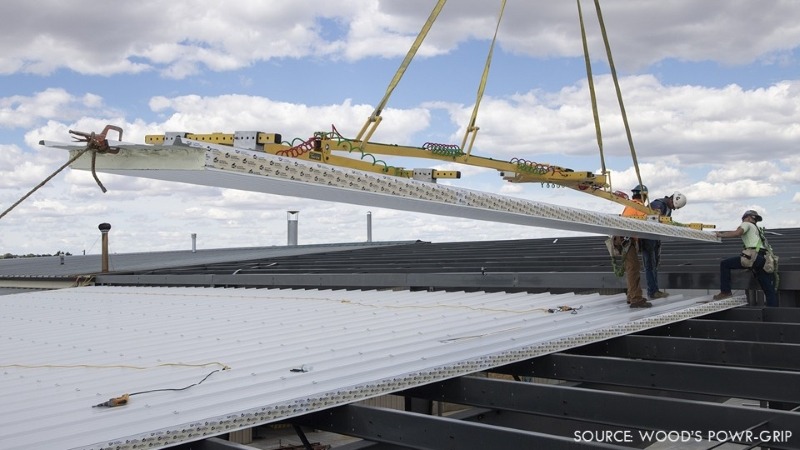
Further, since vacuum lifting reduces the likelihood of panel damage during installation, vacuum lifters represent a high-value component of erecting building envelopes. Damaged panels can cause costly delays, reorders, and scheduling conflicts. By providing uniform support, vacuum lifters help protect that investment.
Protecting panels during construction
Panel protection does not end once the IMP is secured in place. Throughout construction, supporting trades can inadvertently dent or scratch exposed surfaces. Proper handling during installation is the first line of defense in preserving panel integrity. Vacuum lifters contribute to panel protection by:
- Eliminating sling contact marks
- Reducing bending stress that can cause subtle deformation
- Maintaining clean surfaces that are free of clamp impressions
When combined with proper site coordination and protection protocols, vacuum handling helps maintain the aesthetic and performance characteristics of the building envelope.
Supporting the future of IMP construction
The IMP market continues to evolve. Panels are becoming more sophisticated, incorporating enhanced fire resistance, integrated solar systems, and improved energy performance. As building codes tighten and sustainability goals increase, IMPs are playing a larger role in energy-efficient construction.
Handling equipment must evolve in parallel. Manufacturers have recognized this shift and invested in specialized lifters tailored to emerging panel technologies. Whether lifting heavier fire-rated panels or maneuvering roof panels designed to accommodate rooftop solar installations, purpose-built vacuum systems ensure that installation methods keep pace with product innovation.
Additionally, vacuum lifting technology is adaptable. Modular pad configurations allow contractors to handle varying panel contours, widths, and lengths without purchasing entirely new systems. This flexibility is particularly valuable for contractors who install both wall and roof panels across multiple project types.
Training and proper use
As with any lifting equipment, proper training is essential. Operators must understand:
- Surface conditions required for vacuum sealing
- Inspection protocols for vacuum pads and seals
- Load limits and configuration adjustments
- Emergency procedures
When used correctly, vacuum lifters provide a secure grip on smooth, coated metal surfaces. Regular inspection and maintenance of vacuum pumps, hoses, and monitoring systems ensure continued reliability.
A competitive advantage for contractors
Contractors who invest in IMP-specific vacuum lifters often find they gain a competitive edge. Faster installation times, improved safety records, and reduced material damage translate directly into cost savings and improved project margins.
In competitive bid environments, demonstrating the use of specialized equipment can also instill confidence in general contractors and building owners. It signals a commitment to safety, quality, and efficiency.
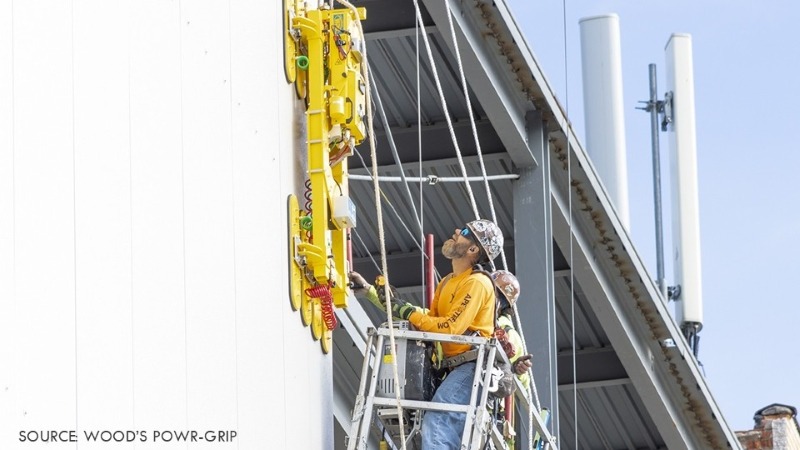
As IMPs continue to increase in size and weight, mechanical handling will become less optional and more essential. The days of manually guiding large wall panels into place are giving way to precision-engineered lifting systems.
The bottom line
Installing IMPs demands more than just cranes and a workforce. It requires precision, protection, and safety at every stage of handling. Vacuum lifters, with flexible configurations and advanced technological features, offer a modern solution to modern construction challenges.
By evenly distributing loads, protecting finished surfaces, and enabling controlled placement, these systems enhance both safety and efficiency. As IMP usage expands across commercial, industrial, and architectural markets, purpose-built vacuum lifting technology will continue to play a central role in successful installations.
Specialized vacuum lifters are crucial for contractors who want to simplify installations, safeguard materials, and uphold strong safety practices. These tools are indispensable for advancing insulated metal panel construction.
Barry Wood is the vice president of marketing and commercial development for Wood’s Powr-Grip.