Steel shapes modern society. Its strength and versatility drive design freedom and construction speed from airports to arenas. But when exposed to fire at certain temperatures, steel does not hold. According to the American Institute of Steel Construction (AISC), it begins to lose half its strength around 538°C (1000°F). These temperatures can be reached within minutes in a building fire fueled by standard office contents such as furniture, textiles, and wood.
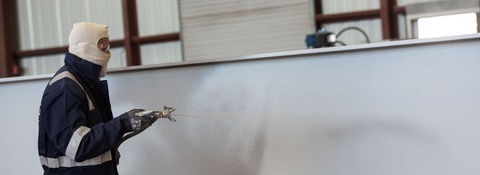
Intumescent coatings extend the time to steel’s calculated structural failure temperature. These systems expand when exposed to heat and form an insulating char. The char delays heat transfer to the steel, helping maintain structural integrity long enough to allow occupants enough time to evacuate and emergency crews more time to respond.
Performance depends on testing
However, the benefits of coatings only hold up if they perform as tested. Misapplied systems or mismatched conditions can introduce risk. Instead, specifiers and contractors must ensure fire testing aligns with how coatings will be used in real construction scenarios. Fire testing must account for application thickness, primer and topcoat interaction, applied loads, and system performance under both restrained and unrestrained conditions
Coatings proven in the lab show their full potential when tested to match actual construction methods. Testing under real-world loads and assembly configurations can help ensure the effectiveness of the coatings.
No universal standard
There is no single fire testing standard that applies globally. North America uses UL 263 and ASTM E119. The EU follows EN 13381-8, while China enforces GB 14907. Each standard uses a similar cellulosic fire curve but applies different failure limits, furnace setups, and durations. Coatings tested for one region’s standard cannot be assumed compliant elsewhere.
To ensure compliance, engineers must verify that every system component meets the applicable regional test criteria, including primers and topcoats.
What the testing shows
At the Chongqing Jiangbei International Airport T3B Terminal, engineers faced a three-hour fire resistance requirement for structural columns that included circular, conical, and shuttle-shaped assets. These columns, filled with concrete, required coatings that could withstand stress and match the architectural finishes.
Enter an intumescent coating designed to provide passive fire protection for structural steel in buildings and infrastructure. This advanced solution underwent extensive testing that simulated real-world weld seams, assembly loads, and surface preparation variables. With design driven by the highest standards, third-party labs confirmed performance through mechanical load fire testing and complete system evaluation. This validation proved critical. It kept the project on track and allowed designers to retain the exposed steel aesthetics, demonstrating what effective fire testing delivers: clarity, protection, and speed.
To avoid costly delays and rework while effectively safeguarding assets, contractors and specifiers should:
- Review complete system testing, not just the intumescent layer.
- Confirm third-party certification from Underwriters Laboratories (UL), Factory Mutual (FM), or other approved agencies.
- Ensure testing includes actual steel profiles, loads, and assembly types.
- Align every layer of the coating system to the tested conditions.
- With support from the coating manufacturer, select the appropriate intumescent coating system based on the corrosive environment to ensure durability and long-term performance.
Coating selection is important
Do not rely on performance claims alone when evaluating structural steel intumescent coatings. Ask about the test standards and verify third-party validation. It is essential to confirm that the system includes tested primers and topcoats. Find the right coatings partner that can help ensure test conditions match how the product will be used on-site, effectively working to reduce rework, premature failure, and costs.
Fernanda Gregati is PPG’s business development manager for the protective and marine coatings business. She is a seasoned chemical engineer and business development leader with over a decade of experience in passive fire protection and protective coatings.