Due to its high strength-to-weight ratio, versatility and long lifespan, metal roofing is becoming a more popular choice for residential and light commercial construction.
Preventing water intrusion in metal roofing requires planning and precautions
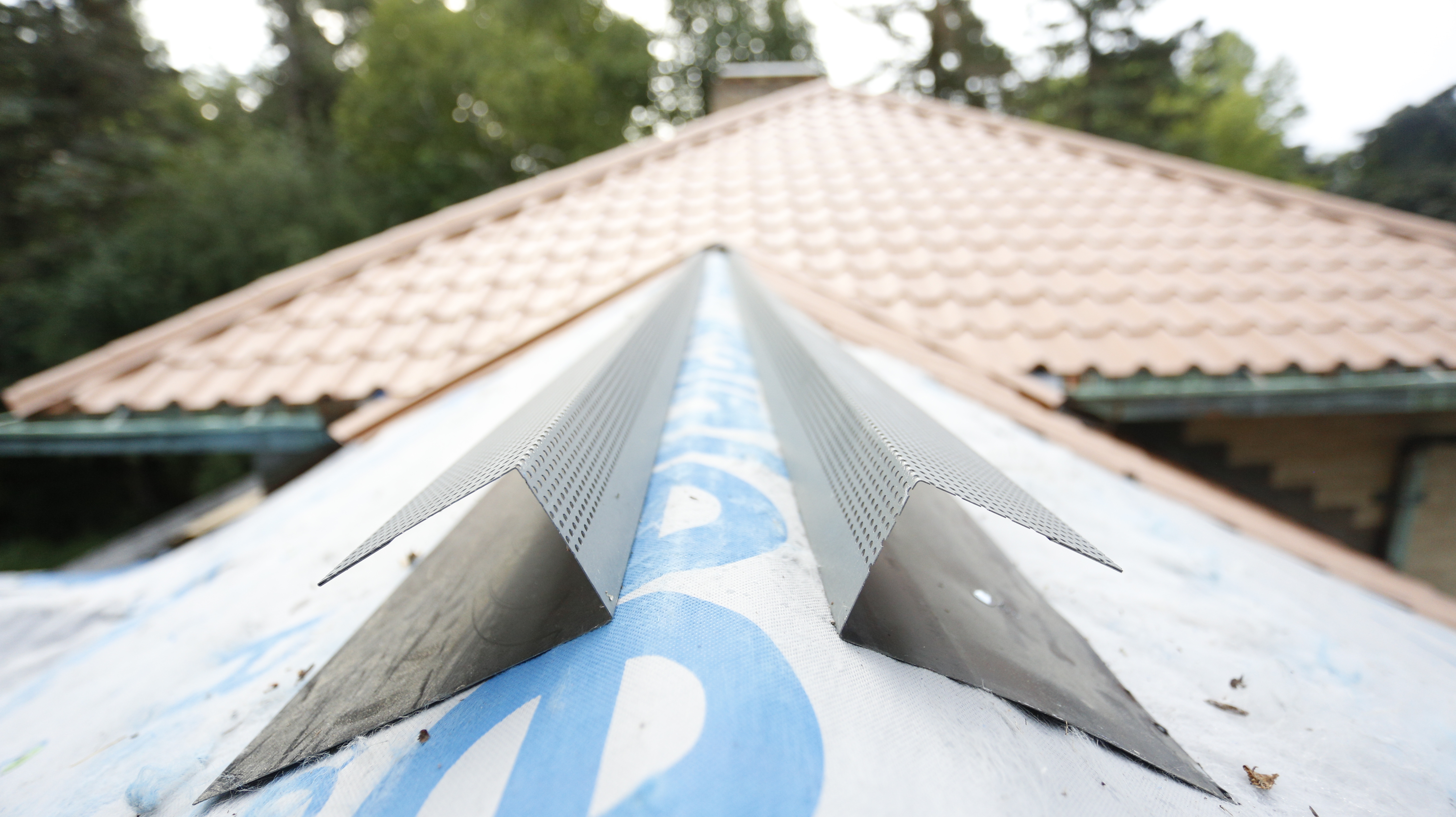
Metal roofing is one of the best choices for capturing non-potable water for gardening and other uses, and, when properly installed, is one of the most effective choices for protecting homes from the elements.
Like anything made of metal, metal roofing can expand and contract in the presence of heat. Metals can also interact with each other in unexpected ways if they come into contact with one another, especially in the presence of moisture. Metal is different and preventing water intrusion in metal roofing requires additional know-how. Taking a few additional precautions will ensure your next metal roof project performs to expectations.
Denying Entry
The foundation for any water-resistant, steep-slope roofing system is a proper underlayment, which adds a moisture-resistant layer to back up your shingles (or in the case of metal roofing, the panels). While there are several solar-reflective metal roofing options, the undersides of metal panels often absorb a great deal of heat (up to 250 F). A synthetic underlayment designed especially for use beneath metal roofing is the best option for resisting heat destruction that can expose roof decking to unwanted moisture.
Unlike porous felt underlayments of the past, a good synthetic underlayment will not allow water to wick through to the deck. Also, using a high-temperature waterproofing underlayment at the eves and around roof penetrations will help maintain a watertight barrier under the panels, especiallysince the underlayments are designed to seal around nails driven through it. The waterproofing underlayment will also help defend against ice dams and potential roof system damage as accumulated moisture goes through the freeze-thaw cycle.
While underlayments, flashings and other waterproofing methods provide excellent moisture defense, roof designs with a lot of architectural elements (e.g., gables, hips, valleys) can make a roof susceptible to water intrusion. Any point where the roof line stops and starts is an invitation for moisture, so it is best to use a good quality waterproofing underlayment under all unique structural elements where there is a high potential for water intrusion.
Another moisture prevention detail in which to pay close attention is the proper placement of fasteners. Unlike asphalt roofs, which are typically nailed down, most metal roofing systems require screwed fasteners to attach the panels to the decking. Under-driven, loose or off-center fasteners can turn a well-functioning metal roof system into a metal colander, leading to roof system failure over time.
Take the time to make sure every fastener is driven straight and flush to the panel. Dividing the labor so that one installer can focus solely on driving fasteners is one way to limit the risk of installation errors. Also, look for metal roofing with hidden or covered fasteners, which greatly limits the ability of water to enter at fastener locations.
Preventing Corrosion and Condensation
Most metal roofing on the market is stone coated or protected by corrosion-resistant paint systems. However, saltwater mist can have a highly negative impact on metal roofing over time. For that reason, many metal roofing warranties are voided or limited when the product is installed within close proximity to a body of salt water. In general, consult with the manufacturer before selling or installing metal in coastal and seaside communities.
Corrosion can occur in metal roofing if the undersides of metal panels are not properly coated or become damaged. A granulated underlayment installed directly under metal panels can scratch the layer of protective paint, exposing the metal to oxidization. A proper synthetic underlayment will prevent this. Fasteners, rivets, flashing, trim, gutters and non-galvanized metals can interact poorly when in contact with weak or damaged metal panels. To prevent the interaction of metals, it is best to rely on a single manufacturer for all roof system components. This extends the life span of the roofing system and ensures the best warranty protection.
Condensation under metal panels is a possibility in any climate, but especially in humid or swampy climates like in the Southeast. Proper ventilation of attic spaces is extremely important for preventing the build-up of moisture that can lead to condensation. Venting the roof from the soffit to ridge is the most optimal way of preventing condensation under metal and eliminates the potential for various moisture issues.
When installed properly, metal roofing will often outlast the structures they are built upon. With a little precaution and preparation, your metal roofing project will stand out among neighboring structures for years to come.
Dale Walton is manager, residential product marketing at CertainTeed Corp., Malvern, Pa. To learn more, visit www.certainteed.comor call (800) 233-8990.