Why should your company have retrofit as part of your offered services? The market size is huge, there are over 19 billion square feet of metal roof systems that are 20 to 50 years old. Most retrofit work is negotiated, not bid work. Projects typically have a fast turnover compared to new construction, which is great to maximize cash flow and/or keep crews busy between long-term projects. It is customer friendly because you cause little or no disruption to ongoing operations. You are providing a long-lasting, low-maintenance, code-compliant roofing solution.
A closer look at the metal-over-metal roof retrofit market
Metal-Over-Metal Retrofitting Facts
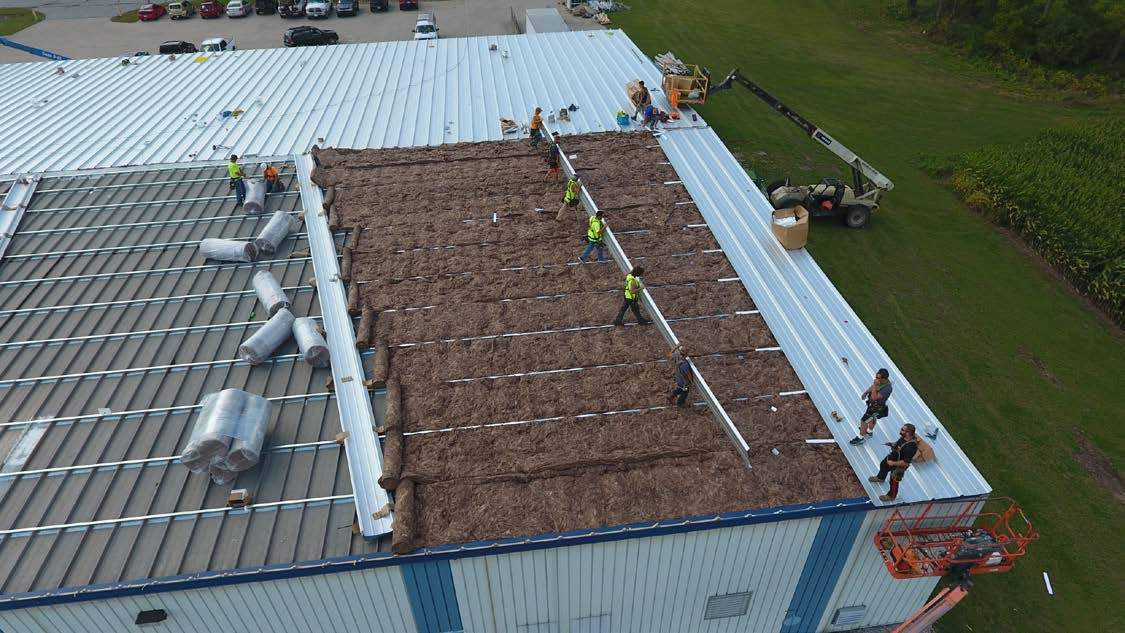
Existing metal roof panels of all types and rib profiles can be retrofitted: screw-down, standing seam and corrugated. The new retrofit roof can meet or exceed current code requirements. Standing seam roofs with an expected 60-year useful life can be installed over existing screw-down roofs. Standing seam roofs are the perfect platform for installing photovoltaic (PV) systems, since the roof will last longer than the PV units. Attachment of the solar panels does not penetrate the roof.
New metal roofs can be installed over coatings, including foam coatings.Increased R-values can easily be achieved with various insulation systems, either fiberglass batts or rigid board, pending the desired R-value or for local code requirements. Strengthening of the existing roof purlins in excess of the weight of the retrofit system can be accomplished.
Metal-Over-Metal Retrofitting Competitors’ Weaknesses
The number one competitor to metal-over- metal retrofits is roof coatings. Rarely explained, roof coatings are not weather proofing, they are specifically for extending the life of the existing roof finish only. Liquid-applied roofing is a weather proofing product; significantly more expensive, difficult to prep and apply properly. Coatings are short-term solutions 3 to 15 years typically and they are not cheap, especially liquid applied Roofing. Both require regular maintenance.
Neither coatings nor liquid applied roofing will bring the existing roof to the current code. They also frequently hide significant roofing defects that lead to early roof failure. Both systems can also develop leaks that trap moisture under the coating, causing the existing roof to corrode quickly and become un-repairable.
The second largest competitor is thermoplastic polyolefin (TPO) over metal. This is an expensive system, sometimes costing as much as or more than the metal-over-metal system. TPO can be shown to meet the current wind loadings if properly designed but it cannot meet the existing snow loading. Most older roofs do not meet the current snow load requirements. A 40- to 60-mil TPO membrane adds no strength to the existing panels.
TPO can also be installed such that it collects water and creates ponding, overloading the existing roof. Metal buildings are never designed to have water standing on the roof and if overloaded they can collapse. These systems also have a fairly short life cycle compared to metal roofing; 15 to 20 years is common.
Worth Your Time
If you are a contractor/erector: the metal over metal retrofit market is truly worth your time to investigate and see how it will fit with your other service offerings, along with what it can add to your yearly sales volume.
If you are a building owner, review closely the systems presented to you for updating that old metal roof. Metal-over-metal will have the lowest lifetime cost of any system and give you the best return for your money, including an increase the buildings value.
Dale Nelson is president of Roof Hugger, Lutz, Fla. To learn more, e-mail sales@roofhugger.com or call (800) 771-1711.
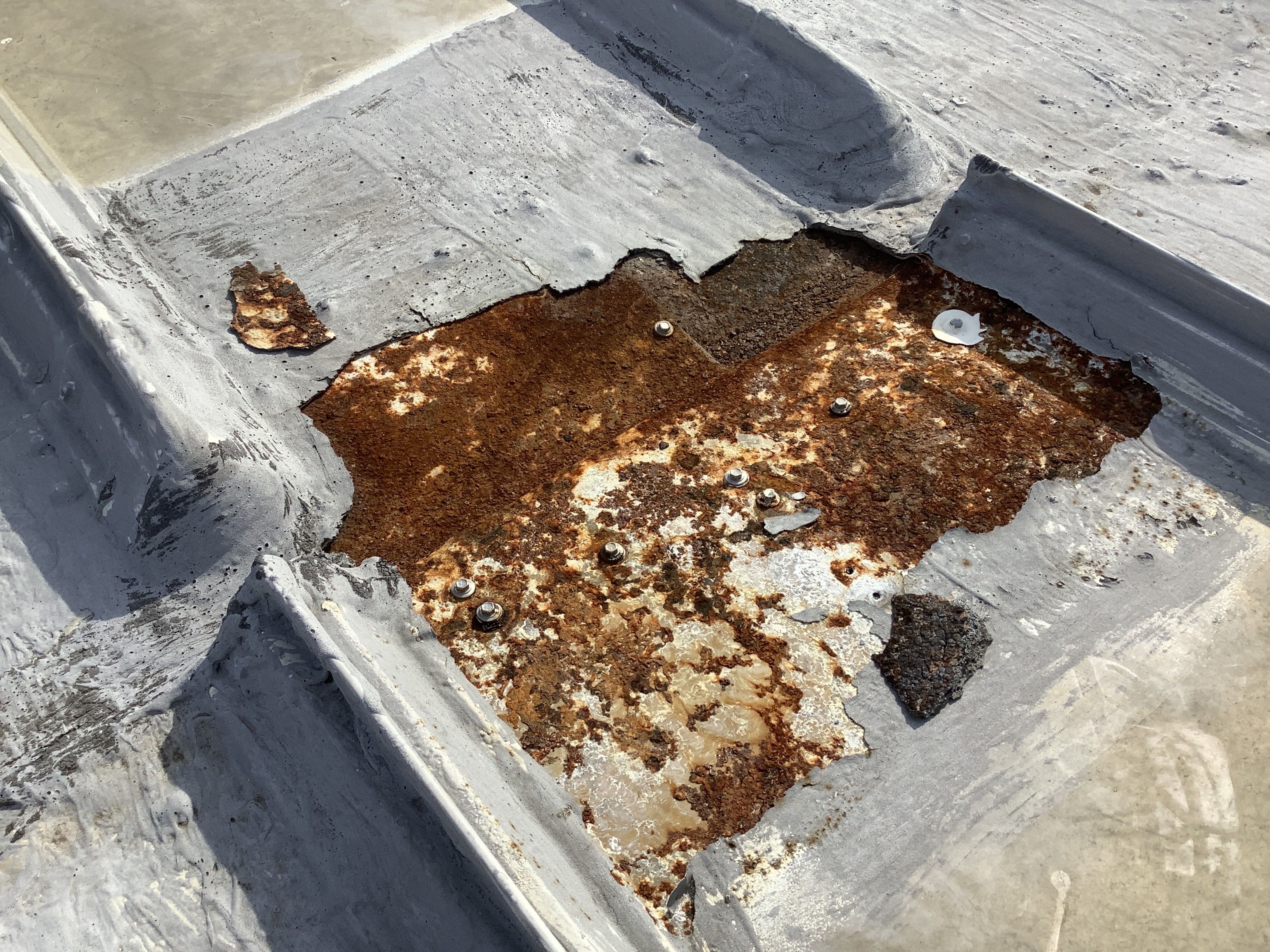
Endlap coating fail