Know the pros and cons of the four main sealant systems
 When it comes to weatherproofing those hard-to-seal areas on your next metal building project, choosing the right weatherproofing system is one of the most important decisions you can make. Get it right, and you’ve got a loyal customer for decades. Get it wrong, and you’ll waste time and money.
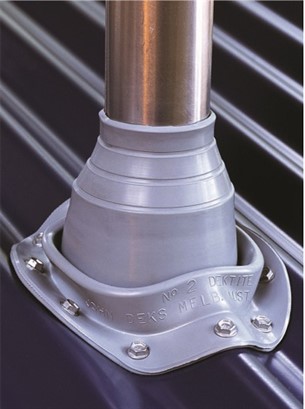
Making the right choice when it comes to metal building sealants, however, isn’t simply about knowing the differences between silicone, polyurethane, solvent-based or butyl sealants. It’s also about knowing the pros and cons of the four main types of sealant systems for hard-to-seal areas like expansion joints, roof-to-wall transitions, roof and wall penetrations, and vertical gaps.
What are the Four Main Sealant Systems?
Currently, metal building contractors mostly use the following:
• Liquid-applied, elastomeric sealants
• Membrane-and-fastener systems
• Pressure-sensitive adhesive (PSA) tapes
• Pre-cured sealant systems
Liquid-applied, elastomeric sealants are typically brushed or trowelled directly onto metal substrate. Polymers-such as rubber, urethane, silicone and acrylics-are the main ingredients for these sealants.
Membrane-and-fastener systems use elastomeric membranes fastened to sheet metal panels with sealant and screws.
Pressure-sensitive adhesive (PSA) tapes are a peel-and-stick system. Simply peel off the neutral backing and press the tape into place by hand. Some PSA tapes are fleece-faced to hold an additional coating of sealant over the top, and some are foil-faced and exposed.
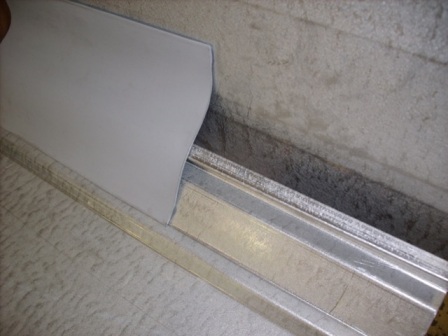
Pre-cured sealant systems are designed to handle extreme movement (up to 200 percent). The seal comes in a roll, which is laid right over the joint or gap. The outer edges of the seal are bonded to the substrate with a thin bead of fast-curing sealant, creating a wide area in the middle of the seal that contracts and expands easily because it isn’t bonded to the metal underneath.
Liquid-Applied, Elastomeric Flashing PROS: The main advantage is ease of application over irregular surfaces with crevices or fissures. Also, in most cases, these sealants are the least expensive option, especially for large areas (i.e., thousands of feet of seams or joints versus a few hundred feet or less). Liquid-applied flashing have good adhesion, as anyone who has ever tried to scrape this stuff off will tell you.
CONS: That strong adhesion, however, can also be one of the main drawbacks. Since it sticks everywhere it contacts the substrate, there is little, if any, room for movement. Liquid-applied, elastomeric flashings will last about 10 to 20 years when used as part of a tape or mesh system. They are less effective at spanning large voids or gaps.
 Membrane-and-Fastener Systems
PROS: With fasteners placed about every 1 ½ inches or so, this system is tough to beat in terms of strength. A membrane-and-fastener system also works well for weatherproofing around difficult details because the membrane is held firmly in place with mechanical fasteners. Because most of the membrane isn’t bonded to the substrate, this type of system can handle lots of movement.
CONS: While this system takes only about 10 minutes to install on most small penetrations, tears or cracks, it can be labor intensive for longer strips. In addition to the labor, this is also the second-most expensive system of the four. And, then, there is the issue of putting a lot of holes into a roof to keep the water out.
Pressure-Sensitive Adhesive Tapes
PROS: PSA tapes provide a quick and easy fix, require little expertise, and are less expensive than pre-cured or membrane-and-fastener systems. They’re good for patching holes.
CONS: PSA tapes, however, have the same weakness as liquid-applied sealants. They have full adhesion to the substrate, which makes them more susceptible to failure caused by expansion and contraction. This system just doesn’t last as long as the others, and may not work well with curbs, expansion joints, roof-to-wall transitions, and roof steps because it doesn’t tolerate much movement.
Pre-Cured Sealant Systems
PROS: Pre-cured seals last as long as membrane-and-fastener systems (20-plus years), but the key difference is that they require no mechanical fasteners⎯you aren’t making holes to keep the weather out. Chemical bonding takes place in only a matter of hours instead of the days that it takes liquid sealant systems to fully cure. Because the majority of the seal isn’t bonded to the substrate, it’s free to stretch during the extremes of expansion and contraction on metal buildings.
CONS: Pre-cured seals are the high-end choice for contractors, so you have to weigh material costs versus labor costs. Pre-cured seals are easily and quickly installed on straight-run and flat applications. For more complex applications, however, it may take some practice to hold the seal in place with clamps or weights while the bonding sealant cures.
Chris Bovee is vice president of Sealex Inc., Harbor Springs, Mich., and holds degrees from Ferris State University in both plastics engineering and rubber engineering. Bovee received assistance on this article from Karnak Corp., Broadview, Ill.; Deks Industries, Chicago; and Royal Adhesives & Sealants, South Bend, Ind. To learn more, visit www.sealexinc.com.