Metal Construction News asked industry insiders for their perspectives on the snow retention market both now and in the future
MCN: What are the current trends and innovations in snow retention?
 Rob Haddock: There is a trend toward continuous fence and rail systems as opposed to individual cleat-type products. There is a trend away from adhesively attached products and toward those that mechanically attach to the standing seam without penetration of the roof. There is also a trend toward engineered systems, as opposed to “by-guess and by-golly” frequency and placement. There is a trend away from plastic parts and toward metallic systems.
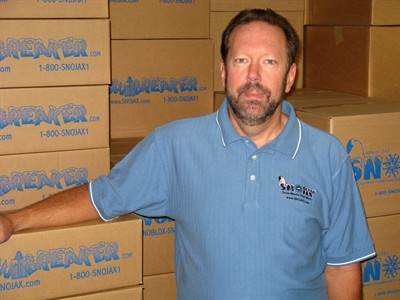
Brion McMullen: Because of the current economic times, the current trend is for the consumer to shop for the lowest price when comparing snow retention systems. That’s why we offer everything from inexpensive snow guard solutions to high-end custom colored rail systems. Most snow retention systems basically perform the same function but proper spacing and installation determines the effectiveness of the system. Our most recent innovation is the SnowBreaker which is a cost-cutting solution to install avalanche control in just isolated roof areas to break up the snow and ice, rather than the conventional way of retaining it across the entire roof until it melts. We feel that future innovations in snow retention will provide the consumer with quality alternative cost-saving choices.
MCN: What does a contractor need to know when choosing and installing snow retention products?
Haddock: Engineering: Snow retention products have a structural function. The forces that are introduced to the snow guard device are finite and calculable. The variables involved are slope, roof size and design roof snow load. These factors change from job-to-job, so the system should be specifically calculated and engineered to the project in question.
Testing: If a part is intended to resist a calculated force, its ability to withstand that force should be documented by testing. Use products that are tested by a third-party lab for holding strength. Be sure that the kind of test conducted is appropriate for the product in question, and ask the product manufacturer to document by calculation that the frequency of the parts or system is adequate for the project. A minimum factor of safety of 2.0 should be used in calculation for mechanically attached parts; and 3 to 5 for adhesively attached ones.
Service Life: Use a system that is compatible to the roof and solicit the roof manufacturer’s recommendations. Some systems may violate the roof manufacturer’s finish and weathertightness warranties. Metal roofs have service lives of 40 years or more. The snow retention system should have a service life equal to that of the roof.
Installation: The last thing a contractor needs if a system fails is to find out that the failure was due to faulty installation. Follow all the manufacturer’s written installation instructions to a tee, so that if there is a failure you know that you are not to blame.
Shop Around: Once a system has been qualified to the criteria above, buy the least expensive system that achieves all the objectives. But do not simply compare costs of one part vs. another, as this can be deceiving. The first may cost $2 and the second $4, but if the second has five times the holding strength of the first, then the bottom line is revealed when the roof is populated with enough parts to do the job at hand.
Education: Many are not aware of all the facts pointed out above. Don’t be afraid to educate the owner or designer if he has specified a system that won’t work. The MCA publishes a document called “Metal Roof Design for Cold Climates” that provides helpful information in this regard. It is available through their website (metalconstruction.org).
McMullen: With so many snow retention choices on the market today, it may be difficult to choose the correct system for your roof because there is not just one type of snow retention system that is perfect for every application. Some types of metal roofing do not have the proper seam height and are not structurally suitable for use with a clamp down system. While it is usually harmless to the panel to use an adhesive mounted system, weather conditions may not always be ideal for immediate installation. When it comes down to it, choosing an experienced manufacturer and following their instructions and spacing recommendations is the key to a successful snow guard installation.
MCN: Will current and future adjustments to codes and regulations impact snow retention? How so?
Haddock: I doubt that it will. I am not aware of any pending code or standard regarding snow retention. In the Alpine areas of Europe, codes that mandate snow retention are commonplace. That is not the case in the United States. It would not surprise me if the use of adhesively mounted devices is some day banned by code. The strength of a chemical bond weakens as it ages due to the effects of thermal cycling, moisture and UV, so its useful life is rather unpredictable. This is a risky practice when dealing with life/safety issues.
MCN: With respect to metal buildings, does snow retention play a significant role in the green building movement? Please explain.
Haddock: The whole “sustainability” issue has to do with service life and carbon footprint. This all points toward using products and systems with extended service lives. Metal is the most sustainable roof available today. It is consistent then that ancillaries mounted on the roof (such as snow guards) should measure up to the service life of the roof on which they are mounted. Using systems that require replacement every five to seven years do not accomplish that objective–a system that outlasts the roof does.
McMullen: Re-using discarded content in the construction of metal buildings will help make a significant environmental impact and increase our energy savings in the long run. This is why we now offer the industry’s first recycled snow guard made from post consumer polycarbonate. Now you can buy ‘green’ and still know you are using a trusted and proven snow guard made with materials that are comprised mostly of recycled five-gallon water bottles and compact discs.
MCN: If you own a metal building in a cool climate, how important is snow retention? Please explain.
Haddock: Metal roofing, like several other roof types (slate, tile, thermoplastic membrane) has a low frictional coefficient– in other words, it is a slippery surface. This means that snow can suddenly release, discharging tons of snow to whatever is below. A roof measuring 50-feet along the eave and 30-feet to the ridge with only 10 psf of snow accumulation (less than 12 inches) would weigh 15,000 pounds. Sudden discharge can pose a danger to vehicular and pedestrian traffic. I have seen this hazard close busy city streets and intersections–and crush cars. I have seen it implode building walls below. In a few cases it has killed people. It can damage expensive landscape, gutters, flashings or roofs below, and its removal can become a maintenance nuisance.
McMullen: In colder climates, contractors and owners of buildings with metal roofs should consider the potential liability of a snow and ice avalanche after any winter storm. When the weather breaks and the sun emerges, it melts the ice on the surface of the roof panel. Water from the snow melt creates a lubricant which is the catalyst for snow and ice to slide. These dangerous avalanches could potentially cause injury or death to pedestrians, bend gutters, destroy automobiles, HVAC equipment, livestock and other property below. As such, snow retention is often very necessary on metal roofs in cool climates.
MCN: What do you expect to see in this market over the next 2-3 years?
Haddock: More designers are recognizing the need for snow retention, so use of these systems will grow at a slightly higher rate than organic growth of the industry. The trends toward mechanically attached, non-penetrating fence and rail type systems will continue for metal roofs, as they tend to be more practical and effective.
McMullen: It will depend on the economic times and the willingness of the American people to buy American! With so many price-conscience consumers demanding lower prices, there are a lot of manufacturers turning to the Chinese market for the manufacturing of their products to keep costs low. We believe that if the American consumer has a choice, they should patronize the companies that are selling products that are made in the U.S.A.
MCN: What sets your company’s product(s) apart from your competitors?
Haddock: S-5! systems and business practices are consistent with all the above points of importance. Any industry has leaders and followers; those who innovate and those who imitate. S-5! has been the leader and innovator since its inception, constantly setting new standards and raising the bar in snow retention. Real innovation means creating new and better technologies-that actually cost less, too.
We were the first to introduce clamp-to-seam technology for snow retention back in the early ’90s. We were the first to introduce the concept of engineered systems that followed scientific, site-specific calculation. We were the first to introduce lifetime color-matching with our ColorGard system. We are the first (and only) to offer a lifetime limited warranty of our system that guarantees performance for the life of the roof.
We are the only company that conducts panel-specific testing. We were the first to provide web-integrated tools to facilitate system design, and now we are also the first to offer certified calculations on any job, sealed by a registered professional engineer.
McMullen: First and foremost, all of our products are American made. Secondly, we do not feel the need to bash our competitors to sell our products. Instead, we continue to promote our products in a positive way while stressing our strong selling points.
SnoBlox-Snojax is recognized in the metal construction industry as a trustworthy, nationally known manufacturer whose predominant business is snow retention. Our customers are our most valuable asset. We are committed to excellent customer service, “Hands on Ownership” and providing the industry with the highest quality snow retention systems at the best price with an excellent warranty. Our mission is to meet the constantly changing needs of the metal roofing industry by continuously researching, developing, professionally testing and marketing the “Best of the Best” and we plan to be of service for generations to come.