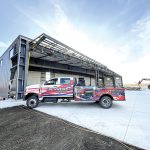
This month’s topic addresses upfront due diligence on a potential retrofit project. This subject is very complex and extremely hard to adequately explain in one article. However, there is considerable information available on the Internet. One website you may want to explore is from Bossier City, La.-based McElroy Metal, www.mcelroymetal.com, where you can find a retrofit design guide to download.
A thorough examination of the existing building and its roof is necessary, both above and below the deck, to know what the effect a new retrofit will have. Besides geometry modifications, you are making some drastic changes to the existing roof. Some considerations will be explained in detail in the coming months, but generally they are as follows:
• The new roof creates a cavity-or an “attic space”-between the old and new roofs. This space must be ventilated to assist in condensation control and to help dissipate any trapped moisture in the existing substrate.
• All of the light-gauge steel framing and metal roofing that will be erected on the existing roof will add a considerable amount of weight. The simple fact is the old roof was not originally designed for this additional weight, and you must provide for that in your overall retrofit design.
• The retrofit framing must be attached for the existing roof in a way that it will stay on the roof, preventing it from coming off due to wind exposure. I have seen retrofits that failed with 70 mph wind speeds, when the code required 90 mph. The key to this is attaching to the existing roof supports (joists).
• In most cases, the retrofit project will be subjected to building code review and approval. This means engineering and installation documents must be prepared and submitted to obtain a building permit.
• The existing roof and its bracing system will receive loads from the new construction. Because of this, the existing building must provide a serviceable diaphragm for bracing itself laterally.
• The existing roof assembly, including the deck, insulation and membrane must be inspected for trapped moisture. If moisture is present, the existing roof should be removed entirely or at the affected areas at a minimum. Premature failure of your retrofit anchors could result in moisture infiltration into the building.
• All penetrations through the existing roof during the retrofit construction must be sealed temporarily with a compatible sealant. There is no worse feeling than getting a call from a building owner that his roof is leaking after you have left the job site for the day. Check with your fastener distributor for what sealant should be used based on the type of existing membrane.
• If your retrofit design requires continuous-type base framing-normally zee-shaped members-it is wise to shim these enough to permit rainwater to drain to the existing drainage system. Otherwise, you may very well dam the water on the roof causing a catastrophic roof failure. Normally a shim thickness of about 1/2-inch will suffice.
• The existing roof substrate must be tested to determine its compressive strength. The physical dimensions of the base member at each attachment point must accommodate the downward acting loads to prevent depressing the substrate. The result, if you don’t do this, can cause a severely undulated roof after the first snowfall long after you have completed the job.
• A structural analysis of the existing roof system should be performed by a qualified engineer using your retrofit manufacturer’s design documents. This will ensure the roof will not be overloaded. Retrofit system manufacturers typically do not provide this service. This topic will be discussed next month in more detail.
This month we have only touched on some fundamentals of retrofit roof systems. The important thing to remember is you are attempting to change the structural integrity of an existing building roof and, if not conducted properly, the results could be devastating with you holding all of the liability.
Mark James has more than 40 years experience in the retrofit and metal construction markets, working for leading manufacturers and executing great projects. Currently, he is president of RetroSpec LLC, a consulting company offering direction and deep knowledge of the retrofit business for manufacturers and contractors. James can be reached at mark@retrospecllc.com.