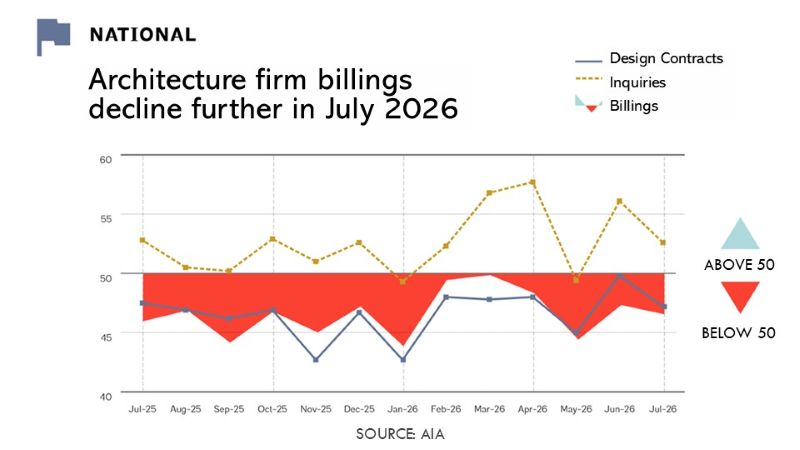
The AIA/Deltek Architecture Billings Index (ABI) score for July 2026 was 46.6, slightly down from June’s score of 47.3. The persistent downturn in business conditions now extends to nearly three and a half years, as many firms continue to struggle to grow their billings.
The ABI is a leading monthly economic indicator based on billings at U.S. architecture firms and is used to predict nonresidential construction activity 9 to 12 months in advance.
ABI scores greater than 50 indicate growth, while scores below 50 indicate contraction.
Clients are still bringing business to firms, AIA noted, as inquiries into new projects rose again in July, albeit at a slower pace than in June. However, the value of newly signed design contracts declined further after nearly approaching growth last month.
Business conditions also remained weak at firms in all regions of the country in July. Firms located in the Northeast reported the softest conditions for the second consecutive month, while the pace of the ongoing decline slowed slightly at firms in the other three regions.
Billings declined at firms of all specializations as well, AIA continued. While firms with multifamily residential and institutional specializations both saw slight growth earlier this year, conditions have since softened.
Meanwhile, firms with a commercial or industrial specialization have not reported an increase in billings for four years.
Conditions across the broader economy remained relatively mixed. Nonfarm payroll employment decreased for the second time this year, shedding 23,000 jobs in July. Construction employment remained generally flat, while architecture services employment dropped by 100 positions in June (the most current data available).
AIA pointed out that June marked the fourth consecutive month of declines in employment in the industry, which has lost a total of 900 jobs since January.
— With files from AIA