The U.S. construction industry is projected to require hundreds of thousands of new workers every year just to keep pace with demand. According to Associated Builders and Contractors, we will need 349,000 net new workers this year, rising to 456,000 by 2027.
Industry surveys show nearly 94% of contractors report difficulty filling open roles, 88% of construction firms face hiring challenges, and 45% report project delays specifically due to labor shortages.
Broader labor data suggests the industry will need 1.1 million more construction workers by 2028 to meet demand—a projection driven largely by retirements and underfilled field positions.
As the industry continues to struggle to find qualified field labor, it has forced contractors and developers to look at methods for reducing the amount of onsite labor required.
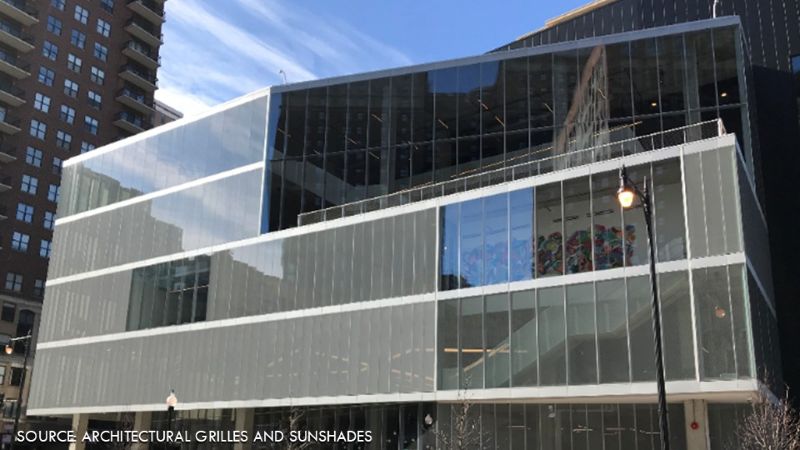
For example, the traditional stick-built curtain wall requires a large field crew because it is assembled and glazed in the field. The installation process typically sees ladder frames shipped to the site, with every other bay shipped as knock-down and assembled in the field.
After the frames are installed and the system is sealed per the manufacturer’s instructions, the frames are ready for glazing. The glass is installed with either “traditional” pressure plates or structurally glazed. If the project requires structural glazing, the glass is held in place by temporary pressure plates for roughly 30 days while the structural silicone cures. This process requires the installer to come back and remove the temporary pressure plates and caulk the weather seal.
An alternative to stick-built is to use unitized curtain wall, which is fabricated as pre-assembled, factory-glazed panels. Shifting the fabrication and a larger portion of assembly to an offsite manufacturing location can improve efficiency and quality while minimizing the onsite labor required.
While a unitized curtain wall does increase the amount of shop labor and number of parts needed to complete the system, the work is being carried out under controlled temperatures in a consistent work area.
Controlled temperatures allow for predictable curing time and proper adhesion of the structural silicone. A consistent work area helps improve the quality of the system. A shop is almost always cleaner than a jobsite, which helps prevent dust and dirt from contaminating the seals.
Prefab allows all the bays to be assembled and glazed uniformly, whereas traditional curtain walls require installers to use scaffolding, boom lifts, or swing stages under a myriad of field conditions.
Properly coordinated, the prefab curtain wall can be fabricated, glazed, bunked, and stored while the building itself is still being worked on. When the structure is complete, the prefab curtain wall components allow for faster enclosure. In fact, this is often done to compress the construction schedule.
Labor shortages are compelling construction companies to seek new ways of getting the job done. While selecting the best curtain wall solution still depends on project-specific factors, prefabricated building systems are becoming an increasingly important strategy for reducing onsite labor requirements.
John Trainor is the president of Architectural Grilles and Sunshades, which specializes in custom sunshades, grilles, and other aluminum architectural elements. John founded AGS in 2003 and has over 30 years of experience in architectural metal design.