During the last few decades, many contractors have jumped into the retrofit business only to be snake bit. Because of this, several of them elected to not stay in the retrofit market, but others persevered and over the years built their reputations and expertise with successful projects. Today, many of those contractors continue to thrive even in a down construction market.
Case Study No. 1: Metal-over-Metal
The metal-over-metal retrofit represents a tremendous opportunity for any contractors who are considering expanding his or her services and to help themselves become a little more recession proof.
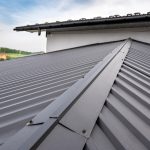
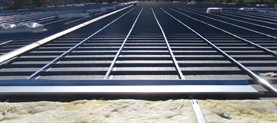
The business is installing a new metal roof system over an existing metal roof. Why install new metal over existing metal? That question comes up frequently, and there are countless reasons why you would want to do this. The existing roof may have reached the end of its service life, or it may be in need of repair due to major storm damage. Also the building owner may just want to upgrade the building’s curb appeal and appreciable value.
Some of the drivers of the retrofit market today are projects with the military and our public schools. A metal-over-metal retrofit is a great solution that offers increased energy efficiency and reduces life cycle costs. Plus, the new roof can serve as an ideal platform for adding solar energy technologies.
Some of the drivers of the retrofit market today are projects with the military and our public schools. A metal-over-metal retrofit is a great solution that offers increased energy efficiency and reduces life cycle costs. Plus, the new roof can serve as an ideal platform for adding solar energy technologies.
One contractor who has capitalized on his metal systems expertise is Donald J. Parks General Contracting and Crane Service, located in Randolph, N.J. Ken Parks and his son, Ken Jr., know how to create retrofit opportunities in both the public and private markets. The company, started in 1952 by Ken’s father, has always had a metal systems focus having been a Varco Pruden builder since 1986 and having actively pursued retrofit projects since.
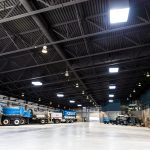
One of their latest retrofit projects is an 180,000-square-foot metal-over-metal reroof project for a building occupied by Archive Systems of Washington, N.J., which provides records storage for companies in the eastern and western U.S. Needless to say, a waterproof roof was vital to this company’s operations and reputation.
One of their latest retrofit projects is an 180,000-square-foot metal-over-metal reroof project for a building occupied by Archive Systems of Washington, N.J., which provides records storage for companies in the eastern and western U.S. Needless to say, a waterproof roof was vital to this company’s operations and reputation.
Since a metal-over-metal retrofit creates a cavity between the existing and the new roofs, the Parks design team installed 3 inches of unfaced fiberglass, thus reducing heat gain/loss through the new roof assembly. This means major energy savings to Archive Systems for years to come.
Case Study No. 2: Metal-over-Flat
The metal-over-flat retrofit is a reroofing/ roof replacement technology that has been embraced by many design professionals and building owners over the years. You will find projects installed on schools, office buildings and nearly every military base built in the U.S. prior to 1990.
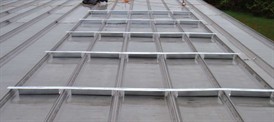
Some people believe that metal-over-flat is extremely complex and difficult to execute. It can be but there are jobs that are pretty simple as well. The idea is to install a light-gauge steel framing system over an existing flat roof to create a slope, enabling the building owner to capture the benefits from a new high-performance metal roof. Instead of replacing the existing flat roof with a conventional membrane, building owners opt for a roof that has a service life of a minimum 40 years that is nearly double conventional roofing.
Metal-over-flat retrofits typically cost more than conventional roof replacements, but for those building owners and managers who consider the life cycle costs of their buildings, it is a more desirable option. The return on their investment is usually recouped within a few years according to recent case studies.
Still, don’t be fooled into thinking the metalover- flat retrofit is always more expensive. In many cases it can cost less if the roof design or geometry is less complex. When making the comparison between metal versus conventional, always compare the metal retrofit to a complete tear-off and full replacement. If your building is temperature controlled and you want to increase the speed of the payback, upgrade the retrofit package with a new insulation package as well.
I & E Specialties of Lexington, S.C., has been in business since 1988 and has principally operated in the public bid market. Wayne Fulmer, president, explains the company works in the public construction market because “John Q. Public” doesn’t really understand that you can install a sloped framing system and new metal roof on top of an existing flat roof. When private building owners need a new roof, they call a roofer and not a metal construction contractor. However, the inherent benefits of metal roofing are known at all levels of government-from city to federal-which continue to specify retrofits for older buildings.
I & E typically completes about 10 retrofit projects a year in addition to its new construction business. It is considered one of the premier retrofit contractors in South Carolina, a state that is very familiar with retrofitting existing building roofs. Due to this level of retrofit work, the company has elected to perform its own in-house designs and installation with framing and roofing materials purchased from McElroy Metal, headquartered in Bossier City, La.
One I & E projects that sets an example of excellence is a 32,000-square-foot building for York Technical College in Rock Hill, S.C. Completed a few years ago, the building had an existing 4-ply fiberglass built-up roof over insulation, concrete decking and steel bar joists. The new retrofit framing system created a 3 in 12 pitch (14 degree slope) and included McElroy’s 24-gauge Maxima 216 standing seam metal roof in a Dark Bronze color.
To make the building more energy efficient, I & E specified 6 inches of blown-in fiberglass to be installed at the existing roof level. York Technical College has had an active retrofit program with the goal of converting all of the buildings to metal roofs for aesthetic purposes and for energy savings.
Is now the time for you to get into the retrofit roofing market? If you have been thinking about how to subsidize your workflow and keep your people on the job, then maybe you should consider this as a viable alternative. When you are ready, there are a few metal component and retrofit system manufacturers out there that have the expertise, the knowledge, the products and the technical personnel to support your efforts. We suggest you contact one of them to get started out on the right foot.
Mark James has more than 40 years experience in the retrofit and metal construction markets, working for leading manufacturers and executing great projects. Currently, he is president of RetroSpec LLC, a consulting company offering direction and deep knowledge of the retrofit business for manufacturers and contractors. James can be reached at mark@retrospecllc.com.