Over the last several decades, the coil coating industry has become an important force in the metal construction industry. During this time, coil coating technology has grown and adapted to meet the demanding and sometimes changing requirements of metal formers, environmental legislation and most importantly consumers, while continually providing value-driven and continuously improved products.
30 Years of Progress
Many years ago, coil coated metal was used primarily in venetian blinds and other non-critical applications. Fast forward to today and coil coated metal is used in critical and demanding construction applications, including metal roofing, garage doors, windows, skylights, commercial and residential entry doors, siding, wall panels and more. The versatility that the coil coating process and its inherent technology now offers to meet formability of complex parts, corrosion resistance, weather resistance and aesthetics is nothing short of remarkable.
With the improvement of application, metallurgy and coating technologies, the use of metal has exploded in the construction market. Long gone are the days where an original beautiful forest green color would fade away into looking like the dollar bill that somehow got slipped into the washing machine. Today, high-quality resin systems, formulated with specifically designed pigments, are available that provide a long lasting and durable finish keeping that beautiful original color looking great for literally decades of worry-free protection. With the combination of longevity, an almost endless selection of colors and designs, and the excellent strength and protection, it is easy to understand how coil coated metal has grown to be one of the most popular building materials available.
Advancements in Coil Coating Technology
In addition to resin technology and pigment advancements, there are other breakthrough technologies that provide even more fuel to the growth of coil coated metal. Some of these innovations include microbial resistant coatings, ant-static coatings, weldable primers, reflective (energy saving) pigments, and even contemporary designs that include print and texture technologies. Added up, coil coated metal can be tailored to meet the requirements for almost any construction application.
However, coil coaters and their suppliers are not resting on the successes of the recent past. The industry continues to research and develop new and exciting coatings to meet the ever-changing metal construction landscape that will further grow the use of coil coated metal in the market. Thanks to coil coaters, health care facilities can now enjoy metal walls, ductwork and equipment finished with microbial resistant coatings; metal roof panels can now be made with energy saving reflective pigmented coatings, but also with popular looks like copper patina and cedar shakes; and, coated roofing and wall panels can be constructed from weathered steel looking coatings which are favored by many architects, building designers and building owners today.
Environmentally Friendly
The durability, formability and aesthetic qualities of coil coated metal are not the only advantages that this product offers. There have been many changes to environmental legislation over the last 30 years related to any type of coating application. These ever more, and increasingly stringent, EPA requirements are leading many manufacturers to convert their product lines to coil coated metal rather than in-house painting.
Coil coating reduces, or even eliminates, paint related environmental issues for manufacturers, resulting in less government paperwork, a streamlined process, and lower costs as opposed to all the hassles that are involved with an in-house paint shop.
Beyond EPA regulations, there are added environmental advantages to the use of coil coated metal that meets many of the green and environment friendly initiatives. Coil coated metal is made from varying percentages of recycled metal, and is 100 percent recyclable.
In addition, a growing requirement for construction applications is for a Life Cycle Assessment. LCA is basically an in depth study as to the energy required and the greenhouse gasses emitted into the environment to make, ship, and dispose of a given material. Studies have shown that the LCA of coil coated metal results in a lower impact to the environment over almost all other alternative building construction materials.
Metal Roofing Demand Grows
Thanks to publications such as Metal Construction News and the efforts of the coil coating industry, metal roofing is a rapidly growing for both residential and commercial buildings as the market learns of the advantages of cool, reflective pigmented, coated metal as compared to other roofing products. For example, the federal government is providing up to a $1,500 tax credit to homeowners who install a qualified cool metal roof at least through December 31, 2010.
Financial incentives such as this coupled with beautiful design options such as weathered wood, copper and tile looks are fueling growth in the residential market. Commercial properties looking to reduce their environmental impact are also turning to cool metal roofing for its durability and energy saving benefits. Metal roofs are also compatible with solar energy panels, which play a key role in the world’s fastest growing energy market.
The Future of Coil Coating
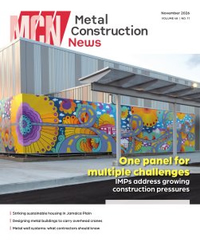
Coil coating is without question the most efficient and environmentally friendly painting process available today. What’s more, the process saves manufacturers money. Intense competition in the global economy means manufacturers must focus on lowering costs and maximizing existing resources instead of raising prices. Prepainted metal can help accomplish those initiatives. With all the advantages that coil coated metal offers, the future looks very bright indeed. Metal Construction News continues to be vital to the coil coating industry, keeping readers abreast of trends and advice in the metal industry and the benefits of this highly efficient coating process.
For more information visit the National Coil Coating Association website at www.coilcoatinginstitute.org. Here you’ll find helpful tool kits, case studies, videos, online tutorials and a comprehensive supplier database to help locate a prepainted metal supplier that meets specific needs.
For more information, visit www.coilcoating.org or call (216) 241-7333.