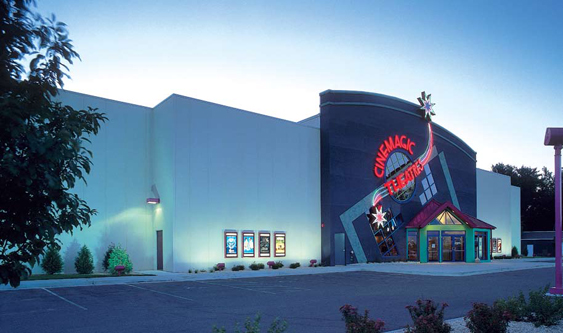
 To comply with local ordinances and grab additional market share from non-metal materials, many of today’s metal wall panels are boasting durable, versatile, stucco-like coatings
Metal building systems and metal wall panels are expanding their market share and growing into new markets traditionally dominated by non-metal materials and components.
In some cases, local policies dictate that the structures in certain areas like business parks or community centers cannot have the external appearance of metal. While the bases for such rules have their roots in antiquated perceptions, the fact remains, these policies do exist all over North America.
As a result, metal building systems and wall panel manufacturers must continue to provide options for non-metal appearances. One option has been EIFS, or exterior insulated finish systems, which often includes an applied stucco or brick façade. The downside to suchs ystems includes cost, labor, durability and moisture issues.
The common alternative to EIFS is a textured finish applied directly to the metal wall panels, either at the job site or even in the manufacturing facility. These finishes compare favorably to their EIFS counterparts, and in many ways are more desirable.
Metal Construction News asked three industry experts for their thoughts on the role of textured finishes in disguising metal wall panels, and what the future holds for these innovative systems.
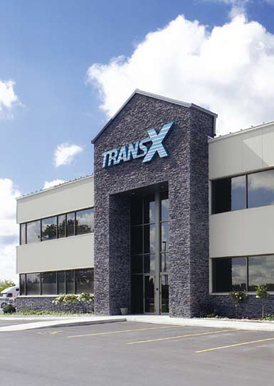 MCN: What are the most common or most effective ways of “disguising” metal panels and products?
Kevin Conlin, General Manager of IPS, a division of NCI Group: At IPS, we can create the illusion of an alternate building material, by simply using one of our many finishing applications. Our Heavy Azteco embossing technique simulates the appearance of a stucco exterior. Stone and additional textured veneers allow our products to blend in naturally to their surroundings.
Dave Evers, Vice President of Research& Development, Butler Manufacturing: People have tried various embossing patterns on metal to impress different configurations-from a wood look to a pebbled, stucco look;they play with gloss, and in some architectural panels, they like that.
In other cases, [building owners] say they don’t want metal and can’t accept it, usually due to a local covenant in an office park. There,you see other applications where they’ve taken a fine-grain sand or small pebble and adhered it to the face of the panel, and that was a popular look in the ’70s and ’80s. But with the emergence of the EIFS-type stuccos, that look is much more popular. So that’s where our Texture-Cote product comes in. There are a couple competitors out there, and some do it in the factory and some do it in the field.
Field application would probably be the case where the panel manufacturer can’t do it, so a local contractor will find a guy who can spray it on in the field. I would say it has to do with the capital expenditure involved in setting up a coating line at a manufacturing location [for factory-applied finishes].
Anita Stacey, President, Cowden- Woods Design Builders, Ontario, Canada: We have a lot of Site Plan Control [a local municipality building development approval agency] , and under that they don’t want to see a plain, agricultural-looking panel. What they want is something that is-from their standpoint-more architecturally pleasing. By doing the factory-applied finish, it solves a lot of problems and helps work toward the site plan approval process because they look an exterior elements.
The other benefit is to be able to erect [those panels] in a colder climate without having to tarp and heat. The alternative to that is to do a stucco, hand-applied finish, but that is so determinate on the weather it doesn’t always work. Factory-applied finishes can be more effective given our weather.
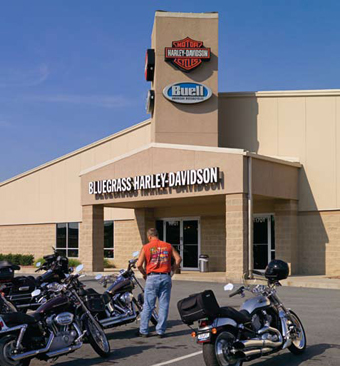 MCN: How does the act of coating a metal product to make it look like a non-metal product affect the perception or reputation of metal building components and systems?
Conlin: Certain jurisdictions and architects prefer the performance of metal systems along with the ease of installation, but desire the aesthetics of conventional systems.
Evers: I think there’s a misconception that all metal walls look like corrugated industrial buildings, and they say,”We don’t want that look in our office park.” Even though there is a lot of great-looking, attractive architectural metal being used today, some places are just strict about it. In that case, where you have a textured panel that looks kind of like the accepted EIFS look, then I think it allows you to compete in these commercial community markets, and be looked at fairly favorably. So we’ve got a number of projects where that was the case. I think it’s been a plus for the metal building companies.
Stacey: I think it raises [the perception]. A lot of the people that we introduce [a textured finish] to don’t even know that it’s available. Every time we introduce it, it goes over very well and there is a feeling that it’s an upgrade to the steel metal panel look.
MCN: What are the advantages of metal coatings and finishes over other options like EIFS and non-metal exterior cladding/facades?
Conlin: Metal coatings and finishes are the superior choice when compared against EIFS and other non-metal exterior veneers for a number of reasons, including their ability to stand up to moisture and mildew issues, and their incredible ease of installation.
Stacey: The weather issue again plays a big role, as the finish is factory-applied, and the labor savings in the installation. Some of the EIFS products are more labor-intensive.
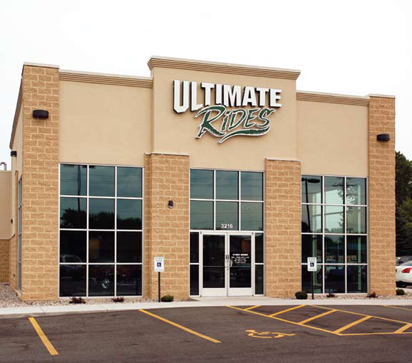 MCN: In your opinion, how can stucco coated metal products take additional market share from EIFS products?
Conlin: Longevity is important as well as the lifespan of the product. As mentioned, stonecoated metal products have impressive moisture- resistant properties and are therefore also more impervious to infestation problems.
Evers: EIFS panels have suffered performance issues (weatherproofing, mold, etc.) and you don’t have that with our product because you don’t have that foam substrate. Our panels are much more abuse-resistant, more durable and weatherproof than the traditional EIFS which is traditionally an acrylic stucco over foam. You also have cases where abuse-resistance is important, and you have cases where EIFS systems are highly-reliant on the skill of the laborer and the detailing to get it right. When you have a factory panel, that’s taken care of-it takes a lot of that labor out of it.
Stacey: It all depends on who’s selling [the stucco-coated metal panel]. We’ve been very successful with it and we promote it. The one thing with it being factory applied, it’s all very consistent, whereas an EIFS with a hand-applied stucco can have some inconsistencies. The EIFS can also have some problems with moisture getting in behind it, and with the metal panels you don’t have that.
Typically we’ll use a thermal wall panel with the factory-applied stucco, and for us, depending on the application, it gives a finished look on the inside, especially if it’s a warehouse or something like that where you don’t need to drywall. You basically put up the one panel and you’re done. It’s got an aesthetically pleasing outside and inside.
MCN: Are there any limits to the applications for stone or stucco-like coatings for metal panels? What are the most common applications/uses?
Conlin: Common guidelines to follow when utilizing applied-finish metal panels in a design typically stem from panel length and weight requirements, and are based on the equipment being used. Otherwise, applied finish panels are often widely accepted by most architectural review boards. When used at full length, or as a wainscot application, applied-finish panels add a more polished architectural look to the project.
Evers: When you take an EIFS product, they do a nice job of sculpting little “do-dads” in the wall-that’s a limitation for a metal wall panel. What I’m starting to see is a combination where they’ll take the basic wall and do a textured metal panel, but then use the EIFS and attach it to the face of that and use it to create an architectural accent. If there’s a lot of that on a building with a lot of color-changes, etc., then EIFS would have an advantage. Metal panels are a defined, modular product and it’s tough to do a lot of architectural detailing.
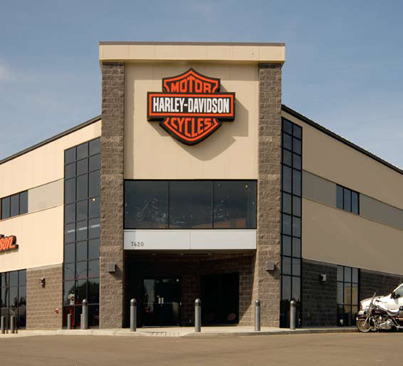 I think in a high-traffic industrial application there might be some limits in terms of impacts. Repairs might not be as easy [cracks and chips in the finish]. But they do plenty of durability tests on it.
MCN: What are the newest innovations or trends in coatings and finishes for metal panels?
Conlin: Lately, our high-end acrylic quartz stone-imitating panels have been popular. They’re extremely attractive and more cost-effective than using actual stone. Additional savings may be seen in reduced foundation costs as brick or masonry ledges are not needed, unlike with most masonry products.
Evers: These products are starting to prove themselves-our product has been out there for 15 years or so-and it’s gaining a little more acceptance than in the early days. One trend is using textured metal panels in conjunction with an EIFS.
MCN: How have the advances in insulated metal panels and composite panels affected the stone-coating/finishing market?
Conlin: There have been gains in energy efficiency and performance characteristics of applied finishes that make these products more acceptable in the industry.
Evers: Panels are wider than they used to be- our panels are 42 inches (1,067 mm) wide, and wider is typically better. The energy codes are getting tougher, so you can get a very energy-efficient composite 2- to 2 1/2-inch (51- to 64-mm) foam panel to meet just about any energy code requirement-you don’t have a lot of thermal short-circuiting. On many composite panels, if you add drywall to the inside face you can get a fire rating, and that becomes an important design feature as well.
Stacey: The R-values-we promote it a lot. It gives a higher R-value, it’s less expensive in terms of labor costs, and it’s aesthetically pleasing.
MCN: What does the future hold for these types of textured coatings for metal construction products?
Conlin: We’re confident that the future of applied-finish metal products is going to be a good one. As word spreads about the green attributes and price benefits associated with these panels, when compared against real stucco or stone, more and more architectural markets and high-end commercial markets will be incorporating them into projects. They provide aesthetic flexibility with unmatched product performance. In the end, it just makes sense.
Evers: Community/commercial markets are still probably a larger percentage of the building opportunity than manufacturing/warehousing has been, or it’s at least a growing segment. I think it’s a good entry for metal buildings to get into those markets.
Stacey: I think it’s going to be strong, thanks to the Site Plan Approval process up here in Canada. If someone’s looking for a metal panel, it just lends itself well to doing that in a cost-effective way.