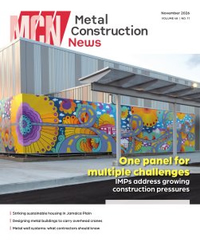
Aluminum is an often overlooked construction material, but many of America’s most famous and notable buildings use aluminum including Chicago’s Willis Tower, Cincinnati’s Great American Tower at Queen City Square, and New York’s New Museum of Contemporary Art. As increasing emphasis is placed on developing green building, aluminum will gain more and more praise and applications.
The most common application for aluminum is curtainwall structures, the public face of the building. Steve Fronek, P.E., LEED Green Associate writes for Green Building Pro: “Aluminum remains the framing material of choice for commercial and institutional buildings’ façades.
The question is, “Why use aluminum?”
The answer is, “Sustainability.” Aluminum’s strong, lightweight and durable nature coupled with high recycled content and recyclability make it a highly sustainable architectural material.
Its range of characteristics also makes it a positive option for architects and designers. Aluminum alloys range from soft, flexible and moldable to stronger than steel. It weighs only half steel’s weight. Softer aluminum often functions to create more aesthetic and ethereal features that are facilitated by the material’s lightness but are durable because of its strength. Stronger, harder alloys can function the same as steel while imparting weight savings in time, energy and cost during transportation, construction and throughout the facility’s life.
Aluminum provides a strong green design investment due to its durable nature and high recyclability. Aluminum exterior cladding and windows and doors are more durable than competing products. For instance, architects integrating solar energy often select aluminum roofs. Solar arrays are designed for a life of 15 to 25 years. The durable and the corrosive-resistant nature of aluminum roofs allow for completion of that life cycle. Additionally, aluminum’s strength can bear the added array weight.
Extruded aluminum is often used in solar array framing and these framings carry the same benefits as all aluminum products. The high strength-to- weight ratio aids in reducing overall array weight when added to existing roofs. In focal solar arrays, aluminum’s stiffness increases array stability thereby improving the energy generation efficiency of the array by focal point maintenance.
Aluminum micro-wind turbines have begun to appear on the outsides of building facades for wind power generation. For years, similar technology has been used to generate power as freestanding structures.
The elemental nature of aluminum means it is infinitely recyclable. It can be repeatedly recycled with no loss in quality. The industry average for recycled content of flat-rolled aluminum is 85 percent with 60 percent coming from postconsumer sources.
It is estimated that 75 percent of all aluminum ever produced is still in use today due to aluminum’s durable nature, increasing product life span and high recycling rate. Recycling aluminum requires 5 percent the energy and saves 95 percent of greenhouse gas emission associated with manufacturing primary aluminum.
A 2004 study by Delft University of Technology found a 95 percent end-of-life recycling rate for aluminum in Europe. Preliminary data from our end-of-life recycling study shows more than 90 percent of the aluminum used in commercial buildings is recycled during the demolition process.
Looking to the future, we are completing two studies on aluminum in building and construction applications including a life cycle analysis through semi-fabrication and an end-of-life recycling survey to confirm the 2004 report.
The life cycle analysis study, expected to be completed during the first quarter of 2012, will provided life cycle data for aluminum from mine through semi-fabrication. Since the Association makes all of its study data public, manufacturers will be able to utilize the data and add their information to provide customers with a life cycle analysis for specific products.
On the functional side of aluminum usage, our Association produces the “go-to” guide for aluminum architecture, the recently revised “Aluminum Design Manual” and other technical data including tensile strength, alloy properties and designations, and a welding guide.
With aluminum it comes down to recyclability, recycled content and durability. Customer demand is turning greener and aluminum is positioned to allow contractors and architects to achieve their aesthetic vision while meeting structural and sustainability requirements.
Heidi Biggs Brock is the president of the Aluminum Association and serves on the board of the National Institute of Building Sciences.