Contractors and specifiers check off baseline specifications for a commercial rolling or sectional door, including structural, thermal, and fire safety requirements. These specs establish the minimum performance of the door on the day of installation, but they often fail to capture the long-term operational or life cycle value once it is installed.
To sustain day-one performance, a building owner must ensure the door is routinely maintained and serviced, and that operating conditions do not exceed the original specs. This seems straightforward enough, but specifications are often driven by tight day-one construction budgets, meaning they do not always account for all the factors that contribute to long-term value.
A door may fail sooner than expected due to an underspecification, such as opting for a lower cycle count or forgoing corrosion protection. Likewise, underperformance may result from serviceability complexities that lead to avoidance or deferral of routine maintenance tasks.
By recognizing how initial specs impact lifetime costs, contractors and specifiers can better educate owners on the value of specifying doors for the building’s entire life. This guidance empowers owners to make decisions that lower their total cost of ownership, ensuring both client satisfaction and dependable performance long after installation.
Cycle count: plan for the building’s future
A door’s cycle rating is a specification intended to predict how long the door system will last under expected use conditions. A standard rating of up to 25,000 cycles may be appropriate for moderate daily commercial use, but is often selected based on anticipated use at the time of design rather than how the facility may operate years later.
A warehouse may add a second shift or a distribution center may increase shipping volume, causing doors to operate far more frequently than originally expected. Even modest increases in daily cycles can significantly shorten the service life of springs that were specified with little margin for growth.
For this reason, owners should be encouraged to think beyond current operating conditions. Is the facility expected to expand? Could operating hours increase? Is the opening critical to production or shipping? Answering these questions may justify specifying a higher rating of 50,000 to 75,000 cycles—or 100,000 cycles or more for extreme use cases.
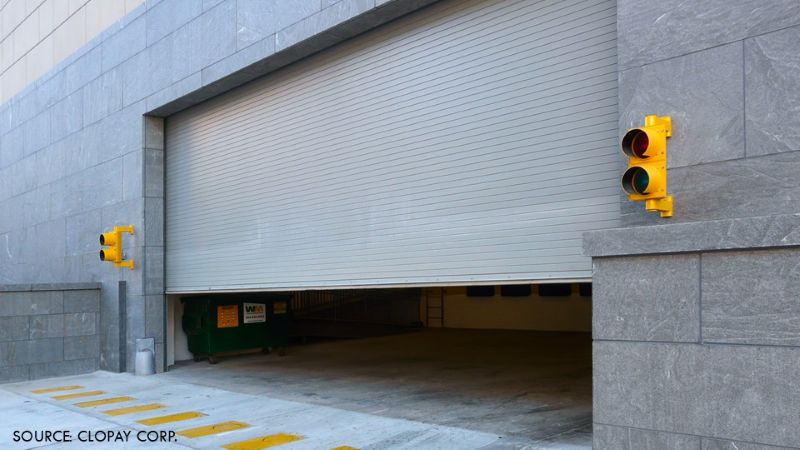
For openings like parking garages that are expected to operate at 100 cycles per day or more, it is also worth considering whether an alternative springless, direct-drive design may be better suited to the application. Some springless designs offer a minimum of 300,000 cycles, providing longer uptime under high-frequency operating conditions.
While specifying a higher cycle count moves the project beyond baseline hardware requirements, it is a strategic choice that pays continuous dividends throughout the door’s service life. Upgrading to high-performance springs or a springless design reduces maintenance, minimizes downtime, and helps avoid disruptive emergency service calls. Although these assemblies typically come at a higher initial cost, that cost is often recouped in long-term savings in maintenance, labor, and uptime.
Corrosion resistance: match the door to its environment
Protection against corrosion is often specified based on the project’s location or a known exposure to moisture, chemicals, or salt. Galvanized steel, factory-applied coatings, stainless steel hardware, and specialized finishes are commonly selected for coastal regions, food processing facilities, agricultural buildings, and other harsh environments where corrosion is an obvious concern, but corrosive conditions are not limited to these applications.
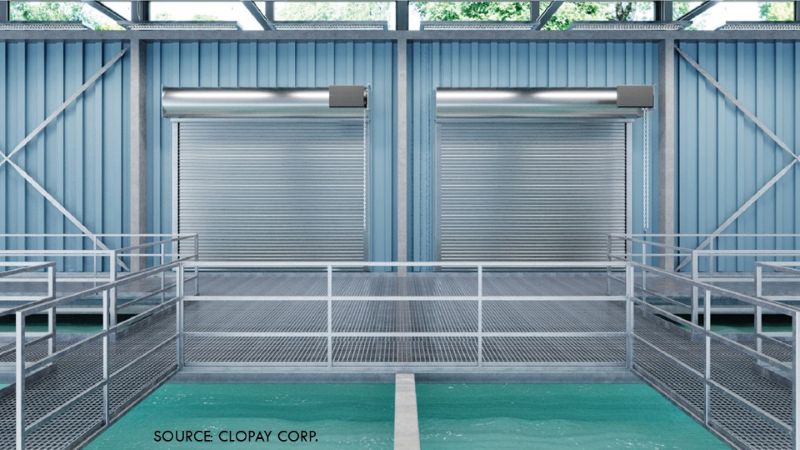
Doors in parking structures are routinely exposed to road salts, vehicle exhaust, and moisture. Manufacturing facilities may generate airborne contaminants that accelerate corrosion, and washdown procedures and high humidity can gradually degrade door components. Without protection, corrosion can affect springs, hinges, rollers, fasteners, tracks, and other hardware, increasing maintenance requirements and shortening the door’s service life.
Rather than relying solely on geographic location, evaluate the door’s operating environment over its entire life. How often will the opening be exposed to moisture? Will cleaning chemicals or industrial processes create a corrosive atmosphere? Are there seasonal conditions, such as deicing salts, which could affect hardware and finishes?
The answers will help determine whether upgraded coatings, corrosion-resistant hardware, or alternative materials are warranted.
Specifying enhanced corrosion protection can extend component life, reduce maintenance, and preserve the door’s appearance and performance. More importantly, it helps prevent premature failures that can disrupt operations and require repairs. By matching corrosion protection to the operating environment rather than to the minimum project requirements, building owners can achieve greater reliability and lower total cost of ownership.
Serviceability: minimize maintenance complexity
Routine maintenance is essential to the long-term performance of any commercial door, but not all doors are equally easy to inspect, adjust, and repair.
Serviceability—the ease with which technicians can access, maintain, and replace key components—can significantly impact maintenance costs, downtime, and the door’s ability to continue performing as specified.
Although serviceability is rarely a formal specification, it is a vital component of the door manufacturer’s design. Features such as accessible hardware, modular components, and easily removable covers can reduce the time required for routine maintenance and repairs. For owners, that translates into lower labor costs, shorter service calls, and less disruption to daily operations.
More importantly, simplified serviceability encourages preventive maintenance. When routine tasks are time-consuming or require extensive disassembly, they are more likely to be deferred or performed less thoroughly. Over time, those shortcuts can compromise both the door’s reliability and its performance.
For example, rollers, hinges, bearings, and spring systems require periodic inspection and lubrication to reduce wear and identify developing problems before they lead to component failure. If these inspections are difficult to perform because key components are hard to access, worn or damaged parts may go unnoticed until they cause an unexpected breakdown and unplanned downtime.
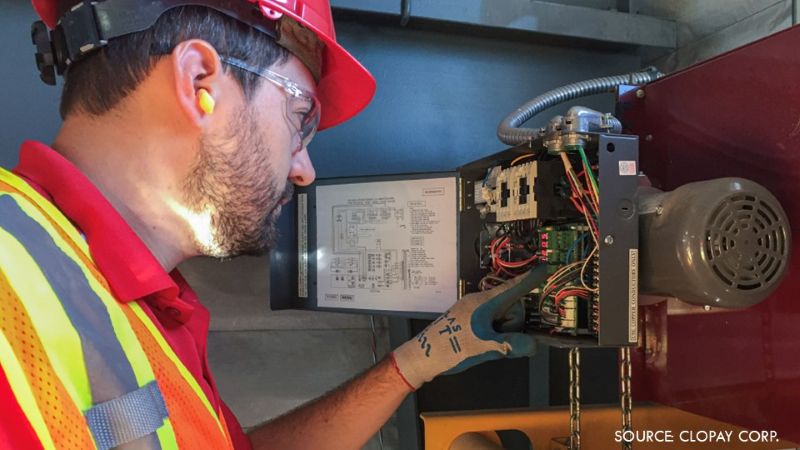
Likewise, perimeter seals require regular inspection and periodic replacement, as damaged or deteriorated seals can allow moisture infiltration that can accelerate the corrosion of door components. When replacing worn seals is unnecessarily complicated, owners may postpone the work, accelerating the decline of the door system’s performance.
By prioritizing doors engineered for straightforward serviceability, building owners can significantly reduce maintenance labor, encourage timely preventive maintenance, and minimize disruptions throughout the building’s life. For facilities where dependable access is critical, these long-term operational benefits easily justify a more robust specification.
Looking beyond installation day
Commercial door performance is often judged by how well it meets project requirements at the time of installation, but its true value is measured over years of reliable operation. Decisions made during specification, such as selecting a futureproof cycle rating, matching corrosion protection to the environment, and prioritizing serviceability, can significantly influence maintenance costs, downtime, and service life, as well as the building’s overall energy efficiency.
While these enhancements can elevate the initial scope of the project, they often deliver a strong return through reduced maintenance, fewer repairs, and more dependable performance. By helping building owners evaluate commercial doors based on total cost of ownership rather than day-one performance alone, contractors and specifiers can improve long-term performance while strengthening client relationships and confidence in the finished project.
Heather Bender leverages 17 years of experience in manufacturing and building materials as the director of commercial product marketing at Clopay Corp., a designer and producer of residential and commercial garage doors, as well as industrial rolling steel doors. Heather helps building owners and designers uncover unique and innovative door solutions.