Competing at a higher level. Consistent results. Reduced callbacks. These are just some of the benefits cited by contractors who have undergone and achieved AC478 Metal Building Assembler accreditation.
I first learned about AC478 while attending the Spring Conference of the Metal Building Contractors and Erectors Association. According to MBCEA, it is the most comprehensive quality assurance accreditation of its kind for metal building assembly.
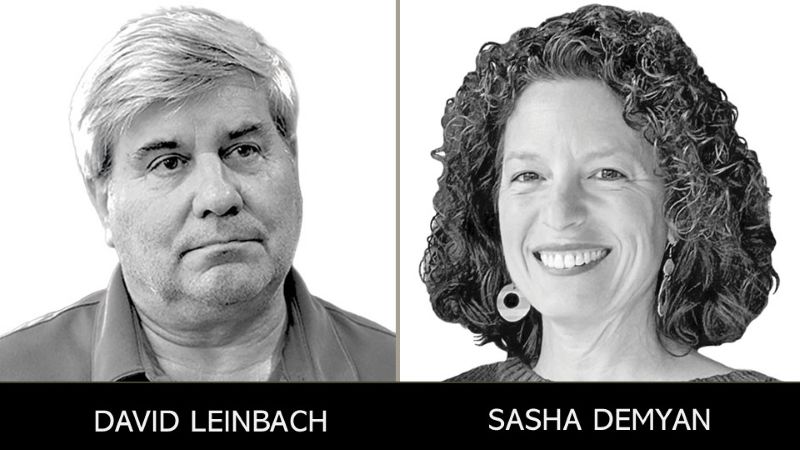
To learn more about the program and how it truly benefits contractors, MCN spoke with David Leinbach, president of The Kaiser-Martin Group and current MBCEA president, and Sasha Demyan, MBCEA executive director.
MCN: What problem was AC478 created to solve?
SASHA: Manufacturers have long had stringent quality standards, but there wasn’t an equivalent industry-recognized benchmark for the contractors installing metal building systems. Specifications would routinely just call for an erector who has been in business a minimum of three years.
It was actually the contractors themselves who decided to create this quality program. They were tired of losing out on a job to the lowest bidder who was not qualified. They wanted to create standards that raised assembler quality and leveled the playing field.
DAVID: In the real world, AC478 brings credibility. Owners and GCs want assurance that the team erecting the building knows what they’re doing … that they know how to erect a building and can prove it.
SASHA: So AC478 closed that gap by establishing a uniform third-party verified standard for quality, safety, documentation, and training. It helps ensure that the performance designed into a metal building is actually delivered on the jobsite.
DAVID: There is an AISC certification for structural or hot-rolled steel erectors, but there was nothing for metal building systems erectors before AC478. So accreditation gives us—the contractors and erectors—a way to demonstrate that our processes are disciplined, repeatable, accountable, and safe.
We are not just saying “We’re good!” The accreditation shows that we’re good.
MCN: Beyond just technical ability in the field, what does AC478 validate about a company?
DAVID: It validates the entire business: from leadership’s commitment to quality and training programs, quality-management systems, safety culture, field practices and, most importantly, the documentation practices that bring all of those systems together. Technical skill is essential, but AC478 ensures that skill is supported by a structure of systems that bring consistent quality to our processes and our jobs.
MCN: So an owner/GC can look beyond the workers on a jobsite to see a strong, sophisticated company doing the work. With accreditation, they know what they’re getting.
DAVID: Yes, and in today’s construction, paperwork has grown immensely. Everybody is documenting. You have to protect yourself. And that’s not just GCs or CMs, but owners, too. Many of the big companies have systems in place and they want to know that you have systems in place; that you are documenting man-hours on the project, safety and quality processes, and near misses. It all has to be documented. AC478 helps bring all of these systems together.
MCN: Let’s talk a little more about these changes to company systems when a contractor undergoes accreditation.
SASHA: Training becomes much more intentional. Accreditation affects how you operate and document. You’re not relying on individual experience alone but working through a defined process. From pre-job planning to final inspection, there’s a clear roadmap that everyone follows.
On projects, you see better documentation, clearer communication, and fewer surprises. Work is planned, checked, and verified at every stage. Workers are trained and qualified for the tasks they are expected to execute. Crews are more aligned because everyone understands the expectations and the procedures. Issues get caught early instead of becoming expensive fixes later.
So you see those changes in day-to-day operations and in the field. And documentation is no longer an afterthought—it becomes standard practice.
MCN: David, based on your own experience as a contractor, or from conversations with others, what part of the accreditation process felt the most demanding?
DAVID: That’s hard to answer, because I actually found it to be the opposite. I suppose it may seem demanding in our own minds … a fear of the time it will take to do this.
Smaller contractors have to wear many hats: they’re the legal, estimating, and safety departments! They may have a safety manual, but it’s not integrated with a quality management system. As for me, I did have a quality management system, but it was all in my head … it wasn’t written down.
So it was demanding from the perspective of just getting started. Once we started, MBCEA and other contractors supported us. In the end, it was a very liberating experience and ended up saving us time and costs.
SASHA: That really is the issue. We find that companies quickly feel overwhelmed. They look at the criteria for accreditation and think “Oh, this is going to take so many hours, so much time, and we’re going to have to hire someone to put this all together.”
DAVID: And it does take time, but MBCEA has templates for a lot of the things we use. Once a year we get reviewed as part of our accreditation, which only takes about a day, maybe a day and a half. In fact, we recently went through our reassessment and learned some valuable information that will help us streamline the process.
Accreditation brings consistency to the office and the field. It may sound strange, but it is an overall time saver. Sure, a contractor will say “I don’t have time for another thing on my plate,” but you will save time by avoiding callbacks, or having to explain then re-explain things because they were never well documented.
SASHA: As David said, most contractors already have everything that they need. They just need to put it all together in a structured, auditable system. David had his quality management system in his head; many people have their systems in separate spreadsheets.
MBCEA helps contractors find all those little pieces that are scattered everywhere and put them together. Contractors soon realize it doesn’t take as long as they thought, and they do not need to hire someone for the process. While anyone can pursue AC478 accreditation, MBCEA members benefit greatly from the association’s pooled knowledge and experience with the process.
MCN: David, can you think of a specific example where you really noticed a business or operational benefit because of AC478 accreditation?
DAVID: We now have a very good quality-management manual, and it’s always improving. Also, we were able to coordinate everything with our project management software, so now everything is in one place.
MCN: What separates companies that succeed in accreditation from those that stall?
SASHA: Commitment from company leadership. We find that companies that embrace AC478 as a business improvement initiative—as part of their culture, not just as a certificate or a badge—tend to succeed. It really is important that it becomes part of your company culture.
DAVID: Contractors are concerned about time, cost, and complexity. These are valid concerns, but the benefits totally outweigh them. You are going to gain in all those areas.
AC478 accreditation is going to save you the cost of callbacks, of doing things incorrectly, or worse. And the complexity goes down year after year as you tweak your system. MBCEA has plenty of help for contractors and, like anything, the more you put into it, the more you’re going to get out of it.
MCN: If a contractor is still sitting on the fence about AC478, what is the one thing you would say to them to get their buy-in?
DAVID: I can’t think of a single owner out there who doesn’t want to get better. If you want to make your company better, then get accredited.
SASHA: If you want to compete at a higher level and deliver consistent results, AC478 will get you there. Learn more about pursuing this important mark of quality by visiting mbcea.org.