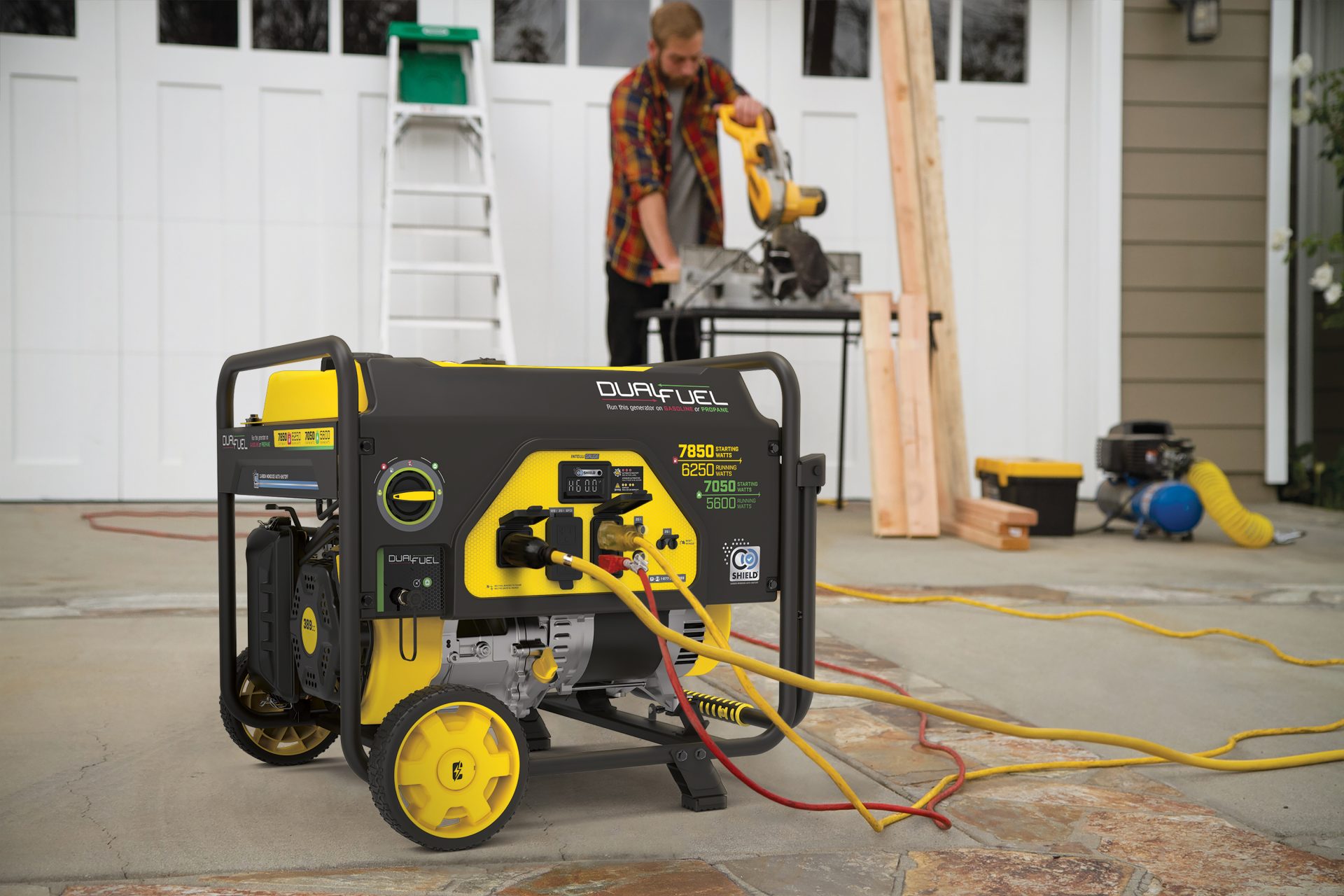
On today’s construction sites, portable generators are often essential. From early-stage developments where permanent power has not yet been installed to temporary power needs that keep crews productive and projects on schedule, generators play a critical role in meeting demanding timelines across the building trades.
Because these units are used daily in rugged, fast-moving environments, job site safety must remain a top priority. The Portable Generator Manufacturers’ Association (PGMA) encourages contractors, equipment managers, rental companies, and safety professionals to be aware of its safety and performance standard for portable generators
PGMA reminds professionals that CO-shutoff technology is a cornerstone of portable generators which comply with the ANSI/PGMA G300 (2018 revision or later) standard and helps to reduce the injury risks associated with improper use in an enclosed space.
The latest update to the standard builds upon the CO-shutoff sensor technology introduced in 2018—which is credited with significant reduction in fatalities—by lowering the carbon monoxide shut-off thresholds. Generators which comply with the ANSI/PGMA G300-2023 standard can further reduce the risk of injury and ensure that occupant cognition remains unaffected during instances of accidental misuse in enclosed or partially enclosed spaces.
Generators should always be operated outdoors and never inside buildings, trailers, truck beds, tents, or partially enclosed areas. Exhaust must be directed away from occupied structures and, when possible, downwind. Operators should always read and follow the manufacturer’s instructions and safety guidelines.
If anyone on a jobsite feels sick, dizzy, or weak while a generator is operating, they should move to fresh air immediately and call 911 for emergency medical attention.