

The Sheet Metal and Air Conditioning Contractors’ National Association (SMACNA), Chantilly, Va., –has just released its newly updated “SMACNA Reference Manual for Labor Units for Sheet Metal and HVAC.” The new guide takes into consideration that no two projects are the same and helps contractors quantify their labor hours by determining the difficulty of the project to more accurately determine the amount of labor required. The manual provides 138 tables embedded in 30 pages of detailed commentary and step-by-step instructions. It is based on surveys of active sheet metal and air conditioning contractors in the U.S. and Canada, including actual data from numerous projects, along with U.S. government statistics and scholarly reports and journals. The manual is especially useful for helping justify the labor costs on each specific change order quoted. The guide allows the contractor to print out the spreadsheet and walk the customer through the project, letting them know the circumstances encountered and what the labor factor would be. The “SMACNA Reference Manual for Labor Units for Sheet Metal and HVAC” is available for download in PDF format or on CD-ROM for $475 from the Publications Store on the SMACNA website. Refer any questions to SMACNA’s Publications Department at (703) 803-2989.
New SMACNA Reference Manual
This Month’s Features

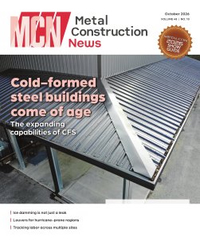
Cold-formed steel buildings come of age
If you’ve spent any time around cold‑formed buildings, you know cold‑formed steel is in a class of its own. It’s precise, efficient, stubbornly strong,...

Ice damming is not just a leak—it’s an outright thermal failure
For facility managers in the Midwest Industrial Corridor, winter is the ultimate stress test. But while most maintenance teams focus on visible snow accumulation,...

The upside to the downslide
Newly built hotels are “low-hanging fruit” for Colorado contractor Nick Piontek. Because building owners are looking to save costs, they often don’t include snow...

Designing for wind-driven rain
Architects designing buildings along the Atlantic Coast—from Miami to Boston—and the Gulf Coast—from Tampa to Houston—are likely familiar with the term “Hurricane-Prone Region.”
Read the latest issue
October 2026