Metal walls are chosen for their durability, fire resistance, contemporary aesthetics, and eco-friendly qualities—especially compared to composite, fiber cement, wood, and vinyl. Wood-look metal panels resist invasive pests such as termites, a significant advantage over natural wood. Wood, fiber cement, and composite materials are also prone to warping or becoming brittle over time. Metal cladding boards avoid these issues, requiring less maintenance and material replacement. Compared to vinyl siding, metal offers superior resilience, fire safety, and strength. While vinyl dents from impact and fades over time, well-crafted metal panels maintain their aesthetics and performance for decades.
Why aluminum stands out
Rollformed vs. extruded
When it comes to metal walls, not all metal options are the same in terms of metal type, gauge, manufacturing processes, etc. While options such as single-skin metal wall panels–panels rollformed in steel or aluminum–can be an economical choice upfront, projects that use these materials often encounter problems with distortion or “oil-canning” (visible waviness across the panel surface). This is due to the panel’s thin gauge and the stress it undergoes during the rollforming process.
Additionally, ACM (aluminum composite material) has become a popular choice for achieving a modern, metal wall aesthetic. However, when considering ACMs for metal wall installation, it is essential to look beyond initial cost and evaluate the long-term investment, sustainability, and combustibility of the panels. While ACM material costs can be relatively low, the preparation required—including field dimensions, shop fabrication, and installation—extends project timelines and compounds overall costs. Because ACM panels are constructed with a polyethylene core sandwiched between aluminum layers, recycling is complicated, and the material cannot be considered non-combustible. This makes it more challenging to meet local fire code requirements.
When striving to create an eye-catching exterior or interior metal wall installation that is easy to install and customize, wood-look architectural aluminum cladding and battens are a reliable, efficient choice for achieving these design goals. This type of product consists of extruded aluminum profiles, specifically engineered to interlock or mate for streamlined installation, while the extruded material is both lightweight and strong.
Durability and aesthetic considerations
Manufacturers and suppliers use advanced powder coating and sublimation technology to create solid colors, realistic woodgrain finishes, and metallics. This specialized coating process adds durability and protection to a building’s exterior while producing wood-look finishes that rival the authenticity of many ACM and vinyl products.
The aluminum is strengthened during extrusion, and the finishing process applies a thick, impermeable coating layer to each cladding and batten profile. This coating resists impact and performs well in challenging climates. Beyond their durability against impact and weather, aluminum architectural cladding and battens resist corrosion. Aluminum oxidizes during extrusion and manufacturing, creating a natural protective barrier that prevents rust—even in coastal areas. Plus, aluminum is a non-combustible material. With proper finishing techniques, wood-look battens and cladding panels become a fire-safe choice for exteriors that will not spread flames. In many cases, they are Class A fire-rated.
Design trends in aluminum cladding and battens
Why use both cladding and battens for metal wall installations? Metal panels alone can create an attractive facade, but adding battens is a growing trend that revitalizes classic aesthetics while enabling modern design possibilities. From the “modern farmhouse” look with neutral solids to dynamic entryways combining woodgrain cladding and battens, these profiles elevate metal facades beyond a sustainable, easy-to-install option—they become a design-forward choice that increases curb appeal and ROI.
Nature-derived textures and colors have grown increasingly popular as building owners and occupants seek to enhance wellness through thoughtful design in built environments.
Powder-coated and sublimated extruded aluminum panels excel in this trend, seamlessly integrating natural elements into metal exteriors. The long-lasting woodgrain finishes produced by these techniques create metal walls that feel like more than metal. These wood-look aluminum panels provide the warmth and character of timber without the maintenance demands, creating inviting spaces that connect occupants to nature while maintaining the practical benefits of metal construction.
Beyond woodgrains, contemporary metal wall design embraces bold color blocking, mixes matte and metallic finishes, and combines horizontal and vertical orientations to create dynamic facades. Architects are increasingly using battens to define zones, frame entryways, or add sculptural elements to metal exteriors. Whether used horizontally or vertically, adding batten profiles as standalone design elements or in board-and-batten installations is a strategic way to incorporate rhythmic patterns across a metal facade.
Case studies: Successful aluminum wall exterior projects
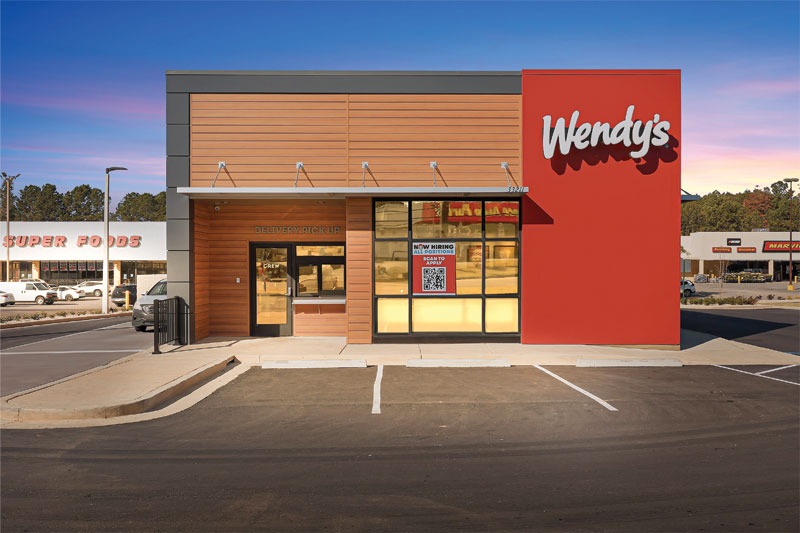
Wendy’s Restaurant – Alabama
This Wendy’s location showcases the versatility of aluminum cladding by combining two profile widths—152.4 mm and 304.8 mm (6 in. and 12 in.) panels—to create visual interest and depth on the exterior. The mixed-width application demonstrates how varying panel dimensions can break up large wall surfaces while maintaining a cohesive design language. This approach is efficient for commercial buildings where brand identity meets architectural appeal, proving that functional fast-casual architecture can still achieve design sophistication through thoughtful material selection and installation patterns.
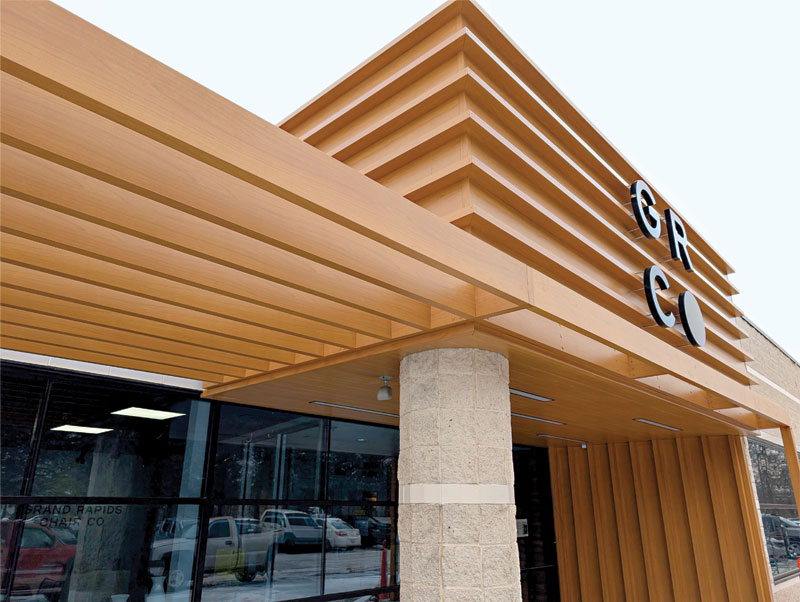
GR Chair Company – Michigan
The GR Chair Company project exemplifies the contemporary board-and-batten trend, utilizing both cladding panels and batten profiles to create a dynamic, textured facade and entryway. A homogeneous woodgrain finish was used to achieve a warm, approachable aesthetic that connects the commercial space to natural materials while leveraging aluminum’s durability and low maintenance requirements. The integration of battens adds visual complexity to the metal wall system, transforming what could be a flat surface into an architecturally engaging exterior.
Parc Mosaic – Colorado
The Parc Mosaic multifamily project involved replacing existing composite cladding with aluminum panels, highlighting a growing trend in renovation and retrofit applications. This demonstrates aluminum’s value proposition in replacement scenarios—offering superior longevity, weather resistance, and lower maintenance than composite alternatives. The decision to transition to aluminum addressed performance issues common to composite materials, such as fading, warping, or moisture damage, while updating the building’s appearance with a more contemporary metal aesthetic that will maintain its integrity for decades.
The future of sustainable construction and design through metal walls
As the construction industry continues to prioritize sustainability, recyclability, and long-term performance, aluminum wall systems are positioned to become the standard for exterior cladding. The material’s infinite recyclability, combined with advancements in finishing technologies that deliver authentic aesthetics without environmental compromise, makes aluminum an essential component of green building strategies. By choosing aluminum cladding and battens, builders invest in metal wall solutions that meet today’s design demands and tomorrow’s environmental goals.
Erin Patrick is the marketing manager for Parallel Architectural Products.