For many contractors, one of the biggest challenges isn’t the work itself, but rather maintaining control over costs, timelines, and materials. They are always searching for ways to improve tight margins, reduce delays, and gain a competitive edge.
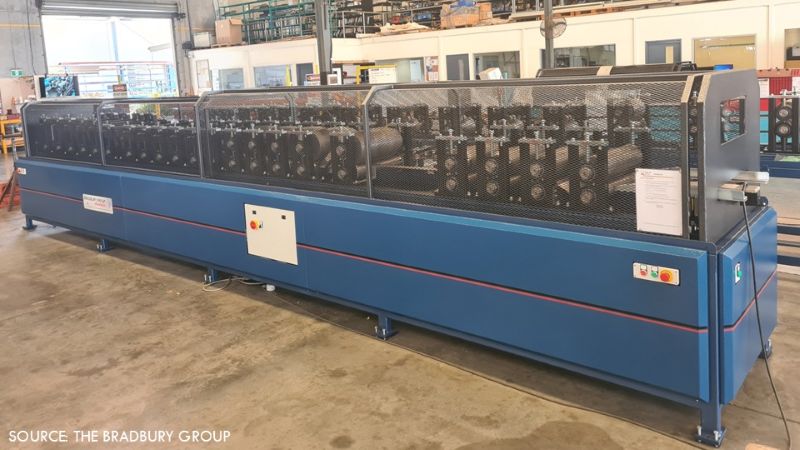
One solution that can transform the way companies operate is to bring gutter production in-house by investing in their own gutter machine.
The main reason to invest in such a machine is usually high volume, but improving quality and ensuring availability are also factors. Commercial gutters made on folders and press brakes often face length limitations. Purchasing a gutter rollformer reduces labor costs and expands your product range.
This is not simply about the equipment. It is about taking full control of your business. Delays in material delivery can bring entire crews to a standstill, impacting both schedules and profitability.
Customization and efficiency
One of the biggest advantages to producing your own gutters is the ability to fully customize your product. When you rely on third-party suppliers, you are limited to their inventory, styles, and timelines. In-house production allows you to create unique gutter profiles tailored specifically to your brand and fulfill your customers’ needs.
Efficiency is critical in any construction-related business. Delays in materials can slow down entire projects, leading to missed deadlines and frustrated clients. By producing your own gutters, you eliminate many of the bottlenecks associated with ordering, shipping, and supplier availability.
With a gutter machine onsite or readily available, you can create materials on demand. This streamlines your workflow and significantly reduces downtime. Crews can complete jobs faster, move on to new projects sooner, and ultimately increase overall productivity.
Cost savings, waste reduction, and flexibility
Material waste is a common issue when working with pre-manufactured gutters. Ordering standard lengths often results in excess material that cannot be used. Over time, this waste adds up, cutting into your profits. In-house production allows you to manufacture gutters to exact specifications, reducing unnecessary scrap.
You produce only what you need when you need it. This not only saves money but also contributes to more sustainable business practices—a desirable bonus for numerous customers.
Every contractor understands how quickly costs add up. Purchasing gutters from suppliers involves markups, delivery fees, and sometimes even rush charges. These expenses can significantly impact your margins over time. By investing in your own gutter machine, you eliminate many of these costs. Over time, the machine pays for itself, turning what was once an expense into a profitable asset.
Flexibility and responsiveness
Construction projects rarely go exactly as planned. Changes in measurements, last-minute requests, and unexpected challenges are part of the job. Having the ability to adapt quickly can make the difference between a smooth project and a costly delay.
With your own gutter machine, flexibility becomes one of your greatest strengths. You can adjust in real time and respond immediately to customer needs. This level of responsiveness not only improves project outcomes but also enhances your reputation for reliability and professionalism.
Inventory control and long-term value
Managing inventory is a delicate balance. Overstocking materials ties up capital and requires storage space, while understocking can lead to delays and lost opportunities. Traditional supply methods often force businesses to estimate their needs, which can result in inefficiencies. In-house gutter production allows for a just-in-time approach.
You produce materials as needed, reducing the need for large inventories. This ensures that your resources are used efficiently and that your cash flow remains healthy. You maintain the right supply levels without the risks associated with over- or under-ordering.
A high-quality gutter machine is built to last. Unlike consumable materials, it remains a long-term asset that continues to generate value for your business. With proper maintenance, these machines can provide years of reliable performance. This durability means that your investment continues to pay off well in the future. Each project completed using your own equipment contributes to your profitability, making the machine a cornerstone of your business operations.
Maintenance and operation
A standard gutter machine has a simple maintenance routine that can be handled in-house after manufacturer training: daily cleaning and inspection, weekly lubrication and checks, periodic alignment and wear inspections, and an annual deeper review of shear blades, rollers, and fasteners.
Most upkeep is preventive and operator‑level, not specialized mechanical work, and companies with basic fabrication or rollforming experience typically manage it themselves.
Major service—such as roller reprofiling, structural damage, or major electrical issues—is infrequent and usually handled by the OEM or an authorized service provider. Day‑to‑day reliability depends more on operator discipline and limiting adjustments than on technical complexity.
Most organizations designate one primary operator along with one or two backup operators, ensuring minimal and well-documented adjustments to machine settings.
While these machines are straightforward to operate, consistently producing high-quality results depends primarily on correct setup procedures and disciplined operational practices more than the machine itself.
Staying competitive
In a crowded marketplace, standing out is essential. Businesses that can deliver faster, customized, and cost-effective solutions have a clear advantage. In-house gutter production positions you as a leader in efficiency and innovation. Customers notice when a contractor can complete jobs quickly without sacrificing quality. They value businesses that offer flexibility and tailored solutions. By bringing production in-house, you not only improve your operations but also elevate your brand in the eyes of your clients.
As the construction industry continues to evolve, businesses must adapt to stay competitive. In-house production is not just a trend but a strategic move toward greater control, efficiency, and profitability.
Contractors who embrace this approach are better positioned to handle challenges, meet customer demands, and grow their operations. Those who continue to rely solely on traditional supply chains may find themselves at a disadvantage in an increasingly fast-paced market.
Matt Werner is the senior sales and marketing manager with The Bradbury Group, a provider of automated production and systems integration for the metal processing industry.